
I sat there longer than I needed to.
Not because I didn’t know where to go—but because I wasn’t sure I deserved to go back.
That’s the part no one really prepares you for.
Relapse is one thing.
Coming back after it? That’s something else entirely.
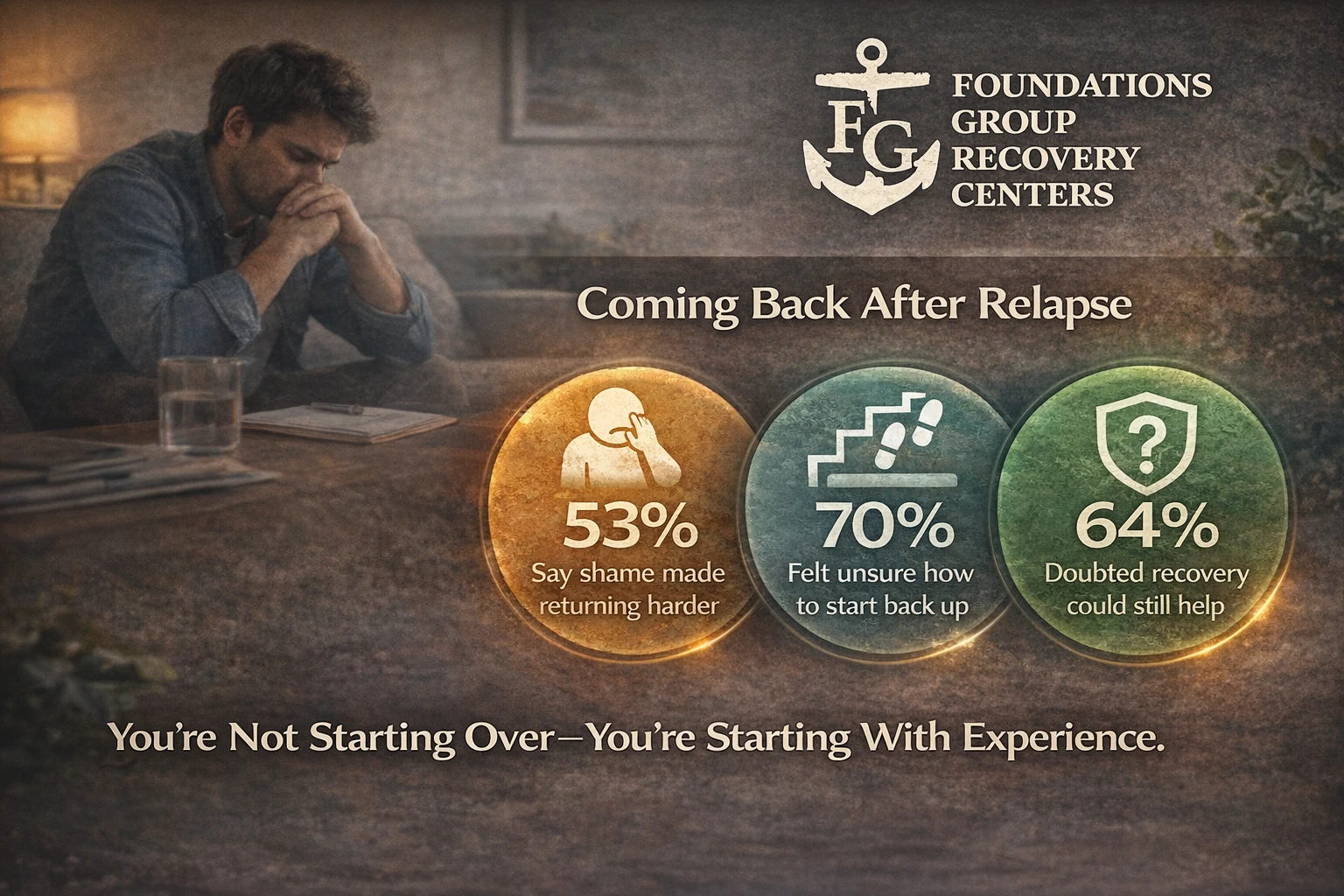
If you’re in that space right now—somewhere between “I need help again” and “I don’t know if I can face it”—you’re not alone. And more importantly, you’re not starting over.
There are still ways forward, including structured daytime care that can meet you where you are now—not where you think you should’ve stayed.
The Moment Before You Walk Back In
There’s a very specific kind of silence that happens after relapse.
It’s not peaceful.
It’s heavy.
It sounds like:
- “You already messed this up.”
- “What’s the point of going back?”
- “They’re going to look at you differently now.”
And if you’ve been sober before, that voice gets louder.
Because now you “know better.”
At least, that’s what it tells you.
But that voice isn’t truth—it’s shame trying to keep you stuck.
I Thought Relapse Erased Everything
When it happened, I didn’t just lose a streak.
I felt like I lost:
- The version of me I was becoming
- The trust I had started to build
- The belief that I could actually do this
It felt like going from progress… back to zero overnight.
But here’s what I couldn’t see then:
Progress doesn’t disappear.
It gets interrupted.
Everything I learned? Still there.
Everything I felt? Still real.
Relapse didn’t erase it.
It just exposed where I still needed support.
Why the Second Time Felt Different
The first time I got help, I was trying to prove something.
I wanted to be “good at recovery.”
To do it right. To get it perfect.
The second time?
I didn’t have that energy anymore.
I wasn’t trying to prove anything.
I just didn’t want to feel the way I was feeling anymore.
That shift changed everything.
Because recovery stopped being about performance—and started being about honesty.
I Needed More Support Than I Wanted to Admit
This was hard to accept.
I thought needing more support meant I had failed.
But the truth was simpler:
The level of support I had before wasn’t enough for what I was dealing with.
That’s it.
Not a character flaw.
Not a lack of effort.
Just a mismatch.
For many people exploring PHP Cape Cod options, that realization is where things begin to click—understanding that needing more structure isn’t failure, it’s alignment.
Structure Didn’t Trap Me—It Held Me
I used to hear “more structure” and think:
More rules.
More pressure.
More things to mess up.
But when I actually experienced it, it felt completely different.
It felt like:
- Not having to make every decision alone
- Having somewhere to go when my head got loud
- Being noticed when I was slipping—before it got worse
For those in Barnstable County, Massachusetts, having access to that kind of consistent support can be the difference between repeating the cycle and actually interrupting it.
Structure didn’t box me in.
It gave me something to stand on.
The Second Time, I Stopped Pretending
The first time, I said I was okay a lot.
Even when I wasn’t.
Especially when I wasn’t.
The second time, I didn’t have that option anymore.
Relapse stripped that away.
And strangely, that made things more real.
I stopped:
- Saying what people wanted to hear
- Minimizing what I was feeling
- Acting like I had it together when I didn’t
And that honesty?
That’s where things actually started to shift.
Shame Was Loud—But It Wasn’t Permanent
I won’t lie to you.
The shame didn’t just disappear.
It followed me back in.
It sat with me in conversations.
Showed up in quiet moments.
Tried to convince me I didn’t belong there anymore.
But something changed the longer I stayed.
No one treated me like I failed.
No one made me feel like I had to “earn my way back.”
They treated me like someone who came back.
And that difference slowly quieted the shame.
What I Learned About Relapse That I Didn’t Know Before
Relapse isn’t the opposite of recovery.
Avoidance is.
That’s the part that gets people.
Not the mistake—but what happens after it.
Pulling away.
Staying silent.
Trying to fix it alone.
That’s what turns one moment into a longer pattern.
Coming back—even when it feels impossible—that’s what keeps recovery alive.
Recovery the Second Time Was More Real
It wasn’t cleaner.
It wasn’t easier.
But it was more honest.
I knew where I was vulnerable.
I understood what I needed more clearly.
I stopped trying to rush through the uncomfortable parts.
For people near Falmouth, Massachusetts, finding support that allows that kind of real, consistent engagement can make the second attempt feel completely different from the first.
Less about proving.
More about building something that actually holds.
If You’re Stuck Right Now, This Part Matters
If you’re in that space—thinking about coming back, but not sure you can face it—
You’re not alone.
That hesitation doesn’t mean you’re weak.
It means you care.
And here’s the truth I had to learn the hard way:
You don’t lose your place in recovery.
You just return to it—with more awareness than before.
You’re Not Starting Over—You’re Starting With Experience
It feels like day one again.
But it’s not.
You’re not the same person you were before.
You’ve learned things. Felt things. Seen things.
Even this relapse taught you something.
About your triggers.
Your limits.
What kind of support you actually need.
That’s not starting over.
That’s starting smarter.
Frequently Asked Questions
Does relapse mean I failed recovery?
No.
Relapse means something in your recovery needed more support or attention. It’s part of many people’s journey and doesn’t erase your progress.
Why does coming back feel harder than starting the first time?
Because there’s more emotion attached—shame, self-doubt, and fear of judgment.
But coming back also means you have more awareness, which can lead to deeper, more sustainable recovery.
How do I know if I need more structured support?
If you’ve relapsed, struggled to stay consistent, or feel like previous support didn’t hold, it may be a sign that a higher level of structure could help.
Will people judge me for relapsing?
Most recovery environments understand that relapse can happen.
You’re far more likely to be met with support than judgment.
Can recovery still work after relapse?
Yes.
In many cases, recovery becomes stronger after relapse—because it’s built on more honesty and real understanding.
Take the Next Step Without Starting Over
If you’re thinking about coming back, you don’t have to figure it out alone.
Call (844)763-4966 to learn more about our Partial Hospitalization Program services in Mashpee, MA.
You’re not back at the beginning.
You’re stepping forward—with more truth than before.