
Depression can make everyday life feel exhausting. Getting out of bed, going to work, or even enjoying activities that once brought happiness may seem impossible. For some people, alcohol or drugs offer temporary relief from that emotional pain. For others, substance use comes first, and depression develops over time. If you’ve been searching for information about depression and addiction, you’re not alone. These conditions frequently occur together, and understanding their connection is the first step toward recovery. If you’re experiencing both, learning more about dual diagnosis treatment can help you understand why treating both conditions together is so important.
Many people wonder whether they have depression because they use substances or whether they use substances because they’re depressed.
Sometimes the answer is clear.
Often, it isn’t.
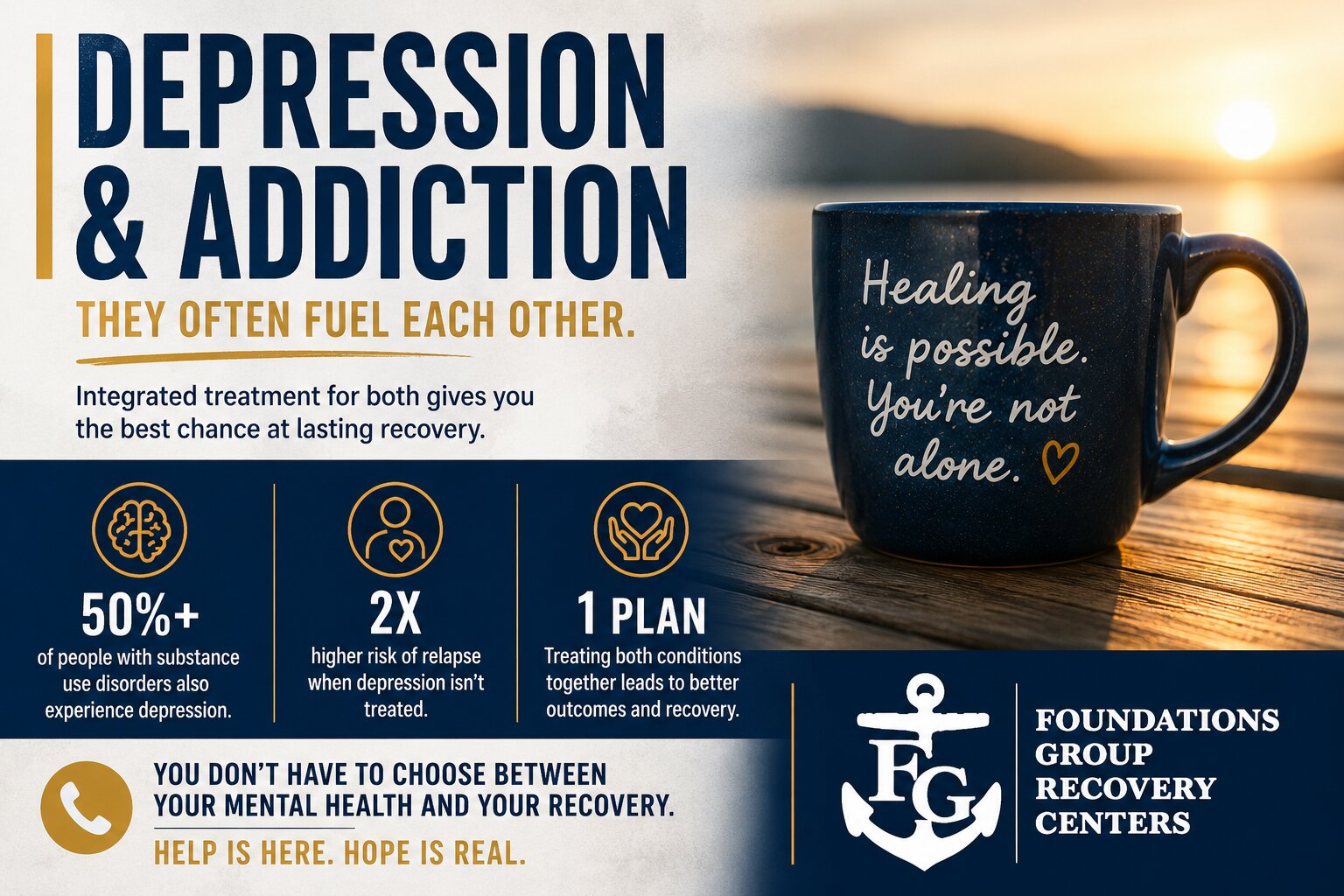
What matters most is recognizing that these conditions commonly reinforce one another. Recovery becomes much more likely when both are addressed at the same time rather than treating one while hoping the other improves on its own.
The Link Between Depression and Addiction
Depression and substance use disorder frequently occur together. Mental health professionals refer to this as co-occurring disorders or dual diagnosis.
Research has consistently shown that people living with depression have a higher risk of developing substance use disorders, and individuals with substance use disorders are also more likely to experience depression.
This connection isn’t simply a coincidence.
Both conditions involve changes in brain systems responsible for:
- Dopamine and reward
- Motivation
- Stress response
- Emotional regulation
- Decision-making
Depression often reduces the brain’s ability to experience pleasure, making everyday activities feel less rewarding.
Many addictive substances temporarily increase dopamine or alter other neurotransmitters, creating short-lived relief or emotional numbness. While this relief can feel significant in the moment, it doesn’t address the underlying depression—and repeated use can make symptoms worse over time.
It’s important to understand that depression and addiction don’t exist in a simple cause-and-effect relationship.
Instead, they often interact in ways that make each condition more difficult to manage without comprehensive treatment.
The Self-Medication Cycle
One of the most common ways depression and addiction become connected is through self-medication.
Self-medication doesn’t mean someone consciously chooses addiction.
It often begins with an understandable attempt to reduce emotional pain.
The cycle may look something like this:
Depression Creates Emotional Pain
Depression can bring:
- Persistent sadness
- Hopelessness
- Low energy
- Emotional numbness
- Difficulty sleeping
- Loss of interest in daily life
When these feelings persist, it’s natural to want relief.
Substance Use Provides Temporary Relief
Different substances affect the brain in different ways.
Some people use alcohol because it temporarily reduces anxiety or emotional distress.
Others turn to opioids because they create feelings of comfort and well-being.
Stimulants may briefly increase energy or motivation when depression causes overwhelming fatigue.
For a short time, the emotional pain may seem quieter.
The Brain Adapts
As substance use continues, the brain begins adjusting to repeated exposure.
Natural dopamine production and other neurotransmitter systems become disrupted.
Instead of improving depression, ongoing substance use often makes it harder for the brain to regulate mood on its own.
Depression Deepens
As the temporary effects wear off, depression frequently returns with greater intensity.
People may experience:
- Increased sadness
- Greater fatigue
- More hopelessness
- Stronger cravings
- Less motivation
At that point, using again may seem like the only way to feel normal.
The cycle repeats.
This isn’t a reflection of weak willpower.
It’s the result of changes occurring in the brain’s reward system, stress response, and emotional regulation.
Understanding the neurological nature of this cycle can help reduce shame and open the door to effective treatment.
Depression and Alcohol
Alcohol is one of the most common substances people use to cope with depressive symptoms.
Initially, drinking may seem helpful because alcohol slows activity in the central nervous system, creating temporary relaxation or emotional numbness.
Unfortunately, alcohol is also a depressant.
Over time, regular drinking can:
- Worsen mood
- Increase anxiety
- Disrupt sleep
- Reduce motivation
- Increase hopelessness
Many people notice that although alcohol briefly helps them escape emotional pain, they feel significantly worse the following day.
Repeated drinking can gradually deepen both depression and alcohol dependence.
Depression and Other Substances
Alcohol isn’t the only substance involved in self-medication.
Different drugs may temporarily mask depressive symptoms while creating new problems.
Opioids
Prescription pain medications, heroin, and fentanyl may initially produce feelings of warmth, comfort, or emotional relief.
As dependence develops, mood often worsens between doses, making depression more severe.
Stimulants
Substances such as cocaine or methamphetamine may temporarily increase energy and confidence.
However, the “crash” that follows often includes profound depression, exhaustion, and emotional distress.
Cannabis
Some individuals report temporary relaxation with cannabis.
Others find that heavy or prolonged use contributes to low motivation, emotional blunting, anxiety, or worsening depressive symptoms.
Although each substance affects the brain differently, they all have the potential to reinforce the self-medication cycle.
Which Comes First: Depression or Addiction?
This is one of the most common questions people ask.
The honest answer is:
It depends.
For some people, depression clearly develops first.
They begin drinking or using drugs to escape sadness, loneliness, trauma, or hopelessness.
Over time, substance use becomes increasingly difficult to control.
For others, substance use begins first.
Repeated exposure to alcohol or drugs changes brain chemistry enough that depressive symptoms emerge even when they had never experienced depression before.
This is sometimes called substance-induced depression.
In many situations, it’s difficult to determine exactly which came first.
Someone may have experienced mild depression before substance use, only for addiction to dramatically worsen it.
Because of this complexity, many clinicians focus less on solving the “chicken-or-egg” question and more on ensuring that both conditions receive appropriate care.
Waiting to treat one until the other is completely resolved often delays recovery.
Why Treating Only One Doesn’t Work
One reason people feel discouraged is that they’ve already tried treatment.
Perhaps they became sober but remained deeply depressed.
Or they received treatment for depression while continuing to use alcohol or drugs, only to feel like nothing improved.
Neither experience means recovery is impossible.
It often means one important piece of the puzzle was missing.
Treating Depression Alone
Medication and therapy can be highly effective for depression.
However, ongoing substance use may continue disrupting brain chemistry, reducing the effectiveness of treatment and making recovery more difficult.
Treating Addiction Alone
Stopping substance use is an important achievement.
But if underlying depression remains untreated, emotional pain can become a powerful trigger for relapse.
Many people return to substance use not because they don’t want recovery, but because untreated depression feels unbearable.
Why Integrated Treatment Works
Integrated treatment addresses both conditions simultaneously.
Rather than asking which diagnosis deserves attention first, clinicians recognize that depression and addiction influence one another.
Treatment may include:
- Medical evaluation
- Individual therapy
- Cognitive behavioral therapy (CBT)
- Medication management when appropriate
- Group therapy
- Relapse prevention planning
- Treatment for co-occurring mental health conditions
- Family education and support
This coordinated approach helps reduce the likelihood that one untreated condition will continue fueling the other.
Recovery Is Possible
Living with both depression and addiction can make it feel as though you’re trapped in an endless cycle.
You may have tried getting sober only to discover that depression remained overwhelming.
Or perhaps you’ve worked hard in therapy while continuing to rely on substances to get through each day.
Neither experience means you’ve failed.
It may simply mean your treatment wasn’t designed to address both conditions together.
Healing becomes more realistic when care reflects the reality of what you’re experiencing.
You don’t have to prove which condition came first.
You don’t have to wait until things become worse.
And you don’t have to figure it out alone.
Frequently Asked Questions
What is the connection between depression and addiction?
Depression and addiction commonly occur together because both affect the brain’s reward system, stress response, and emotional regulation. Depression may lead someone to self-medicate with alcohol or drugs, while ongoing substance use can worsen or even trigger depressive symptoms, creating a cycle that reinforces both conditions.
Which comes first—depression or addiction?
There isn’t one answer for everyone. Some people develop depression before using substances, while others experience depression after prolonged alcohol or drug use. In many cases, it’s difficult to separate the two, which is why treating both conditions together is often the most effective approach.
What is dual diagnosis treatment?
Dual diagnosis treatment is an integrated approach that addresses both a mental health condition, such as depression, and a substance use disorder at the same time. It may include therapy, medication management, relapse prevention, and other evidence-based services designed to support long-term recovery.
Take the Next Step Toward Recovery
If depression and substance use have begun feeding into one another, you don’t have to solve the puzzle of which came first before asking for help. Effective treatment addresses both conditions together, helping you build a stronger foundation for lasting recovery. Get help that’s close to home, Proudly serving in Falmouth, Barnstable County, MA.
Call (844) 763-4966 or learn about dual diagnosis treatment at Foundations Recovery.