
I used to say treatment didn’t work for me.
Not quietly. Not thoughtfully.
I said it like a verdict.
I’d gone through a full program. I did the groups. I met with the counselor. I nodded in all the right places. When I relapsed months later, I decided that proved my point.
See? Didn’t work.
If you’re here, maybe you’ve said something similar. Maybe you’re carrying that flat, skeptical feeling — like you already tried the “serious” route and it didn’t stick.
I get that. I’ve lived it.
After completing alcohol addiction treatment in Massachusetts, I honestly believed I had done my part. When I drank again, I blamed the structure, the approach, even the people around me.
But the truth wasn’t that simple.
I Thought One Round Was Supposed to Fix Me
Here’s what I didn’t admit at the time:
I expected permanent change from temporary effort.
I treated recovery like a course I could complete. Finish the curriculum, pass the exam, move on.
But addiction isn’t a class you graduate from. It’s a pattern that took years to build. Expecting it to dissolve after a few months of structured care was… unrealistic.
No one promised me that. I just assumed it.
When I relapsed, I felt betrayed. But really, I was disappointed that healing wasn’t faster or cleaner.
I wanted the discomfort to be over.
I Left With Insight — But No Real Plan
Treatment gave me awareness. It gave me language.
I could name my triggers. I understood my coping patterns. I could explain the cycle of shame and escape.
But awareness without daily structure is fragile.
When I returned to my regular life, everything that had fueled my drinking was still there:
- The same stress at work
- The same unresolved family tension
- The same social circle
- The same isolation at night
I didn’t build enough support outside of treatment. I didn’t commit to ongoing therapy. I skipped meetings when I felt “fine.”
Relief is not the same as readiness.
And I confused the two.
I Took My Relapse as Proof Instead of Feedback
When I drank again, I felt embarrassed. Not devastated — embarrassed.
So I made a choice that protected my ego.
I decided the program hadn’t worked.
That belief was easier than saying:
“I stopped doing the things that were helping.”
Relapse doesn’t mean nothing worked. It means something wasn’t sustained.
That distinction matters.
Because if nothing worked, there’s no point trying again.
But if something helped — and I just didn’t stay with it — that’s different.
That means change is still possible.
I Wasn’t Honest About What I Didn’t Want to Give Up
This part is harder.
There were things I wasn’t ready to release.
Certain friendships. Certain environments. Certain identities.
Drinking wasn’t just a behavior for me. It was how I connected. How I avoided awkwardness. How I softened anger. How I dealt with loneliness.
When I left treatment, I tried to stay sober without changing my lifestyle. I wanted recovery to adapt to my old world.
It doesn’t work like that.
You can’t keep every piece of the life that fed your addiction and expect a different outcome.
That realization hurt. But it was necessary.
The Second Time Was Different — And Quieter
When I considered going back, I didn’t feel hopeful. I felt tired.
There was no dramatic rock bottom. Just a slow, grinding awareness that I didn’t like who I was becoming again.
The difference the second time wasn’t intensity. It was honesty.
I stopped trying to impress anyone.
I stopped pretending I understood everything.
I admitted I didn’t trust myself yet.
And instead of seeing treatment as something that needed to “work,” I started seeing it as something I needed to participate in — long term.
That shift changed everything.
What I Actually Learned About Alcohol Addiction Treatment
Here’s what I wish someone had told me plainly:
- It’s not magic.
- It’s not a personality transplant.
- It doesn’t erase cravings.
- It doesn’t guarantee you won’t struggle again.
What it does do is give you structure, accountability, perspective, and tools.
But tools don’t build the house on their own. You still have to use them — especially when you don’t feel like it.
The first time, I used them when it was convenient.
The second time, I used them when it was uncomfortable.
That was the difference.
If You’re Skeptical Right Now
Maybe you’re thinking:
“I already tried. Why would this be any different?”
That question makes sense.
But here’s a quieter one:
Are you the same person you were the first time?
You’ve learned something since then. Even your frustration is experience.
Sometimes the first attempt cracks denial.
The second one builds discipline.
The third one deepens humility.
There’s no rule that says it has to work perfectly on the first try.
If you’re in Massachusetts and weighing your options again, you don’t have to commit to forever. You can start by simply exploring your next step and what support in Massachusetts could look like now.
You don’t need certainty. You just need willingness.
The Part I Didn’t Want to Admit
This is the line that changed things for me:
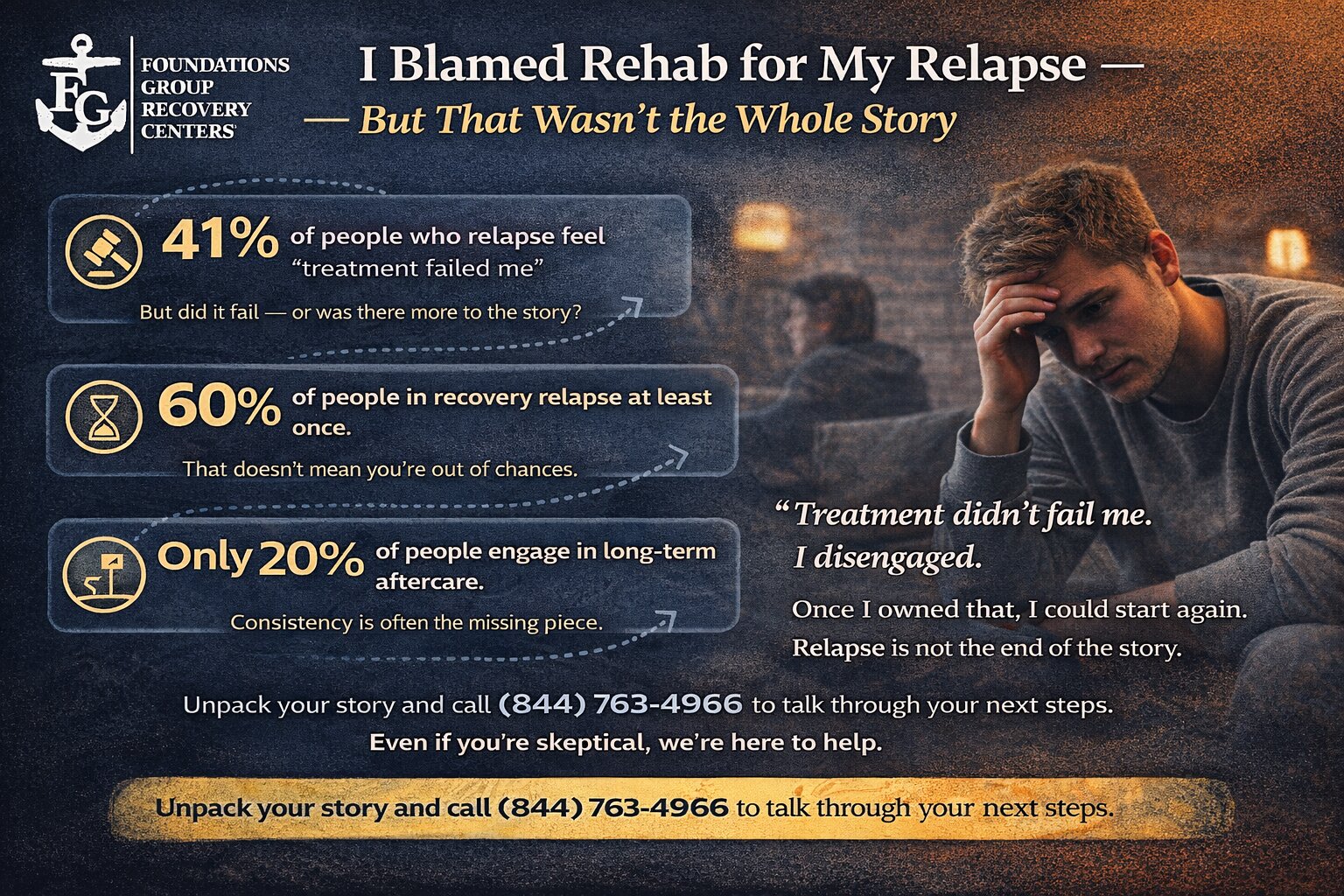
Treatment didn’t fail me.
I disengaged.
Not all at once. Slowly.
I skipped aftercare.
I avoided accountability.
I minimized stress instead of addressing it.
It wasn’t dramatic sabotage. It was gradual drift.
And once I owned that, I stopped being stuck in resentment.
Ownership isn’t about blame. It’s about power.
If it was all the program’s fault, I’d be helpless.
If I played a role, I can change it.
That’s uncomfortable. But it’s freeing.
FAQs: When You Feel Like Treatment “Didn’t Work”
Is it common to relapse after treatment?
Yes. Relapse is common — not because treatment is useless, but because addiction is complex. Many people require multiple rounds of structured care or ongoing support before long-term stability sticks.
Relapse is feedback. It highlights what still needs attention.
It’s not a moral failure.
Does relapse mean I wasn’t serious about recovery?
Not necessarily. Sometimes relapse means:
- You underestimated certain triggers.
- You lacked long-term support.
- You returned to high-risk environments.
- You stopped practicing coping skills consistently.
It can reflect gaps in support — not lack of sincerity.
What matters is what you do next.
How do I know if I should try again?
Ask yourself:
- Am I more honest about my patterns now?
- Am I willing to engage in aftercare this time?
- Am I open to changing more than just my drinking?
If the answer to any of those is yes, that’s movement.
You don’t need full confidence. You just need a little more willingness than resistance.
What would make it different this time?
Often, the difference isn’t the program — it’s:
- Committing to longer-term support
- Following through with therapy after discharge
- Building a sober network
- Changing daily habits and social environments
It’s less about intensity and more about consistency.
I’m embarrassed to go back. Is that normal?
Very. Many people feel shame about returning. But treatment centers see relapse as part of the reality of addiction — not as a disqualification.
Walking back in isn’t weakness.
It’s maturity.
What if I still don’t feel convinced?
That’s okay.
You don’t have to feel inspired. You don’t have to feel hopeful. You don’t even have to feel ready.
You just have to be honest about whether what you’re doing now is working.
If it’s not — staying skeptical doesn’t protect you. It just keeps you stuck.
You don’t need a dramatic breakthrough. You don’t need a perfect mindset.
You need a space where you can be real about what happened — without being shamed for it.
If you’re reconsidering your next step, call (844)763-4966 or visit our alcohol addiction treatment services in Massachusetts to learn more about our alcohol addiction treatment services in Falmouth, MA.