
I remember staring at the glass like it had already decided something for me.
Like the outcome was set before I even took the first sip.
Ninety days. Gone. That’s what I told myself.
If you’re here, you probably know that exact feeling.
Not just the relapse—but the emotional crash that follows it.
The part where your brain goes straight to: “I ruined everything.”
But I need to tell you something I didn’t believe at the time:
You didn’t ruin everything.
You hit a moment that needs understanding—not punishment.
And there are still ways forward, including alcohol addiction treatment that meets you where you are now—not where you think you failed.
The Silence After Matters More Than the Relapse
Relapse is loud for a moment.
But what comes after? That’s quieter—and more dangerous.
For me, it was the silence.
I didn’t call anyone.
I didn’t show up.
I didn’t want to explain.
Because explaining meant admitting it was real.
And deep down, I thought if I stayed quiet long enough, maybe it wouldn’t count.
But silence doesn’t protect you.
It isolates you.
And isolation is where relapse starts to grow roots.
I Turned One Slip Into a Full Story About Who I Was
It wasn’t just that I drank.
It was everything I decided it meant.
I told myself:
- “You’re not actually someone who can stay sober.”
- “You were just pretending.”
- “This is who you really are.”
That’s what relapse does—it tries to rewrite your identity in one night.
But here’s the truth I couldn’t see then:
One decision doesn’t define you.
But the meaning you attach to it can shape what comes next.
I Thought I Lost All My Progress
This one hit the hardest.
Because I didn’t just lose a streak—I thought I lost everything behind it.
The work.
The growth.
The small, quiet wins no one else saw.
But that’s not how it works.
You don’t unlearn coping skills overnight.
You don’t erase emotional awareness because of one moment.
What you built is still there.
It might feel buried—but it’s not gone.
Recovery doesn’t disappear.
It gets interrupted.
What I Almost Did Instead of Coming Back
I almost didn’t come back.
That’s the part people don’t talk about enough.
After relapse, your brain starts offering alternatives:
- “Just handle it yourself this time.”
- “Don’t go back—they’ll judge you.”
- “You already messed up, so what’s the point?”
That thinking feels logical in the moment.
But it’s not logic—it’s avoidance dressed up as independence.
Because coming back means facing it.
And facing it means feeling it.
But avoiding it? That’s what turns one relapse into a pattern.
Walking Back In Was the Hardest Part
The first time I showed up again, I felt like I had a spotlight on me.
Like everyone knew.
Like everyone was thinking something I couldn’t hear.
But that wasn’t real.
No one looked at me like I failed.
They looked at me like I came back.
And that moment shifted something I didn’t expect.
Because coming back isn’t weak.
It’s one of the strongest things you can do in recovery.
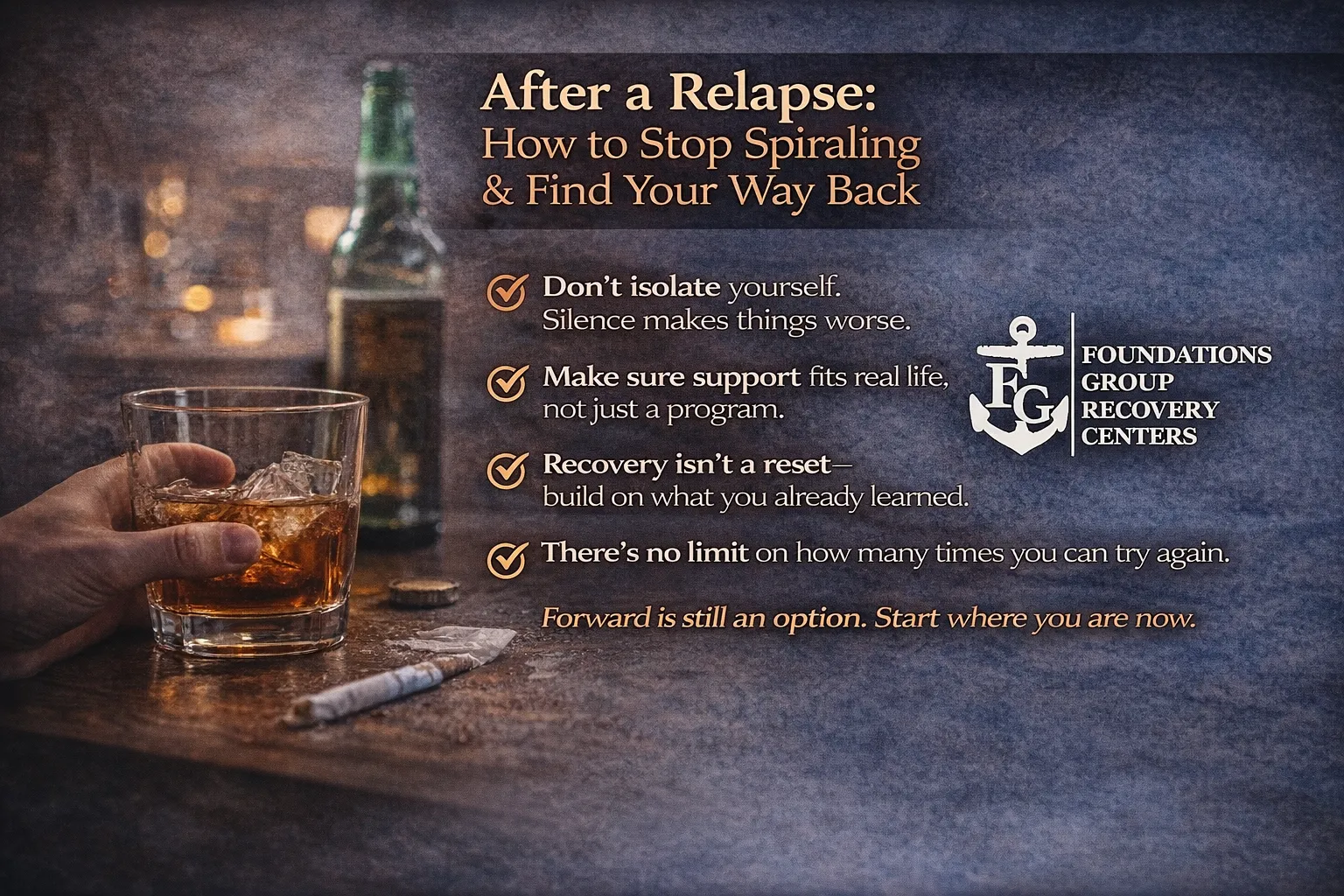
Recovery Didn’t Reset — It Deepened
This is the part I wish someone had explained earlier.
Relapse doesn’t send you back to the beginning.
It changes the depth of your recovery.
Before, I was learning how to stay sober.
After, I started understanding why I struggled to stay sober.
That’s a different level of awareness.
Painful—but real.
Recovery after relapse isn’t about rebuilding the same thing.
It’s about building something stronger, more honest, and harder to shake.
Life Didn’t Pause — And I Wasn’t Ready for That
Here’s something that caught me off guard:
Everything else in life kept moving.
Work didn’t slow down.
Responsibilities didn’t ease up.
Expectations didn’t disappear.
And I didn’t have enough structure to support that reality.
That’s where things started to shift for me.
I needed something that fit into real life—not something that only worked in a controlled environment.
For people in Barnstable County, Massachusetts, having access to flexible support can make a huge difference during this phase.
Because recovery doesn’t happen in isolation—it happens in the middle of your actual life.
I Needed Support That Didn’t Disrupt Everything
I wasn’t ready to step away from everything again.
But I also knew I couldn’t keep going the way I was.
That middle space is where a lot of people get stuck.
Too much responsibility to leave.
Too much struggle to ignore.
That’s where options like outpatient alcohol rehab Massachusetts start to make sense.
Something structured—but still flexible.
Something consistent—but realistic.
If you’re balancing work, life, and recovery, finding support that fits your schedule isn’t a luxury—it’s necessary.
Especially for those near Falmouth, Massachusetts, where access to the right level of care can mean the difference between staying stuck and moving forward.
The Lie That Keeps People From Coming Back
There’s one thought that almost kept me out for good:
“I already had my chance.”
But recovery doesn’t work like that.
You don’t get one opportunity.
You get as many as you’re willing to take.
And honestly? The version of you coming back after relapse is often more self-aware than the one who started.
That matters.
Because awareness is what turns effort into real change.
You’re Not Starting Over — You’re Starting Differently
It feels like day one again. I know.
But it’s not.
You’re not the same person you were before those 90 days.
You’ve seen things. Felt things. Learned things.
Even this relapse?
It taught you something.
Maybe about stress.
Maybe about triggers.
Maybe about what you still need.
That’s not failure.
That’s data.
And recovery is built on learning—not perfection.
What Help Looked Like the Second Time
The second time around felt different.
Less about proving something.
More about understanding something.
I didn’t go back trying to be perfect.
I went back trying to be honest.
That changed everything.
Support felt less like pressure—and more like something I could actually lean on.
And that’s what it’s supposed to feel like.
FAQs
Does relapse mean treatment didn’t work?
No. It means something in your recovery needed more support.
Treatment gives you tools—but applying them in real life takes time, practice, and sometimes adjustment.
Relapse can highlight where more support is needed—not that treatment failed.
How common is relapse after 90 days?
More common than people admit.
Early recovery is one of the most vulnerable times because life starts returning to normal—but internal stability is still developing.
You’re not alone in this experience.
Should I go back to the same type of support?
Not always.
Sometimes the level or structure needs to change.
More flexibility, more frequency, or a different format can make a big difference depending on what you’re facing now.
What if I feel too ashamed to come back?
That feeling is incredibly common.
But most recovery spaces expect relapse to be part of the process for some people.
You won’t be the only one who’s been there—and you won’t be judged the way you fear.
Can I recover again after relapse?
Yes. Absolutely.
Relapse doesn’t disqualify you from recovery.
In many cases, it becomes part of what strengthens it—if you choose to come back and keep going.
Take the Next Step Without Shame
You don’t have to sit in this alone.
Call (844)763-4966 or visit our Alcohol Addiction Treatment in Massachusetts to learn more.
No judgment.
No starting over.
Just a way forward from exactly where you are.