
When a parent realizes something is seriously wrong, the moment can feel surreal.
Your child might be drinking heavily. Their mood has shifted. They seem anxious, angry, withdrawn, or overwhelmed in ways you’ve never seen before. Maybe school, work, or relationships are suddenly unraveling.
And somewhere in the middle of that confusion, one question keeps surfacing:
What is actually happening to my child — and what needs help first?
Many families begin researching options like support for alcohol recovery during this exact moment of uncertainty.
The most important thing to understand right now is this: when alcohol use and mental health struggles appear together, it doesn’t mean everything is out of control.
It means your child needs the right kind of support.
When Drinking and Mental Health Start Feeding Each Other
Parents often try to untangle the situation logically.
Did the drinking come first?
Or did anxiety, depression, trauma, or emotional stress lead to the drinking?
The truth is that many young adults experience these problems as a cycle rather than two separate issues.
A young person might begin drinking to quiet anxiety or escape emotional pain. Alcohol can temporarily numb those feelings, which makes it feel helpful at first.
But over time, alcohol often intensifies emotional instability. It can worsen depression, increase anxiety, disrupt sleep, and make stress harder to manage.
So the young person drinks again to escape those feelings.
And the cycle continues.
From the outside, this can look chaotic and frightening. But clinicians who work with young adults see this pattern frequently.
It’s not unusual. And it’s treatable.
The Question Every Parent Asks: “What Do We Treat First?”
When families reach out for help, one question almost always comes first:
Do we address the drinking first, or the mental health issue?
It’s a reasonable question. Parents want a clear path forward.
But separating these issues rarely works.
If someone stops drinking without addressing anxiety, depression, trauma, or emotional distress, the underlying pain often remains. That pain can quickly lead back to alcohol.
On the other hand, therapy for mental health symptoms becomes far more difficult if alcohol continues disrupting the brain and emotional system.
This is why modern recovery care often addresses both challenges at the same time.
Not one before the other.
Together.
Why Everything Might Feel Like It’s Happening All at Once
Parents often say the same thing during early conversations:
“This all happened so fast.”
But in many cases, the struggles have been building quietly beneath the surface for some time.
Young adults are often skilled at hiding emotional distress. They may appear functional on the outside while feeling overwhelmed internally.
Alcohol can become a private coping tool — something that helps them avoid conversations about what they’re really experiencing.
Eventually, though, the pressure becomes too heavy to hide.
The moment when families finally see the full picture can feel like a sudden crisis. But often it’s the moment when hidden struggles finally become visible.
And visibility, while painful, is also the beginning of real help.
What Early Recovery Support Usually Focuses On
When someone begins receiving help for both alcohol use and mental health challenges, the first goal is often stabilization.
In simple terms, that means helping the person slow down enough to feel safe and clear-headed again.
Depending on the situation, support might include structured daytime care, multi-day weekly treatment, or other levels of professional support.
During this early stage, clinicians focus on helping the individual:
- Reduce immediate emotional chaos
- Rebuild healthy sleep and daily routines
- Begin processing what they’re experiencing
- Develop coping strategies that don’t rely on alcohol
It’s not about forcing dramatic life changes overnight.
It’s about creating a stable foundation where real healing can begin.
The Emotional Storm Parents Often Carry
While your child is struggling, you may be going through something deeply painful as well.
Parents frequently describe feeling like they’re living inside a constant state of alert.
You may feel:
- Fear about your child’s safety
- Confusion about what caused the situation
- Guilt that you somehow missed warning signs
- Exhaustion from trying to hold the family together
These reactions are extremely common in families navigating a behavioral health crisis.
But it’s important to say something clearly here:
Addiction and mental health struggles are not caused by a single parenting mistake.
They develop through a complicated combination of genetics, life experiences, emotional stress, and environmental factors.
Blame rarely helps families move forward.
Understanding does.
Something Many Families Don’t Expect
Parents often fear that seeking help will create conflict.
They imagine their child becoming angry, defensive, or completely resistant to support.
And sometimes that happens.
But many young adults also feel something else when real support begins.
Relief.
Struggling with alcohol and emotional distress can feel overwhelming and isolating. Many young people know something is wrong but don’t know how to explain it or where to turn.
When someone finally says, “We can help you figure this out,” the reaction is often quieter than expected.
Less anger.
More breathing room.
Like someone finally turning down the volume on a storm that has been raging inside their head.
Families Often Heal Alongside Their Child
Another truth many parents discover is that recovery is not only about the individual.
Families often grow and heal through the process as well.
Parents gain tools for communication. Boundaries become clearer. Conversations that once felt impossible become easier over time.
Most importantly, families begin to move out of crisis mode.
Instead of reacting to emergencies, they begin building stability together.
Frequently Asked Questions
How common is it for young adults to struggle with both alcohol and mental health issues?
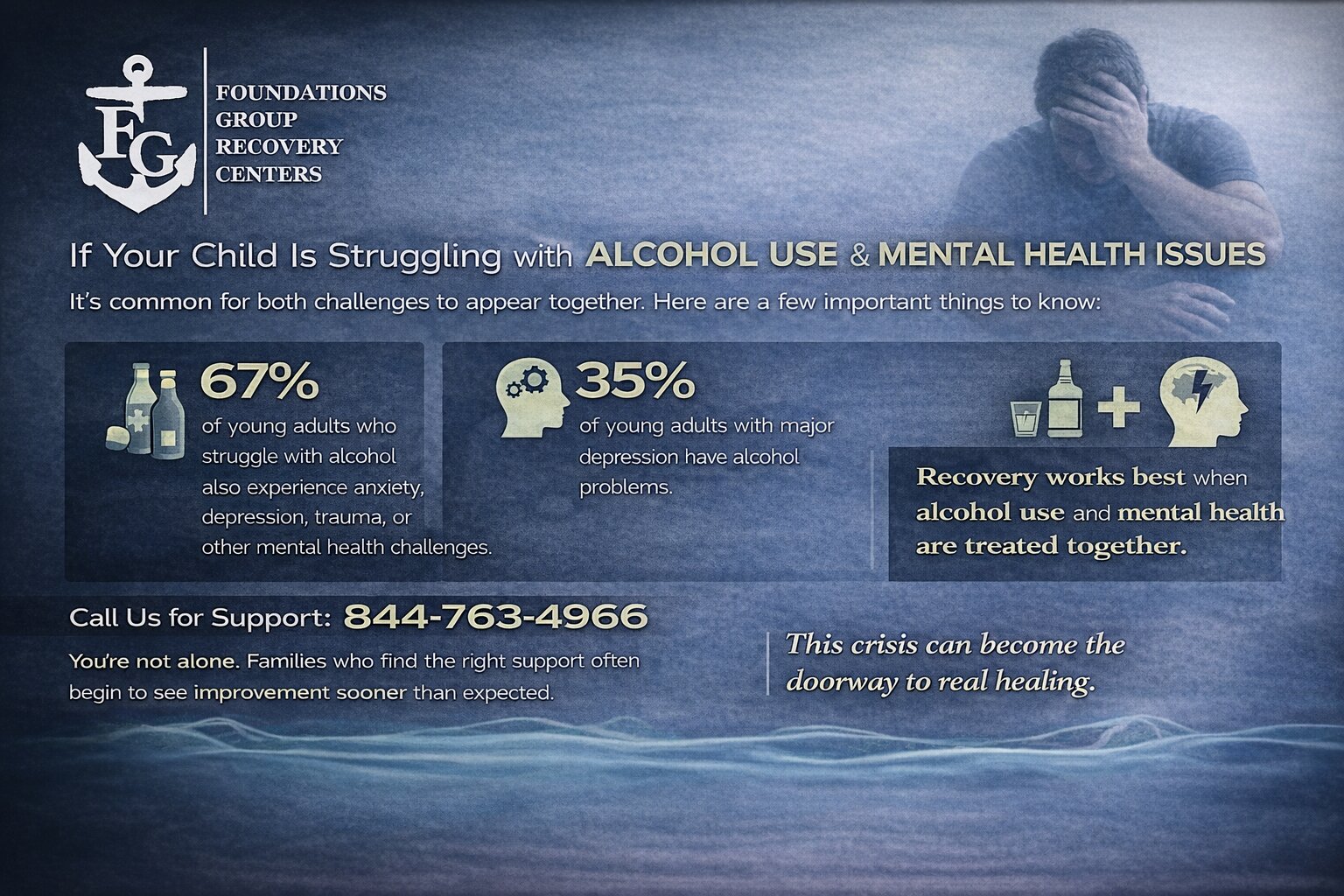
It’s very common. Many young adults who struggle with alcohol also experience anxiety, depression, trauma, or other emotional challenges.
These issues often develop together, which is why effective recovery support typically addresses both at the same time.
Did I do something wrong as a parent?
This is one of the most painful questions parents ask themselves.
But addiction and mental health struggles rarely come from one specific cause. Genetics, emotional sensitivity, life experiences, stress, and many other factors can contribute.
Parents who seek help for their child are not failures — they are often the reason recovery becomes possible.
What if my child refuses help?
Resistance is common, especially early on.
Young adults may feel embarrassed, scared, or unsure about what treatment means. In many cases, supportive conversations and guidance from professionals can help families approach the situation in a way that lowers defensiveness.
Even when someone initially refuses help, change can still happen over time.
How long does recovery take?
Recovery is not a single event or a quick fix.
It’s a process that unfolds over time. Some people begin feeling better within weeks of receiving structured support, while deeper emotional healing may take longer.
The important thing is that progress often begins sooner than families expect.
Can families be involved in the recovery process?
Yes, and family involvement can be extremely helpful.
Many recovery programs encourage family participation through counseling, education, or communication support. This helps rebuild trust and strengthens the support system around the individual.
How do I know if my child’s drinking has become serious?
Signs can include rapid mood changes, increasing alcohol use, withdrawal from family or friends, disrupted sleep patterns, declining performance at school or work, or emotional instability connected to drinking.
If alcohol seems to be making emotional struggles worse, it may be time to explore professional guidance.
You Don’t Have to Solve This Alone
Watching your child struggle with alcohol and emotional pain can feel overwhelming. Many parents believe they must find the right answer immediately or say the perfect thing.
But recovery rarely begins with a perfect plan.
It often begins with a conversation.
If you’re trying to understand what help might look like for your child, call 844-763-4966 or visit our alcohol addiction treatment services to learn more about our alcohol addiction treatment services in Massachusetts.
Right now, you may feel like everything is unraveling. Get help that’s close to home, Proudly serving in Falmouth, MA.
But many families who stand in this exact moment later discover something they couldn’t see at the time:
This crisis can become the doorway to real healing — for your child and for your entire family.