
There’s a quiet moment that happens before someone reaches out.
It’s rarely dramatic. There’s no movie-scene collapse.
It’s usually a normal Tuesday. A sink full of dishes. An unopened email. A headache that lingers a little longer than it should.
And then the thought comes back — the one you’ve been pushing away:
I can’t keep doing this.
If you’ve found yourself researching options, maybe even reading about our alcohol addiction treatment in Massachusetts, you’re probably not just looking for information.
You’re looking for reassurance.
Let’s talk about what this actually feels like — and what happens next.
The Fear Before the First Call
Most first-time clients aren’t confident.
They’re exhausted. Scared. Unsure how they got here.
Some are high-functioning professionals who’ve kept everything together on the outside. Some are parents trying to hide how much they’re struggling. Some are young adults who thought they had more time before things got this serious.
Almost everyone has the same quiet fears:
- What if I can’t handle withdrawal?
- What if people find out?
- What if this doesn’t work?
- What if it does — and I don’t recognize myself anymore?
That last one is rarely spoken out loud.
But it’s powerful.
Alcohol often feels like it’s woven into your personality. Your humor. Your confidence. Your ability to relax. The way you connect socially.
Letting go can feel like stepping into the unknown without armor.
That fear makes sense. And it’s welcome here.
You Are Not Signing Away Your Identity
One of the biggest misconceptions about treatment is that it strips you down and rebuilds you into someone else.
That’s not how this works.
We’re not here to replace you. We’re here to help you rediscover the parts of yourself that alcohol slowly crowded out.
Many people don’t realize how much mental energy drinking has been taking up:
- Planning when to drink
- Hiding how much
- Recovering physically
- Managing guilt
- Promising it’ll be different tomorrow
When that constant background noise quiets, what’s left isn’t emptiness.
It’s space.
And space can feel unfamiliar at first. But it’s also where clarity begins.
What the First Conversation Actually Feels Like
When you call, you won’t be interrogated.
You won’t be judged.
You’ll speak to someone who understands that this is hard. Someone who has had hundreds of conversations just like yours — and still treats each one with care.
We’ll ask about your history, your current use, your physical health, and what’s been worrying you lately. Not to label you. Not to trap you. But to understand what kind of support makes sense.
You don’t need perfect answers.
You don’t need to know exactly what you want.
You just need to be honest enough to say, “I think I need help.”
That’s enough to begin.
The First Few Days: Structure, Not Shock
Many people imagine treatment as something intense or overwhelming.
In reality, the first days are often quieter than expected.
If you need medical support for withdrawal, that comes first. Safety is our priority. Alcohol withdrawal can be serious, and having clinical oversight matters. You won’t be expected to “tough it out.”
After stabilization, your days start to take shape.
Depending on what’s appropriate, that could mean:
- Live-in treatment with round-the-clock care
- Structured daytime care several days per week
- Multi-day weekly treatment while living at home
There are different levels because people’s lives and needs are different.
The rhythm of treatment includes therapy sessions, small group conversations, education about the brain and stress, and time to rest. Yes — rest.
Many clients don’t realize how tired they’ve been.
Sleep improves. Appetite stabilizes. Thoughts become less chaotic.
That alone can feel like relief.
You Don’t Have to Be “All In” on Day One
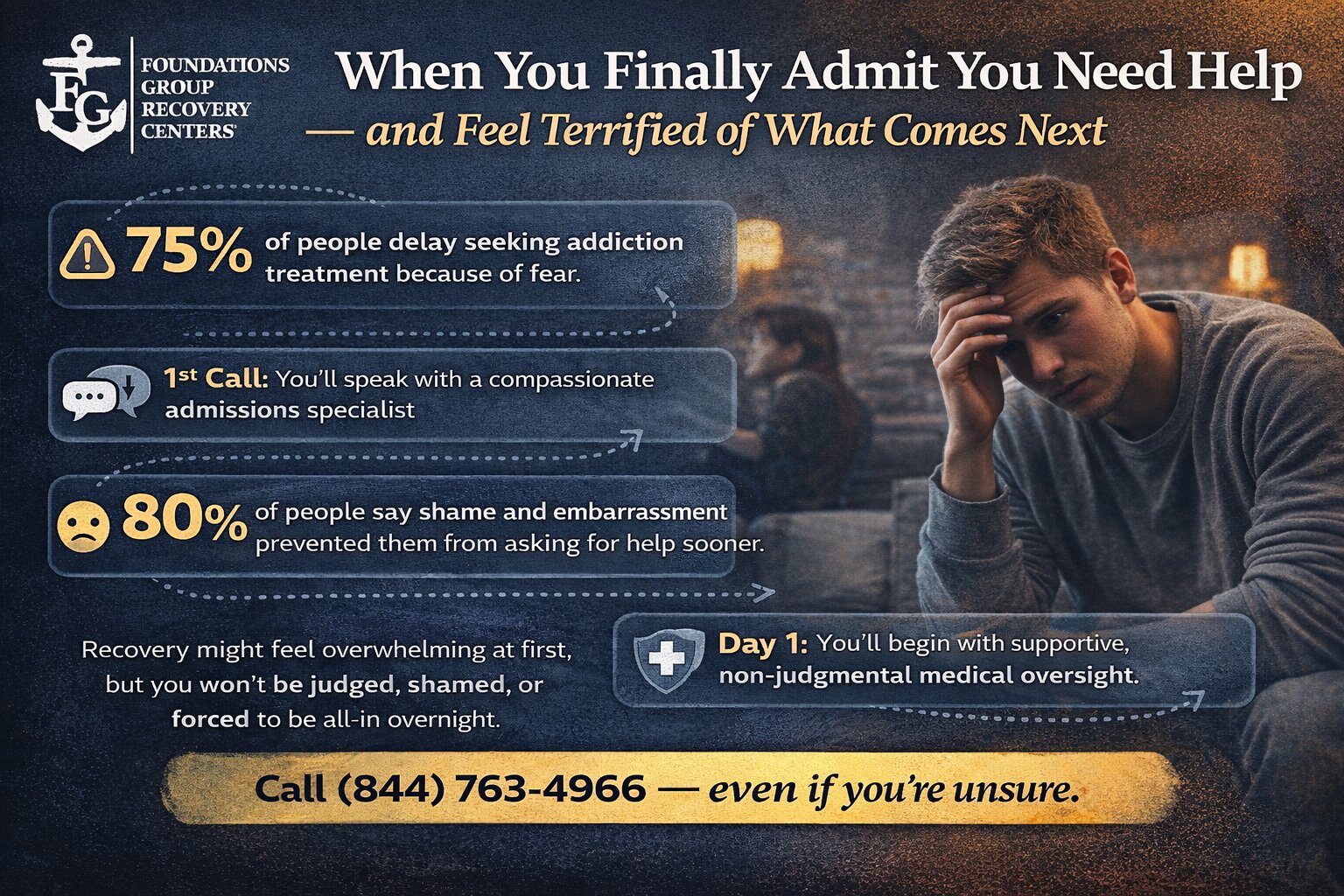
There’s a myth that you have to arrive 100% committed.
In truth, willingness can be small.
Some clients come in saying, “I’m not sure this will work.”
Some say, “I’m doing this for my family.”
Some say, “I just need a reset.”
Ambivalence is normal. It’s human.
Part of early treatment is exploring that ambivalence — not shaming it. We talk honestly about what alcohol has given you and what it has taken.
Recovery isn’t about pretending alcohol never served a purpose. It’s about recognizing when the cost becomes too high.
When Shame Starts to Loosen Its Grip
Shame thrives in isolation.
It gets loud when you’re alone at 2 a.m. replaying things you regret.
Something shifts when you sit in a room and hear someone else describe the exact same pattern — the hiding, the bargaining, the promises, the fear.
You realize you’re not uniquely broken.
You’re human.
In those moments, shame doesn’t disappear overnight. But it softens.
And softened shame makes change possible.
What If I’ve Tried Before?
If you’ve attempted to cut back or stop on your own and it didn’t stick, that doesn’t mean you failed.
It means willpower alone wasn’t enough.
Alcohol changes brain chemistry. It impacts stress response, impulse control, and reward pathways. Treatment isn’t about trying harder. It’s about adding structure, accountability, medical support, and therapeutic insight.
Many of our strongest long-term recoveries began after someone said, “I tried on my own. I couldn’t do it.”
There’s no penalty for coming back. Only support.
Life Doesn’t End Here — It Expands
One of the quiet fears people carry is this:
What will my life even look like without drinking?
Will dinners feel awkward?
Will vacations feel flat?
Will stress feel unbearable?
In early recovery, everything can feel amplified. That’s normal. Your nervous system is recalibrating.
But over time, most people report something surprising:
Moments feel clearer.
Conversations feel more connected.
Mornings feel lighter.
Sobriety doesn’t shrink your world. It gives it sharper edges.
A Note About Privacy
We understand concerns about confidentiality.
Your treatment is protected by strict privacy laws. Employers, neighbors, and extended family do not get notified. Many clients continue working while in structured outpatient care.
You can get help without your entire world knowing.
FAQ: Questions First-Time Clients Ask
How long does treatment last?
Length varies depending on individual needs. Some people begin with medical stabilization and transition into several weeks of structured care. Others start with outpatient support. Your plan is personalized based on your health, history, and goals.
What if I’m not sure I’m “bad enough” to need help?
You don’t have to hit a dramatic rock bottom. If alcohol is causing stress, health issues, relationship strain, or loss of control, that’s enough to warrant support. Early intervention often leads to better outcomes.
Will I be forced to stop forever?
We don’t coerce. We educate, support, and explore. Recovery is a collaborative process. The goal is safety and sustainable health — not punishment.
What happens if I relapse during treatment?
Relapse is addressed clinically, not morally. If it happens, we reassess your plan and strengthen support. Shame doesn’t fix relapse. Structure and honesty do.
Can I keep working while in treatment?
Many clients participate in structured daytime or multi-day weekly treatment while continuing work responsibilities. We help design a schedule that supports both recovery and real-life obligations when appropriate.
Is alcohol withdrawal dangerous?
It can be. That’s why medical assessment is critical. Severe withdrawal can involve serious symptoms, and having clinical oversight dramatically improves safety and comfort.
What if my family doesn’t understand?
Family education is often part of care. We help loved ones understand what addiction is — and what recovery actually requires. You don’t have to explain it alone.
The Quiet Relief After You Decide
There’s a moment after you commit — even tentatively — when something inside you exhales.
The problem isn’t solved yet. But you’re not carrying it alone anymore.
If you’re in Massachusetts and thinking about alcohol addiction treatment but feel overwhelmed by what it might mean, we invite you to take one small step.
Not a lifelong vow. Not a dramatic declaration.
Just a conversation. Get help that’s close to home, Proudly serving in Falmouth, Barnstable County, MA.
Call (844)763-4966 or visit our page to learn more about our alcohol addiction treatment services in Massachusetts.