
Detox Isn’t What You’ve Seen on TV
Let’s be real: when you hear “detox,” your brain might immediately jump to some horror show. Hospital beds. People screaming. Cold sweats and trauma music playing in the background. Or maybe worse—you think of it as something only for “serious addicts,” not someone like you who “just wants a break.”
Here’s the truth: detox isn’t a punishment, and it doesn’t have to be terrifying.
If you’re young and sober (or thinking about it), feeling like the odd one out is normal. You’re navigating a world where parties, casual drinking, and substance use are seen as just “what people our age do.” So even the idea of needing help—like detox—can feel extra weird or intense.
But a lot of what young people believe about detox is based on myths, fear, or what they’ve seen online—not reality. Let’s untangle that. Whether you’re already sober or just starting to think about it, here are six of the most common myths about alcohol and drug detox—and what actually goes down.
1. Myth: Detox Means You’ve Hit Rock Bottom
Reality: Detox isn’t about how “bad” you are—it’s about making withdrawal safer and more supported.
You don’t need to be living under a bridge or have some huge crash to benefit from detox. If your body’s gotten used to using a substance—whether that’s alcohol, weed, pills, or something else—stopping suddenly can throw it into chaos.
That’s not weakness. That’s biology.
Detox is about managing that process safely. It’s for people who care enough about their life and future to say, “I want to feel better. I want help doing that.”
And honestly? That’s strength.
2. Myth: You’ll Be Totally Alone
Reality: Good detox programs don’t just treat your body—they support you as a whole person.
One of the most common fears is, “What if I’m the youngest one there?” or “What if no one gets me?” But detox programs—especially in areas like Mashpee and nearby towns like Falmouth—often have a mix of people, including other young adults.
More importantly, you won’t be alone emotionally. Staff are trained to help, not judge. You’ll probably meet nurses who’ve seen it all and counselors who can spot your anxiety before you even name it. You may even connect with a peer or two who also feels awkward, scared, and uncertain—but who showed up anyway.
And that alone can feel like a huge exhale.
3. Myth: Detox = You’re Cured
Reality: Detox is the start—not the finish line—of recovery.
Think of detox like cleaning your windshield. It’s not the whole road trip—it just makes it possible to see where you’re going.
Alcohol and drug detox clears your system of substances, but it doesn’t magically heal what made using feel necessary in the first place. That takes time, tools, and usually some form of ongoing treatment like IOP (intensive outpatient), therapy, or peer support groups.
But you can’t get to those next steps if your brain and body are still in panic mode. Detox helps you get stable enough to think clearly again—and that’s where real change starts.
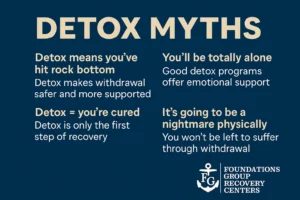
4. Myth: It’s Going to Be a Nightmare Physically
Reality: Detox can be uncomfortable—but you won’t be left to suffer.
Yes, withdrawal can suck. But detox done right is not about white-knuckling it through misery. At medical detox programs like those in Barnstable County, you’ll be monitored, supported, and (when necessary) given medications to ease symptoms.
You’re not expected to “tough it out.” You’re expected to be human.
And believe it or not, many people find the worst part isn’t physical withdrawal—it’s the fear of what’s next. Once your body starts to regulate, there’s a weird, quiet space. And that’s when the emotional stuff bubbles up.
But that’s where the real healing begins.
5. Myth: Detox Will Make You Feel Like a Failure
Reality: For a lot of people, detox is the first time they feel seen without having to fake it.
If you’ve been pretending everything’s fine—keeping it together for school, work, family—it can be exhausting. Detox gives you permission to stop pretending for a minute. To say, “Actually, I’m not okay right now.” And to have people not freak out.
In that way, detox isn’t a failure. It’s an act of honesty.
For some people, it’s the first place they feel safe enough to cry. Or sleep. Or ask for water without feeling like a burden.
That kind of safety? That’s healing, even before the therapy starts.
6. Myth: Detox Will Wreck Your Life Plans
Reality: Detox takes a few days. Addiction takes way more.
We get it. You’re in school. You’ve got work. You have stuff going on.
But here’s the truth: addiction eats time. More than a 7-day detox ever will. It steals weekends, creativity, memory, friendships, sleep, health—and sometimes whole years.
Taking a short pause to reset your system isn’t giving up your life. It’s reclaiming it.
Whether you’re in Mashpee or nearby places like Falmouth, MA, alcohol and drug detox is designed to be a starting point. Not a life interruption.
So… What Does Alcohol and Drug Detox in Massachusetts Look Like?
It’s a mix of medical care, emotional support, and practical help. At Foundations Group Recovery Center in Mashpee, detox is customized for each person—but some things stay the same:
- You’re medically monitored to make sure your body stays safe
- You’re given support to handle cravings and withdrawal
- You’re not pressured to “figure it all out” right away
- You get space to breathe, eat, rest, and just be
And if you want to keep going after detox? We help you figure out what next steps make sense for you. IOP? Therapy? Sober housing? It’s all on the table. But no pressure.
Just options.
Detox FAQs (Real Questions from Young People)
How long does detox take?
Usually 3–7 days, depending on the substance and how your body reacts. For alcohol or benzos, it can be on the longer side due to safety risks. Weed and some other substances might be shorter, but emotional support still matters.
Do I have to stay overnight?
Most medical detox programs are inpatient for safety reasons. That means you’ll stay for a few nights and get full support. It’s not a lockdown—it’s protection during a vulnerable moment.
What if I don’t think I’m “bad enough” for detox?
If you’ve tried to quit and felt sick, anxious, shaky, or overwhelmed, that’s enough. Detox isn’t about how “bad” things look on the outside—it’s about how your body and mind respond when you stop using.
Will people judge me?
Nope. Honestly? Most of the people around you will be so wrapped in their own fears, they won’t have time to judge. And staff? They’ve seen it all. You crying over your phone or sleeping for 12 hours won’t faze them. That’s part of the process.
What happens after detox?
That’s up to you. Some people go home and do outpatient therapy. Others step into a longer program. Foundations offers care coordination to help figure out the next move without pressure. Detox opens the door—but you decide what’s next.
You Don’t Have to Figure This Out Alone
If you’re young and sober—or thinking about it—it’s okay to feel weird, unsure, or even scared. But detox doesn’t have to be a nightmare. And you don’t have to navigate it alone.
Call (844)763-4966 or visit Foundations’ Detox Program in Mashpee to learn more about what your options are. Whether you’re in Mashpee, Barnstable County, or just figuring it out—we’re here when you’re ready.
No pressure. No shame. Just support