
The moment many parents describe is painfully quiet.
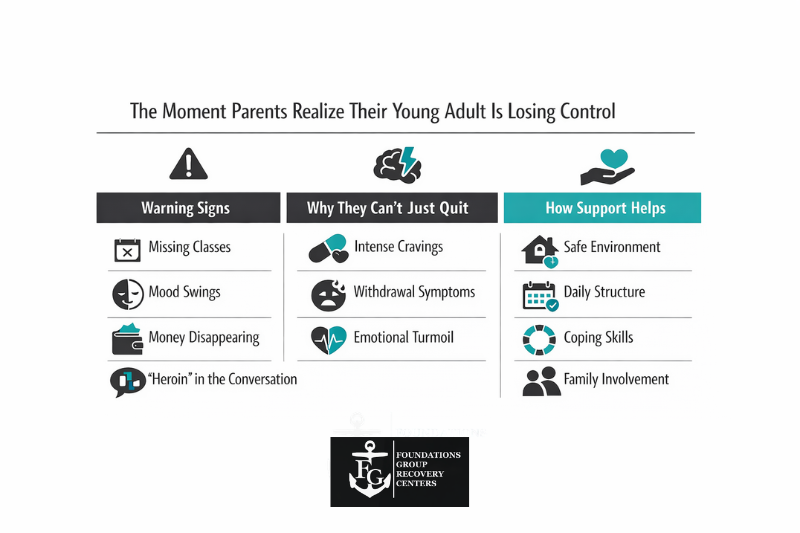
You notice changes. Missed classes. Mood swings. Money disappearing. A name you hoped you’d never hear heroin suddenly enters the conversation.
If you’re trying to understand what could actually help your child right now, learning about options like heroin addiction treatment can be an important first step.
You don’t need to have every answer. But it helps to know what support can look like when a young adult is in crisis.
The Fear Parents Often Carry in Silence
Many parents blame themselves first.
Did I miss something?
Was there a moment I should have intervened?
But addiction rarely begins with a single mistake. For many young adults, opioid use grows out of stress, pain, trauma, untreated mental health issues, or social pressure. Sometimes it develops quietly until suddenly everything feels urgent.
The truth is this: love did not cause this. And love is still one of the most powerful forces that can help someone recover.
Why Young Adults Often Struggle to Stop on Their Own
Heroin changes the brain quickly. For young adults whose brains are still developing, the pull can be even stronger.
Many truly want to stop. They may promise they will.
But withdrawal symptoms, cravings, and emotional instability make it incredibly hard to break the cycle without structured support.
This is where professional care becomes less about “punishment” and more about stabilization. Like scaffolding around a damaged building, it helps hold things together while healing begins.
What Families Often Notice When Real Support Begins
Parents frequently say the first shift they see is stability.
Not perfection. Not instant sobriety. But signs that their child is starting to breathe again.
Some early changes families notice include:
- Sleep returning to a normal pattern
- Emotional regulation improving
- Fewer crises and chaotic situations
- More honest communication
- A sense of routine returning to daily life
These changes matter because recovery isn’t just about stopping a substance. It’s about rebuilding the parts of life addiction disrupted.
Why Structure Matters for Young Adults
Young adults often benefit from structured daytime care or multi-day weekly treatment that keeps them connected to support throughout the week.
This kind of environment helps them:
- Stay accountable without feeling trapped
- Work through the reasons behind their substance use
- Learn coping skills they may never have been taught
- Reconnect with goals that addiction pushed aside
Many parents say their child begins to look more like themselves again not overnight, but gradually.
The Role Families Play in the Healing Process
Parents often ask, “Should I step back or stay involved?”
The answer is usually both.
Healthy treatment programs help families learn how to support recovery without carrying the entire burden themselves. That might include family therapy, education about addiction, and guidance on boundaries.
One parent once described it this way:
“For the first time, I wasn’t the only one trying to hold my child up.”
You deserve that support too.
Hope Often Returns in Small Moments First
Recovery rarely begins with a dramatic turning point.
More often, it starts with smaller moments:
A young adult showing up to a session when they didn’t want to.
A conversation that’s a little more honest than the last one.
A week that feels slightly less chaotic.
These moments may seem small, but they’re signs of momentum.
And momentum can change everything.
When It’s Time to Explore Help
If your child is caught in heroin use, waiting for things to “get better on their own” can be incredibly painful.
Programs designed for heroin addiction treatment focus on stabilizing the immediate crisis while helping young adults rebuild their lives step by step.
You don’t have to figure this out alone.
Call 844-763-4966 or explore our Heroin Addiction Treatment services to learn how Foundations Group Recovery Center supports families facing opioid addiction.