
Recovery doesn’t end the day someone leaves treatment. For many people, the real emotional work begins months or years later—when life gets quiet again.
If you’ve been sober for a while but feel disconnected lately, you’re not alone. Staying connected to alumni support can be one of the most powerful ways to keep your recovery alive—especially after completing a program like heroin addiction treatment.
When the Early Momentum Fades
In the first year of sobriety, everything feels intense. Meetings are frequent. People check in often. Every milestone matters.
But over time, life settles. Work resumes. Relationships evolve. The urgency fades.
That’s when some alumni start to feel something they didn’t expect: distance. Not from sobriety—but from the community that helped them build it.
It’s not failure. It’s a common stage of long-term recovery.
The Quiet Drift That Happens to Many Alumni
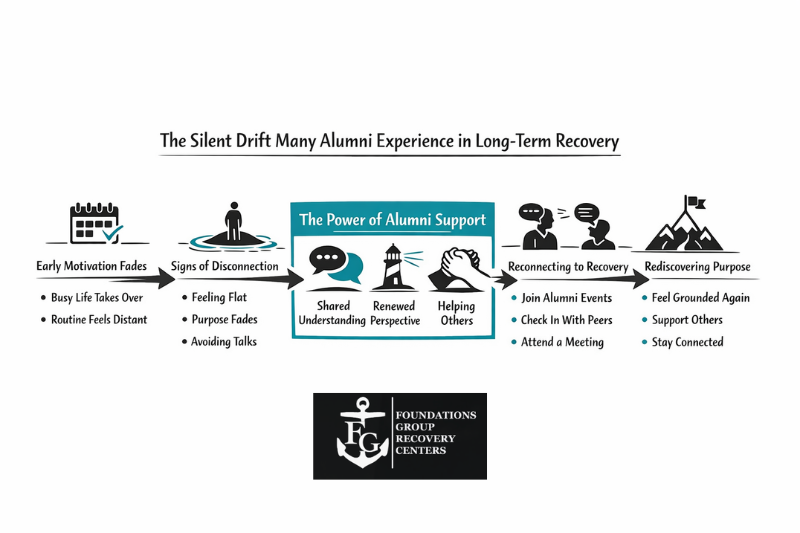
I’ve worked with many people who stayed sober for years but gradually stopped attending alumni events, recovery groups, or check-ins.
At first, it makes sense.
Life gets busy. Things feel stable. You don’t want your identity to revolve around addiction forever.
But recovery thrives on connection. Without it, people sometimes notice subtle shifts:
- Feeling emotionally flat
- Losing the sense of purpose recovery once gave
- Avoiding conversations about the past
- Questioning whether sobriety still “means” something
None of these signals mean someone is about to relapse. They simply mean the connection needs refreshing.
Alumni Support Isn’t About Starting Over
Some long-term alumni hesitate to reconnect because they worry it means they’re struggling again.
That’s not how alumni support works.
Reaching back into the community is less like restarting treatment and more like returning to a familiar gym. The muscles of recovery are still there—you’re just strengthening them again.
Many alumni discover that reconnecting actually deepens their recovery in ways early sobriety never could.
Why Community Still Matters Years Later
Addiction often thrives in isolation. Recovery thrives in relationship.
Even years later, alumni communities offer things that are hard to find elsewhere:
Shared language. People who understand the emotional terrain of recovery without explanation.
Perspective. Someone with ten years sober can remind a two-year alum that plateaus happen.
Purpose. Helping newer alumni often reconnects people to why they chose sobriety in the first place.
Recovery isn’t just about staying sober. It’s about staying connected to meaning.
The Surprising Role of Helping Others
One of the most powerful shifts for long-term alumni happens when the role changes—from receiving help to offering it.
I’ve seen alumni walk into a meeting feeling burned out and leave energized after simply listening to someone in early recovery.
Why?
Because service reminds people of how far they’ve come.
Sometimes the best way to reconnect with your own recovery is to show up for someone else’s.
Reconnection Doesn’t Have to Be Dramatic
You don’t need to make a big announcement or return all at once.
Reconnection can be simple:
- Joining an alumni event
- Checking in with a counselor who remembers your story
- Attending a single recovery meeting again
- Talking with another alum about where life is now
Small steps often reopen doors people thought had quietly closed.
Recovery communities are built to welcome people back—no explanation required.
Recovery Is a Long Conversation
Sobriety isn’t a single decision you made years ago. It’s an ongoing conversation with yourself, your community, and your future.
Sometimes that conversation grows quiet. That doesn’t mean it’s over.
It may just be time to reconnect with the voices that helped you find your way in the first place.
If you or someone you love is considering support again, learning more about professional care can be a meaningful first step.
Call 844-763-4966 or visit our Heroin Addiction Treatment services to learn more about our Heroin Addiction Treatment services in Massachusetts.