
The first time someone goes to treatment, there’s often a quiet hope underneath the fear: maybe this will fix everything.
When someone comes back a second time, the hope usually feels smaller. Sometimes it’s gone entirely.
But from where I sit as a clinician, the second attempt often looks very different—and not in the way people expect. If you’ve been wondering whether trying again is even worth it, it may help to understand what actually changes the second time around.
If you’re exploring options, you can learn more about our support for heroin recovery in Massachusetts and what the process can look like today.
The First Time Often Comes With a Lot of Pressure
Many people walk into their first program believing they have to get it right immediately.
Family expectations. Legal pressure. Fear of consequences.
Sometimes even the quiet belief that this is their “one shot.”
That kind of pressure can make recovery feel like a test instead of a process.
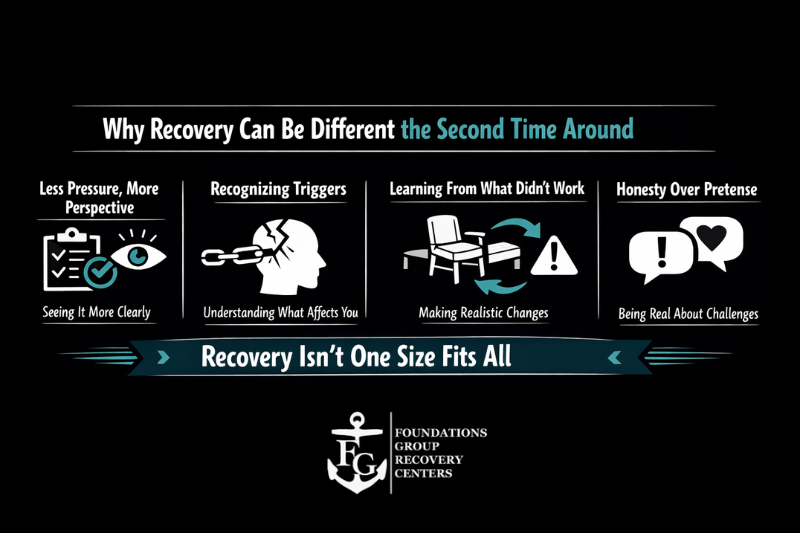
When someone returns later, something subtle shifts. They’ve already seen what the struggle actually looks like. The fantasy of instant change is gone but that realism can make the work more honest.
And strangely, honesty is often where progress begins.
You Understand Your Triggers Better
The first time in recovery, people are usually learning a new language.
Triggers. Boundaries. Cravings. Emotional regulation.
It’s a lot.
After a relapse, those concepts aren’t theoretical anymore. They’re personal.
Someone might say:
“I thought stress was my trigger. But it wasn’t stress. It was loneliness.”
Or:
“I realized I’m most vulnerable right after things start going well.”
That kind of awareness changes how someone approaches the work.
Skepticism Can Actually Be Useful
A lot of people come back saying something like:
“I already tried this. It didn’t work.”
I understand that feeling.
But skepticism isn’t always a barrier, it can be a filter. The second time around, people tend to pay closer attention to what actually helps them instead of trying to follow every suggestion perfectly.
They ask better questions.
They notice what sticks.
They stop pretending something is working when it isn’t.
That honesty can create a stronger foundation than forced optimism ever could.
You Know What Didn’t Work Last Time
In treatment conversations, one of the most useful questions we ask returning clients is simple:
“What fell apart after you left?”
Not to blame anyone.
But to understand.
Maybe it was isolation.
Maybe it was going back to the same environment.
Maybe it was untreated anxiety that slowly built up until substances felt like relief again.
When people can name the cracks in the first plan, the second plan becomes more realistic.
Recovery is rarely about perfection. It’s about adjusting the structure until it can actually hold someone’s life.
The Shame Is Real but It Doesn’t Have to Be Permanent
Relapse carries a heavy emotional weight.
People often return feeling like they failed their family, their counselors, or themselves.
But the truth most people don’t hear enough is this:
Relapse doesn’t erase the work you already did.
The coping skills you learned? They’re still there.
The insight you gained? Still there.
The moments of clarity? Still there.
Recovery doesn’t restart from zero. It restarts from experience.
The Second Attempt Often Comes With More Honesty
The first time someone enters treatment, they may still be protecting parts of the story.
That’s normal.
By the time someone returns, those walls are often thinner.
I’ve had clients say things the second time they never said the first:
“I didn’t tell anyone how bad it actually was.”
“I was still hanging out with people who were using.”
“I didn’t think sobriety would be this lonely.”
Those conversations, raw, uncomfortable, real, are often where meaningful change begins.
Recovery Is Rarely a Straight Line
One of the most misleading ideas about addiction is that treatment should work the first time.
For some people, it does.
For many others, recovery is more like learning to walk again after an injury. There may be setbacks. Adjustments. Frustrating starts and stops.
But each attempt carries information the last one didn’t.
And sometimes the difference between the first and second attempt is simply this:
The person understands themselves better.
That knowledge matters more than people think.
If you’re considering getting help again or wondering whether trying again would even matter, you’re not alone. The door to support is always open.
Call (844)763-4966 or visit our Heroin Addiction Treatment services in Massachusetts to learn more.