
From the outside, it doesn’t look like a crisis.
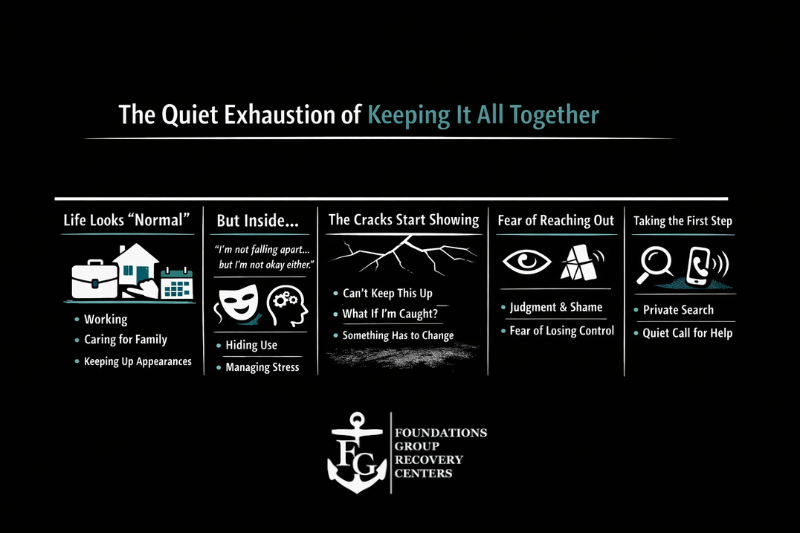
You’re working. Showing up. Paying bills. Returning calls. Life appears intact—even successful.
But behind the routine, something else is happening. And eventually, the weight of holding it all together becomes too heavy to carry alone.
If that’s where you are, you’re not the only one who’s walked this path.
Within the first steps of getting help, many people begin by quietly researching options like heroin addiction treatment in Massachusetts. Not because everything has collapsed—but because they can feel it getting close.
The Life That Still “Works”
High-functioning addiction rarely looks like what people expect.
You may still:
- Go to work every day
- Answer texts and emails
- Take care of family responsibilities
- Keep up appearances socially
From the outside, it looks stable.
Inside, it feels like balancing plates that could crash at any moment.
Many people in this position carry a quiet thought they never say out loud:
“I’m not falling apart… but I’m not okay either.”
The Private Cost No One Sees
Keeping everything running takes enormous energy.
There’s the planning. The hiding. The mental math. The constant promise that tomorrow will be different.
Over time, that effort becomes exhausting.
Not dramatic. Not chaotic.
Just quietly draining.
People often describe it like running a second full-time job no one else knows about.
When the Cracks Start Showing
For high-functioning individuals, the turning point rarely looks like a rock-bottom moment.
Instead, it often sounds like:
- “I can’t keep doing this forever.”
- “I’m tired of managing it.”
- “What happens if someone finds out?”
Sometimes it’s a health scare. Sometimes a close call. Sometimes just waking up one morning and realizing the routine isn’t sustainable anymore.
The moment isn’t always loud.
But it’s honest.
The Fear of Being Seen
One of the biggest barriers to asking for help is fear.
Fear that people will think you’re not who they believed you were.
Fear that everything you’ve built will collapse.
Fear that treatment means losing control of your life.
But many people discover something unexpected when they finally reach out:
The goal isn’t to take your life away.
It’s to help you get it back.
What High-Functioning People Often Need
People who have been holding everything together usually respond best to care that respects their reality.
That means support that understands:
- The pressure of professional and family responsibilities
- The fear of stepping away from daily life
- The need for privacy and dignity
- The emotional exhaustion behind the mask of stability
When treatment meets people where they are—not where stereotypes say they should be—real progress becomes possible.
The Moment Things Begin to Change
For many people, the first step isn’t dramatic.
It’s quiet.
A late-night search.
A private phone call.
A conversation no one else hears.
That small step doesn’t mean everything is falling apart.
Sometimes it means something healthier is beginning.
You don’t have to wait for your life to collapse before deciding you want something different.
If you’re tired of carrying this alone, our team is here to talk confidentially, honestly, and without judgment. Call 844-763-4966 or visit our page about our heroin recovery program to learn more about our Heroin Addiction Treatment services in Massachusetts.