
I didn’t walk into treatment hopeful. I walked in mad, tired, and already convinced it wouldn’t work.
Maybe you get that. Maybe you’ve tried once—or more than once—and left feeling like nothing changed. Or like everything changed, but only for a minute, and then real life came back and knocked you flat again.
If that’s you, this isn’t a pitch. It’s just the truth about what happened when I finally dropped the fantasy that treatment would “fix me”—and started actually showing up for myself instead.
And yes, this started at a place like Foundations Group Recovery Center. But it wasn’t magic. It wasn’t easy. And it didn’t always feel good. It was just real—and real was what I needed.
I Showed Up Wanting to Be Fixed
When I first went to treatment, I brought a quiet list of expectations I didn’t say out loud.
Cure me.
Make this easy.
Tell me what to do so I don’t have to figure it out.
Convince me I’m not like the rest of them.
Prove I’m savable.
I didn’t say any of that out loud, but the second nobody handed me a miracle, I folded my arms and thought: See? I knew it. This won’t work for me.
Because if treatment couldn’t fix me immediately, then clearly I wasn’t the problem. Right?
I Had to Unlearn the Fantasy of a Cure
I wanted treatment to be a fast pass to freedom. I thought I’d do 30 days, talk about my feelings, cry once or twice, and come out healed.
But that’s not how it works. Alcohol addiction treatment doesn’t erase you. It gives you tools to start building something different.
When I let go of the idea that I’d be “healed” and started leaning into the work of healing—messy, uncomfortable, imperfect healing—things started to shift.
It wasn’t all at once. It was in moments:
When I craved a drink and told someone instead of disappearing.
When I said, “I don’t know how to do this,” and they didn’t flinch.
When I let someone challenge me, and I didn’t storm out.
Little wins. No fireworks. But they added up.
Treatment Didn’t Save Me—It Let Me Save Myself
Saying “treatment didn’t work” was a shield. It was easier to blame the program than to admit I hadn’t shown up for it.
The second time around, I dropped the shield. I said the thing I didn’t want to admit:
“I’m scared this won’t work, but I don’t know what else to try.”
That was the beginning.
Because what treatment actually gave me wasn’t a fix. It was a structure. A place to be honest. A mirror I couldn’t lie to. A space where I didn’t have to pretend I was okay.
And slowly, that space became a container for growth. Not a fast solution. Not a perfect path. Just enough of a scaffold to start climbing back to myself.
I Got Language for What I Couldn’t Name
Before treatment, I said I had “bad days.” In treatment, I learned that what I called a “bad day” was often shame, or grief, or deep, old anger I never learned to name.
That mattered.
Because if you can’t name what you’re feeling, you can’t work with it. You just numb it. You hide. You lash out. You drink.
Learning how to say:
“I’m anxious.”
“I feel small.”
“I want to escape.”
“I feel like I’m too much.”
—that changed everything.
Language gave me power. It didn’t remove the pain, but it gave me something to stand on instead of sinking in it.
Real Recovery Was More Boring—and More Beautiful—Than I Expected
I thought getting sober meant constant transformation. I thought I’d feel different—more spiritual, more focused, more something.
But most days, recovery was painfully ordinary. Waking up. Going to group. Drinking coffee. Journaling. Texting someone instead of isolating.
Not exciting. But slowly, the shame fog lifted. I started showing up for things—lunches, birthdays, hard conversations. I made eye contact again. I laughed and meant it.
It wasn’t a mountaintop. It was a garden. Small things, tended daily.
I Wasn’t Kicked Out for Being Skeptical
I didn’t become a treatment believer overnight. I rolled my eyes. I skipped a group. I ghosted once and expected to be shamed.
But at Foundations? They didn’t punish me for struggling. They welcomed me back.
And that was huge.
Because one of the biggest fears people have is that they’ll be disqualified. That if they’re not perfectly compliant, they’ll be cast out.
That didn’t happen. Instead, they treated me like someone worth working with—even when I didn’t believe it myself.
If you’re reading this thinking, “I’m too much” or “I blew my shot,” trust me: you didn’t. There’s still a seat for you.
The Real Win Wasn’t Abstinence—It Was Agency
Yes, I’m sober now. But that’s not the headline.
The real headline is this: I trust myself now.
I don’t have to hide. I don’t have to lie. I don’t have to fear who I am without alcohol.
That didn’t come from being cured. It came from doing the work treatment asked me to do—even when I hated it.
And now, I get to live in a body that doesn’t scare me. I get to feel things and stay. I get to love people without bracing for abandonment.
That’s what alcohol addiction treatment actually gave me.
FAQ: For Anyone Who’s Tried Before—and Still Isn’t Sure
What if I’ve already been to treatment and relapsed?
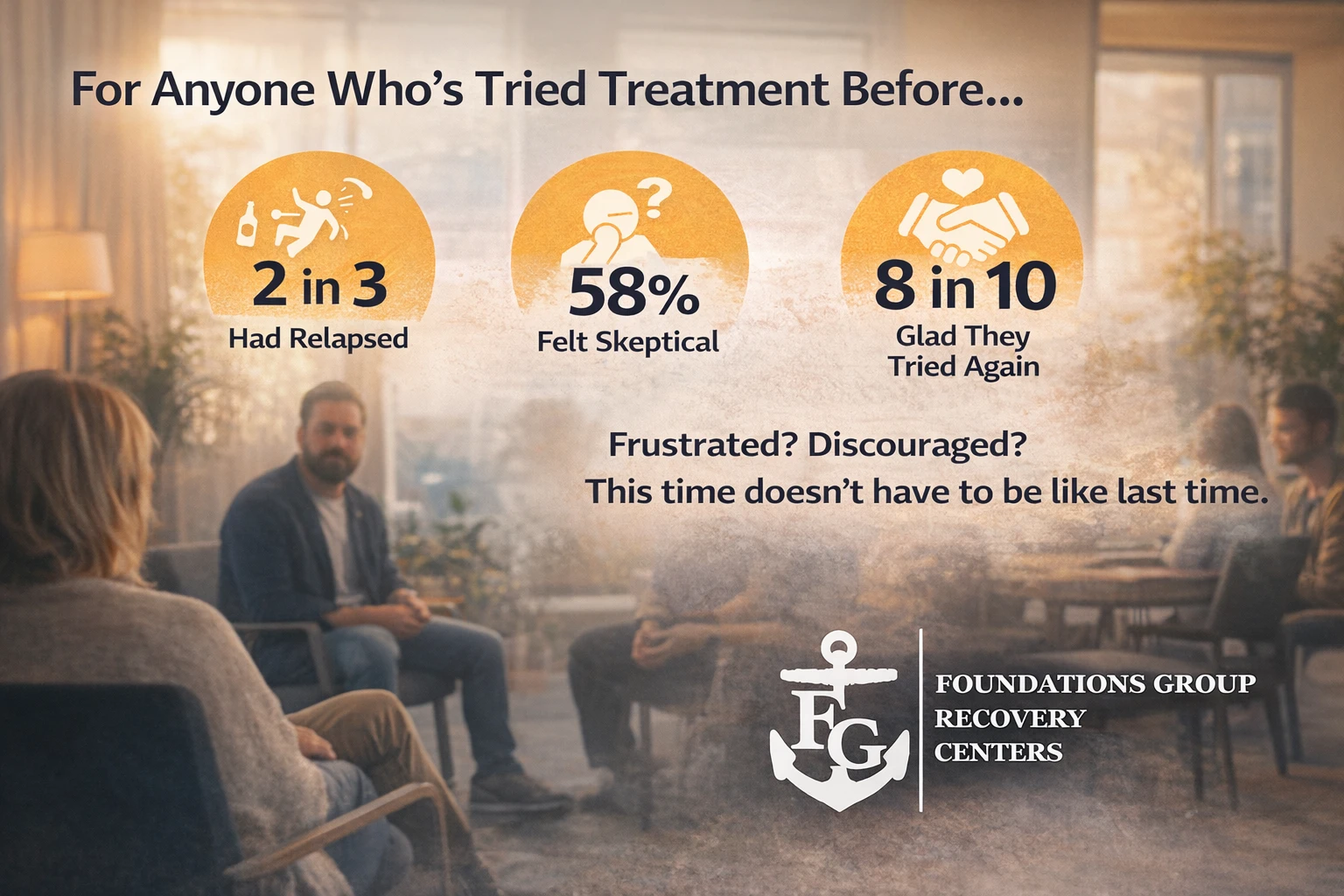
You’re not alone. Many of us don’t stick the first time. Relapse doesn’t erase what you learned—it shows you where support still matters. Coming back isn’t failure. It’s resilience.
Is treatment even worth it if it didn’t work last time?
That depends on what you’re expecting. If you’re looking for a cure, you’ll probably be disappointed again. But if you’re ready for tools, structure, and community—it might be exactly what you need this time.
Can I go back if I left on bad terms?
At Foundations, the door stays open. No shame. No lectures. Just a welcome back and a plan forward. You’re not banned because you struggled. You’re invited to keep going.
What’s different about outpatient treatment?
Outpatient care lets you stay connected to real life while still getting support. You don’t have to pause your whole world to start healing. For many of us, that made all the difference.
I’m still drinking—can I still reach out?
Yes. You don’t have to be sober to ask for help. In fact, most of us weren’t. The first step isn’t perfection. It’s honesty.
One More Time Doesn’t Make You Weak
If you’ve been burned by treatment before, I see you. If you’re angry it didn’t “work,” I’ve been there. If you’re tired of trying and secretly hoping this blog gives you an excuse not to—you’re not alone.
But if there’s even a 1% part of you that’s curious? That still wants to believe change is possible?
Follow that.
You don’t have to believe in the whole thing. Just enough to take one more look.
Alcohol addiction treatment in Barnstable County, Massachusetts isn’t a cure. But it gave me clarity. It gave me people who showed up. It gave me a shot at rebuilding—not my old life, but something way better.
Call (844)763-4966 to learn more about our alcohol addiction treatment in Massachusetts. You don’t have to trust the process. You just have to care enough not to quit on yourself yet.