
Your stomach drops.
Someone cracks a joke about last night’s party. Someone else brings up acid trips like they’re talking about what they ate for lunch. You smile, nod, and feel that familiar flicker behind your ribs: I don’t belong here.
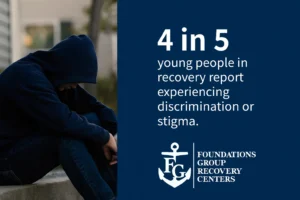
Being young and sober—especially after heroin use—can feel like you’re watching your life through a window. You’re in the room, but not really in it. And when people say “It’s so amazing you’re sober,” it doesn’t always land. Because being the “strong one” can still feel incredibly lonely.
Here’s the truth no one puts on motivational posters: getting clean can feel like losing parts of yourself. Your identity, your confidence, your social life. It’s not a straight line toward feeling better—it’s a whole maze of “who am I now?” moments.
That’s why good treatment matters. Not just to stop using—but to help you stay you.
At Foundations Group Recovery Centers, our heroin addiction treatment programs in Mashpee, MA are built for that exact tension. We don’t expect you to show up already sure of who you are. We’re here to help you rebuild without giving up what makes you, you.
Here are five ways treatment can help protect your identity—not replace it.
1. You’re not handed a “sober script” to follow
Treatment isn’t about turning you into a blank slate. It’s not some personality makeover where you trade in edge, humor, or creativity for a bland version of “healthy.” That fear—the one where you imagine becoming boring or robotic in sobriety—is valid. Especially if your personality used to feel larger-than-life when you were high.
What real treatment offers is the opposite of erasure. It gives you tools to stay grounded while you do the writing.
At Foundations, you’ll work with counselors who know that sobriety is personal. We help you identify what you care about—not just what you’re trying to avoid. That includes your values, your style, your way of moving through the world. Whether you’re loud and expressive or quiet and deep-feeling, there’s room for that.
2. Group therapy helps you realize you’re not the only “weird one”
Let’s talk about group. Because we know—it sounds like a social anxiety nightmare. A room full of strangers? Talking about the darkest parts of your life? Hard pass.
But something happens in those spaces. Not immediately. But slowly. Someone shares something that sounds like your inner monologue. Someone else cracks a joke about cravings that makes the whole room exhale. And suddenly, it’s not so weird to be the “sober one” anymore.
At Foundations Group Recovery Centers, our group therapy environments are designed to be supportive, not performative. You’re not there to impress anyone. You’re there to feel less alone. And if you’re looking for heroin addiction treatment in Falmouth, MA or surrounding areas, know this: there are more people like you out here than you think.
3. Creative therapy and expression aren’t just encouraged—they’re protected
For a lot of young people, substances and creativity were tangled up. Music, writing, late-night deep talks, art—maybe all of it used to flow easier when you were high. Or at least it felt that way. So now, sober, there’s a fear: what if that part of me is gone?
Good treatment won’t dismiss that fear. It’ll make space for it—and offer new ways through it.
We integrate expressive therapies that include art, music, journaling, and other forms of creative processing. This isn’t about making “nice” art. It’s about unlocking what’s under the surface. Your anger. Your grief. Your boredom. Your story.
Creative expression in treatment isn’t extra—it’s essential. Because it’s proof that your voice still works. And you don’t need to be high to hear it.
4. You get to define your “why”
Some people come into treatment with a clear reason: a court case, an overdose, a broken relationship. But many don’t. And even when you do have a reason, it might not feel like enough to keep you going long-term.
Treatment is where you can figure out your real “why”—and build recovery around it.
That might be your music. Your little sister. The version of you that still believes life could be good. It might just be the fact that you’re tired of feeling like a ghost.
When your “why” comes from you, not a checklist, it sticks. It grows with you. And it keeps you grounded when life gets messy—which it will.
5. Sobriety becomes part of your story—not your whole personality
Let’s be real: it’s easy to feel like being sober becomes your whole identity. Like suddenly everything you are is “former addict” or “in recovery.”
But the truth is, good treatment helps you build a life where sobriety is just one part of the story.
At Foundations, we focus on reintegration—how you take what you learn here and use it out there. That includes job skills, school support, peer connections, and yes, learning how to go to a party without spiraling. It’s about making sure sobriety doesn’t box you in. It becomes a foundation—not a costume you wear forever.
If you’re looking for heroin addiction treatment in Barnstable County, MA, we’re here to support that kind of growth. Real recovery, real life.
What People Say
“I thought I’d lose all my friends if I got clean. Turns out, I found better ones.”
– Alumni, 2023
“They didn’t try to fix me. They helped me hear myself again.”
– Client, age 22
“Group was the first place I didn’t feel weird for wanting something different.”
– Former Outpatient Client
FAQs About Heroin Addiction Treatment and Identity
Will treatment make me feel like someone I’m not?
No. If treatment is done right, it helps you feel more like yourself—not less. Recovery isn’t about becoming someone new. It’s about reconnecting with who you are underneath the survival strategies.
I’m scared I’ll lose my personality. Is that normal?
Totally normal—and incredibly common. Especially for people whose personalities felt amplified or “bigger” when using. The truth is, your personality is still there. Treatment helps you learn how to access it sober.
What if I don’t relate to anyone in group therapy?
You might not relate right away. That’s okay. Group isn’t about being identical—it’s about finding shared language for hard things. Most people are surprised by how quickly those connections start to feel real.
Is treatment different for younger people?
Yes. At Foundations, we’re mindful of age and stage of life. Being 22 in recovery is different than being 52. We offer approaches that speak to your stage—socially, emotionally, and developmentally.
Can I still be in treatment if I don’t want to talk about my past?
Absolutely. You don’t need to tell your whole story to start healing. You set the pace. Some people process through art or movement before they ever speak in a group. That’s valid, and we support it.
Ready to Talk?
Call (844) 763-4966 or visit our Heroin Addiction Treatment program in Mashpee, MA to learn how we support young adults in recovery.
You don’t have to pretend to be fine. You don’t have to figure this out alone. And you definitely don’t have to give up who you are to get clean.