
Sometimes the hardest moment in recovery isn’t the first time you ask for help.
It’s the moment you realize you might need to ask again.
Many people quietly look into options like support for opioid recovery after they’ve already tried once before. And when that thought appears, something else tends to appear with it.
Pride.
Not loud pride. Not arrogance. The quiet kind. The kind that whispers:
You should have figured this out already.
You already had your chance.
You can fix this yourself.
That voice can keep someone stuck for months or even years.
But here’s the truth many people eventually discover: returning for help is not failure.
It’s often the moment recovery becomes real.
Step 1: Recognize the Voice That Sounds Like Strength
Pride rarely announces itself as pride.
Instead, it disguises itself as responsibility.
It tells people they should handle things privately. That asking for help again would mean admitting weakness. That if they just try harder, they can regain control on their own.
For people who have already tried recovery once, this voice becomes even louder.
You might think:
They already helped me once. I shouldn’t need to go back.
They’ll think I didn’t take it seriously.
I’ll figure it out myself this time.
But addiction has a way of twisting that determination into isolation.
And isolation is where addiction grows stronger.
Step 2: Notice How Much Energy It Takes to Manage It Alone
Many people spend an enormous amount of energy trying to control opioid use without outside help.
They set rules.
Only weekends.
Only certain doses.
Only when stress gets bad.
For a while, those rules might work.
But addiction rarely respects boundaries created by willpower alone. Over time, the rules become harder to maintain.
Soon the mental calculations start filling more and more of the day.
Do I have enough left?
Can I stretch this until tomorrow?
Will I feel okay at work?
Living this way can feel like trying to keep a spinning plate balanced on a stick. It requires constant attention.
And eventually, something slips.
Step 3: Understand That Recovery Is Rarely a Straight Line
Many people believe recovery should happen once and stay fixed forever.
But real recovery stories rarely look that simple.
People grow. They learn. They discover deeper emotional struggles they didn’t know were there. Life brings new stress, loss, and unexpected challenges.
For many individuals, the first attempt at recovery opens the door.
The second attempt helps them understand themselves more deeply.
The third attempt is where things finally click.
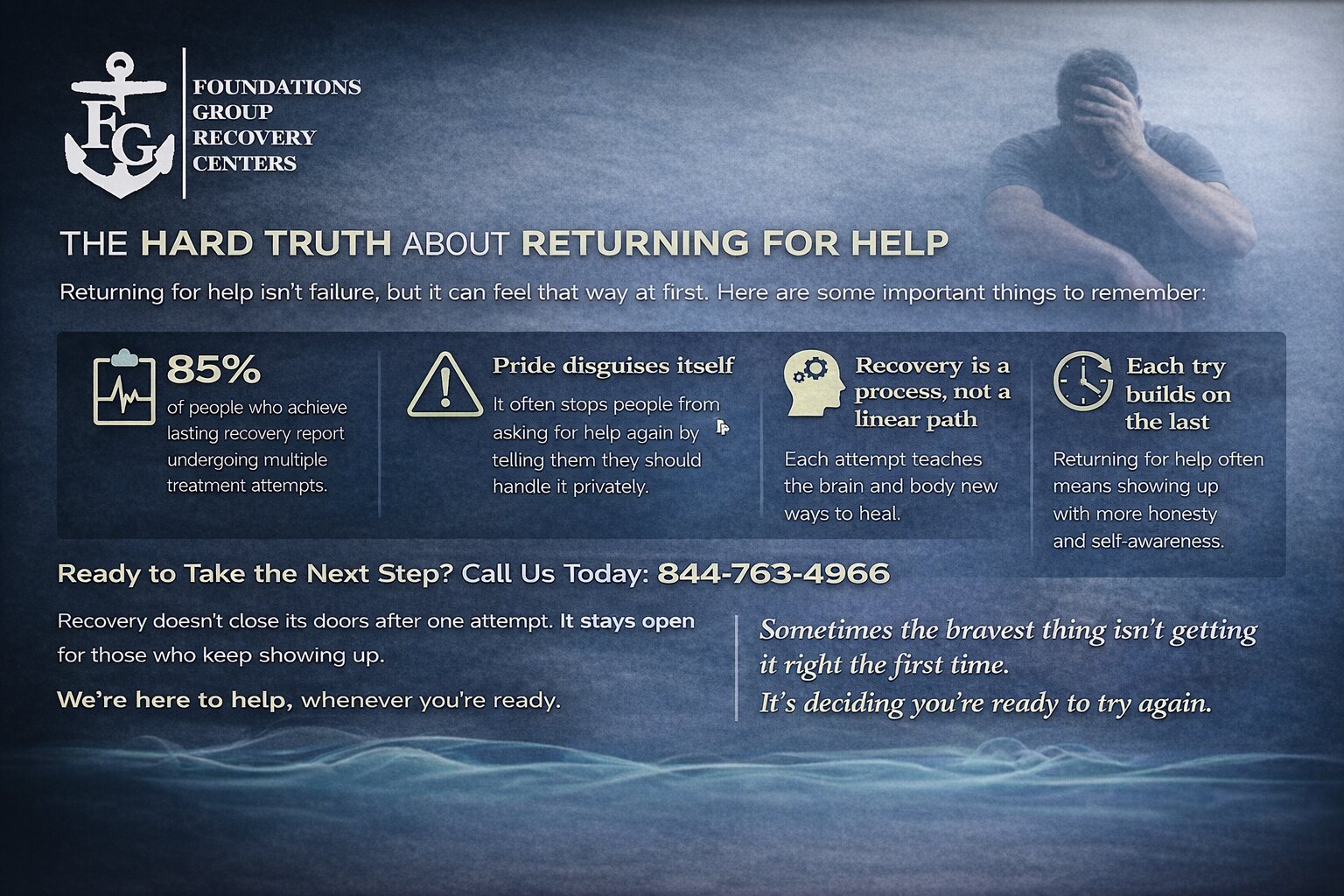
This is not unusual. In fact, it’s extremely common.
When someone returns for help, it doesn’t erase the progress they made before. It builds on it.
Every step forward teaches the brain and body something new about how to live differently.
Step 4: Replace Shame with Curiosity
Shame keeps people trapped in silence.
It convinces them that relapse means something is wrong with them as a person. That they lack discipline. That they wasted their opportunity.
But curiosity asks a much more useful question:
What actually happened?
Maybe stress increased at work.
Maybe anxiety or depression resurfaced.
Maybe certain triggers weren’t fully understood yet.
Recovery is often about learning patterns.
Curiosity turns relapse from a verdict into information.
And information makes change possible.
Step 5: Remember That Recovery Professionals Expect This
Many people avoid returning for help because they imagine being judged.
They picture uncomfortable conversations or disappointed expressions from staff.
But professionals who work in recovery understand something deeply important.
Addiction affects the brain’s reward system, impulse control, and stress response. Healing those systems takes time, and it often takes multiple attempts.
When someone reaches out again, the reaction most professionals feel is relief.
Not frustration.
Relief that the person didn’t disappear completely.
Relief that they’re still trying.
Step 6: Understand That Starting Again Can Be Different
One of the surprising things people discover when they return to support is that the experience often feels different the second time.
The first time around, everything can feel unfamiliar and overwhelming.
The second time, people often arrive with more honesty.
They know where things became difficult. They know which situations were hardest. They have a clearer understanding of what they need.
That awareness can make recovery work deeper and more effective.
Many individuals who begin opiate addiction treatment again report that the second attempt feels more grounded because they’re approaching it with more self-understanding.
Step 7: Take the Smallest Step Possible
Pride often turns recovery into an all-or-nothing decision.
It tells people they must commit to a complete life overhaul before asking for help.
But recovery usually begins much smaller than that.
One conversation.
One question.
One phone call.
That first step doesn’t require certainty. It only requires willingness to explore the possibility of something different.
And once that first step happens, everything else becomes easier.
Step 8: Give Yourself Permission to Start Again
There’s a quiet truth about recovery that doesn’t get talked about enough.
Starting again is powerful.
Every time someone chooses to reach out after struggling, they’re choosing honesty over secrecy. They’re choosing their future over their pride.
And that decision often becomes the moment where real healing begins.
Recovery doesn’t belong only to the people who get it perfect the first time.
It belongs to the people who keep showing up.
Frequently Asked Questions
Is it common for people to return to treatment more than once?
Yes. Many individuals experience relapse or setbacks before achieving long-term stability.
Addiction changes the brain’s reward and stress systems, which means recovery often involves learning and adjustment over time. Returning for help is a normal part of many successful recovery journeys.
Does relapse mean treatment failed?
No.
Relapse usually means additional support, different strategies, or deeper emotional work may be needed. Many people build lasting recovery after returning for help with a clearer understanding of their triggers and needs.
Why does pride make it harder to ask for help again?
Pride often convinces people that they should solve their problems independently. It can also create fear of judgment or embarrassment after relapse.
Recognizing this internal voice can help people move past it and reach out for support.
What if I’m not sure I’m ready to commit to treatment again?
You don’t need to have everything figured out to start a conversation.
Many people begin by asking questions, learning about available options, or speaking with a professional about their concerns.
Even small steps toward support can make a big difference.
Can recovery still work if I’ve struggled before?
Absolutely.
Many people who achieve lasting recovery have experienced setbacks along the way. Each attempt often provides valuable insight that strengthens the next stage of the process.
How do I take the first step if I feel embarrassed?
Remember that treatment professionals work with people who are facing these exact struggles every day.
Their goal is not to judge, but to help. A simple phone call or conversation can be the first step toward rebuilding stability and support.
You Don’t Have to Carry This Alone
If pride has been holding you back from reaching out again, you’re not the only one who has felt that way.
But recovery doesn’t close its doors after one attempt.
It stays open. Get help that’s close to home, Proudly serving in Barnstable County, MA.
If you’re ready to take the next step, call 844-763-4966 or visit our opiate addiction treatment services to learn more about our opiate addiction treatment services in Massachusetts.
Sometimes the bravest thing someone can do isn’t getting it right the first time.
It’s deciding they’re ready to try again.