
If you’re here, it probably means your child just entered detox—or is about to—and your heart is in your throat.
You might be running on adrenaline and sleep deprivation. You might be checking your phone every few minutes, unsure whether you want it to ring or stay silent. You may be feeling both relief and terror in the same breath.
This is what the first 72 hours of alcohol and drug detox often looks like—not just for your loved one, but for you as a parent. You’re not failing for being scared. You’re not overreacting for wanting to understand what’s next.
And you’re absolutely not alone.
Here’s what our alcohol and drug detox program in Mashpee, MA offers during this crucial time—for your child and for your family.
Why These First 72 Hours Matter So Much
Detox is the doorway—not the destination.
It’s the moment when someone who’s been living under the weight of substances finally puts the brakes on, even if just for a moment. It’s not glamorous. It’s rarely dramatic. It’s more often a quiet surrender—or a tired, “Fine, I’ll go”—that marks the beginning of real change.
But those first 72 hours? They’re critical.
Not just because the body is adjusting. But because this is when fear, shame, discomfort, and withdrawal all hit at once. The emotional temperature is high, even if your loved one seems shut down.
This is also the moment your child is most vulnerable—to relapse, to walking out, to doubting themselves. It’s the moment they need the most structured, compassionate, nonjudgmental support possible.
First Few Hours: Stabilization and Medical Intake
When your child arrives at a detox facility like Foundations, the first priority is medical stabilization. That means:
- Monitoring vitals and hydration
- Assessing for dangerous withdrawal symptoms (like seizures, delirium tremens, or rapid heart rate)
- Creating a personalized detox plan based on substance use history
- Beginning withdrawal management with medications, if appropriate
Clients may be groggy, numb, anxious, or emotionally volatile. That’s expected.
We meet them gently, without judgment. Some arrive angry. Some barely speak. Some joke or perform. All are scared—even if they won’t say it out loud. Our staff is trained to see beneath the surface and respond with both medical precision and emotional steadiness.
For parents, this is often the hardest moment to step back. But it’s also when professional support matters most.
24–48 Hours: The Peak of Withdrawal Symptoms
This window is typically the most physically uncomfortable—especially for clients withdrawing from alcohol, opioids, or benzodiazepines.
Common symptoms may include:
- Sweating, chills, nausea
- Shaking or restlessness
- Anxiety or agitation
- Headaches and light/sound sensitivity
- Sleep disturbance
- Cravings or emotional lability
We use medications, calm environments, and trauma-informed care to reduce suffering and prevent medical complications. But it’s still hard. Detox isn’t easy, and your child may say things that frighten you—or trigger guilt.
They might call and beg to leave. They might lash out. Or they might go completely silent.
Please know: this doesn’t mean detox isn’t working. It means detox is working through them. Our team is trained to help clients ride these waves without shame—and without giving up.
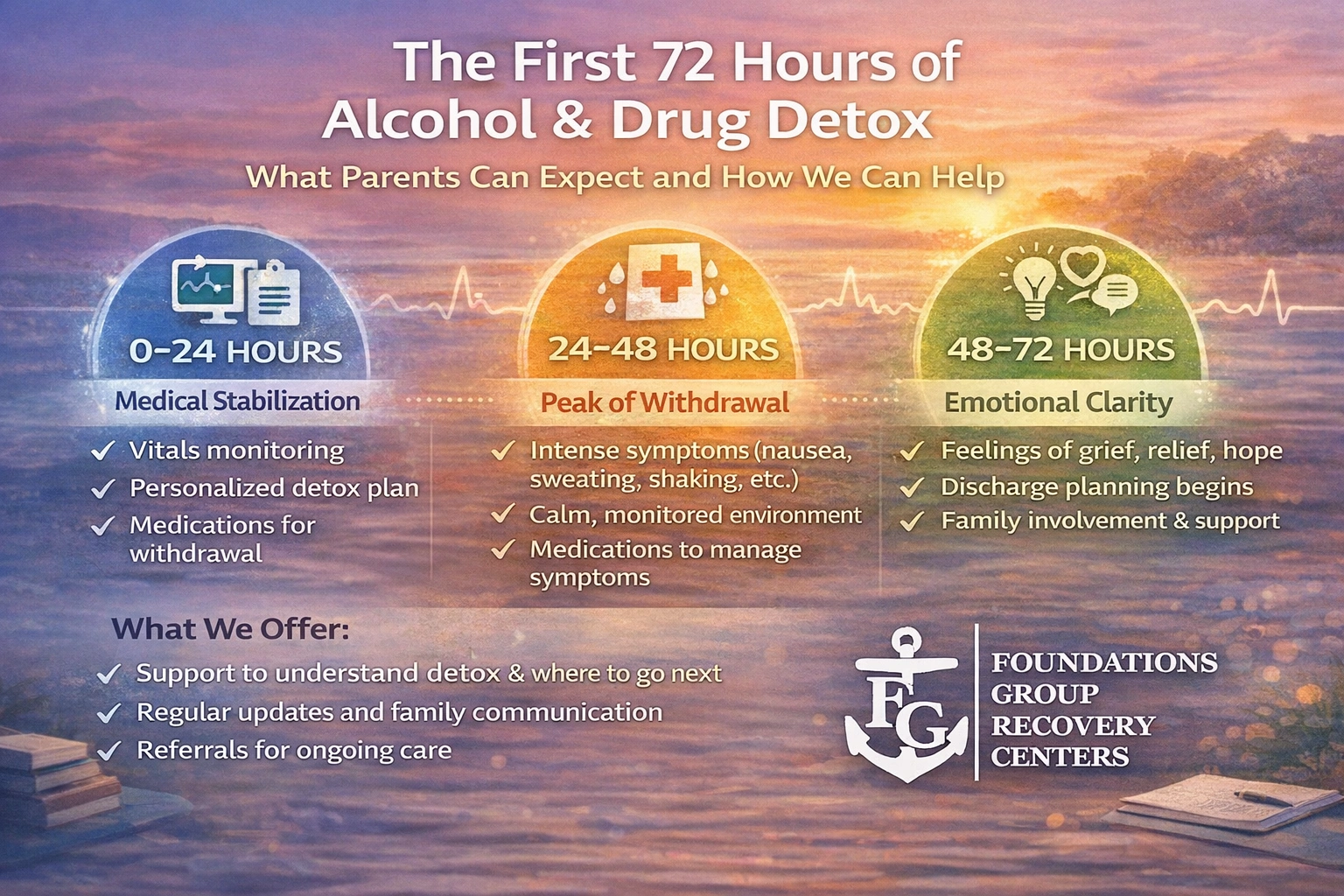
48–72 Hours: Emotional Clarity Starts to Surface
Around the third day, the physical storm often begins to settle. And what rises up? The emotions.
Clients often begin to:
- Sleep more normally
- Feel hunger again
- Reflect on how they got here
- Cry, grieve, or express regret
- Ask questions about what happens next
This can be a fragile but powerful turning point. Some will feel hope. Others will feel deep guilt. Many swing between both.
This is when our clinical staff begins talking with clients about next steps: whether that’s inpatient care, outpatient support, therapy, or a gradual step-down.
This is also when you, as a parent, might finally exhale. But don’t be surprised if you feel flooded too—with relief, sadness, or uncertainty about what your role should be moving forward.
You’re allowed to feel all of it.
What Your Child Might Say (and What It Really Means)
Here are some common phrases we hear from clients during detox—and what may be underneath them:
“I’m fine now, I don’t need more treatment.”
Often a sign of discomfort or fear about what’s next—not actual readiness.
“This place is stupid, I’m not learning anything.”
A way to protect pride when emotions are too vulnerable to name directly.
“I miss home. I just want to come back.”
True longing—mixed with withdrawal emotions that make escape feel safer than staying.
These reactions are normal. They don’t mean detox isn’t helping. They mean your child is human—and likely hurting in more ways than one.
What Parents Can Expect to Feel (and Why It Matters)
Parents often expect relief when detox begins. Instead, many feel:
- Guilt (“How did I not see how bad it was?”)
- Panic (“What if they leave early?”)
- Exhaustion (“I’ve been on edge for months.”)
- Hope that feels fragile and frightening
You’re not doing it wrong.
Detox isn’t just a break for your child. It’s the first time you have permission to step out of crisis mode. That might bring tears, or stillness, or overwhelm. It’s okay.
We encourage parents to use this time to rest, reconnect with their own support system, and ask for clarity from our team when needed. You deserve support, too.
Communication and Involvement During Detox
At Foundations, we respect each client’s privacy while also honoring the role of family—especially when a parent or caregiver is involved in ongoing support.
With your child’s consent, our team will:
- Keep you updated about progress and safety
- Help you understand what’s normal in detox
- Offer discharge planning support and referrals
- Include you (when appropriate) in next-step conversations
If you’re unsure how involved to be—or afraid of overstepping—we’ll walk you through that, too. You don’t need to know the “right” way. That’s what we’re here for.
Looking for Alcohol and Drug Detox in Falmouth or Barnstable County?
If you’re searching for trusted detox support close to home, Foundations Group Recovery Center offers alcohol and drug detox in Falmouth, MA and Barnstable County. We provide evidence-based care that’s also deeply human—because we know you’re not just looking for a facility. You’re looking for someone who won’t let your child fall through the cracks.
FAQ: Detox for Parents Worried About Their Child
How long will detox take?
Most detox protocols last between 5 and 10 days, depending on the substance used, how long your child has been using, and their medical history.
Can I visit or call during detox?
Every program is different. At Foundations, we evaluate on a case-by-case basis depending on your child’s emotional and clinical needs. Sometimes, a brief no-contact period can be healing early on.
What if my child wants to leave?
That happens. Withdrawal can be scary, and the urge to escape is strong. Our team is experienced in helping clients regulate through that discomfort—and make clearer decisions once they feel more stable.
Is detox enough on its own?
Detox is an essential first step—but rarely the only one. It helps stabilize the body and mind so deeper healing can begin through therapy, peer support, or structured treatment.
Will I be included in next steps?
If your child consents, absolutely. We work closely with families when planning discharge, offering recommendations for continuing care and resources tailored to each client’s needs and goals.
You don’t have to hold your breath anymore. We’re here.
Call (844)763-4966 or visit our alcohol and drug detox program in Mashpee, MA to learn how we support the first 72 hours—and every step that follows. There’s help for them. And for you.