You don’t have to lose your spark to get sober.
That’s the part nobody tells you.
When you’re known for your depth, your edge, your way with words or rhythm—there’s a fear that comes with the idea of recovery. Not just what if I fail? but what if I fade? What if sobriety makes me… boring? Unoriginal? Unrecognizable to myself?
If you’re someone who’s ever found inspiration at the bottom of a glass, or courage in a pill, or focus in a hit—healing might sound like giving up the parts of yourself that made you feel most alive.
That fear is real. And it’s not irrational.
But here’s what I wish more people knew: Medication assisted treatment, when done well, doesn’t take your fire. It gives it back a safe place to burn.
If you’re curious about your options, explore our medication assisted treatment services in Mashpee, MA. This isn’t about stripping you down. It’s about helping you come home to yourself—safely.
Why Creative Brains Fear Recovery
As clinicians, we see it all the time—but especially in musicians, writers, actors, entrepreneurs, performers, and anyone who’s ever used substances as a bridge between themselves and the world.
That drink made it easier to write.
That pill made you present on stage.
That hit helped you stop overthinking long enough to create.
And if you’re being honest? That high was often followed by a crash—but at least the art happened, right?
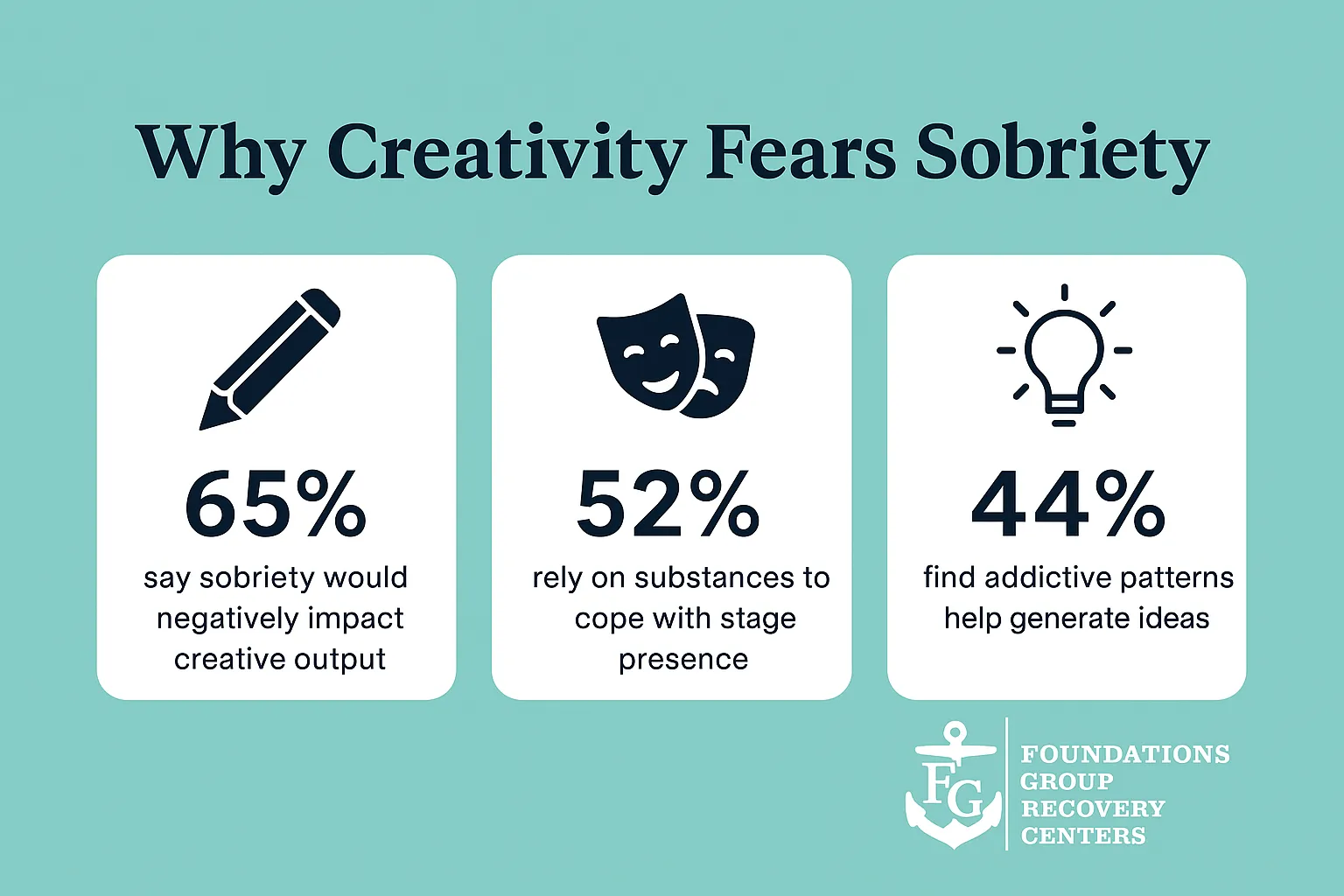
So when we talk about sobriety, of course you’re scared. Because you’re not just losing a substance. You’re worried about losing your rhythm, your voice, your fuel.
MAT Isn’t About Making You Numb. It’s About Making You Ready.
Medication assisted treatment (MAT) is often misunderstood—even by people deep in recovery communities.
At Foundations, we see MAT as a support system, not a sentence. It’s not about sedating you or replacing one addiction with another. It’s about stabilizing the body and brain enough so you can actually do the work—therapy, reflection, boundary-setting, rebuilding identity—without being in constant survival mode.
When your nervous system is fried, when withdrawal symptoms take up all your mental real estate, it’s nearly impossible to create anything meaningful. Let alone maintain relationships, health, or emotional regulation.
The right MAT plan can be like tuning a piano. It doesn’t change the instrument. It just helps it play in tune again.
The Myth of the Tortured Artist Dies Hard
The “struggling genius” story is seductive.
You suffer, you create. You feel everything too deeply, and it pours into your work. You burn the candle at both ends, and it feels worth it—until the burnout leaves nothing behind.
But here’s the truth I’ve watched unfold with dozens of clients:
The most enduring, impactful creativity doesn’t come from chaos. It comes from clarity.
You can write when you’re sober.
You can be funny, weird, magnetic, sharp when you’re sober.
You can dance, lead, produce, connect, invent—without being in pain.
You are not less real when you’re regulated.
What MAT Looks Like in a Holistic Recovery Environment
At Foundations Group Recovery Center in Mashpee, MAT isn’t a standalone pill. It’s one piece of a full-circle, identity-informed care model. For some, it’s part of early stabilization. For others, it’s a long-term anchor.
Here’s what it can include:
- Buprenorphine/Suboxone for opioid stabilization
- Naltrexone or Vivitrol for cravings or alcohol moderation
- Mood or anxiety support through co-occurring disorder treatment
- Integrated therapy for trauma, grief, shame, and identity
- Creative expression spaces—because we know how vital they are
- Nutrition and sleep support to get your baseline energy back
- Safe medication management—not guesswork or overmedication
If you’re looking for medication assisted treatment in Falmouth MA, we support clients from nearby communities with personalized, stigma-free care.
Holistic Means Holding All of You—Not Just What’s Clinical
We don’t separate the “mental health” parts of you from the creative, sensitive, complex parts. In holistic recovery, they’re connected.
Maybe you’re neurodivergent. Maybe you’ve lived through spiritual trauma, cultural shame, or years of masking just to feel safe. Maybe you’ve been misdiagnosed. Or ignored. Or told you’re “too much.”
We build treatment that doesn’t flatten you.
We ask:
- What does safety feel like in your body?
- What conditions help you create, connect, or feel present?
- What rhythms are natural for you?
- What does recovery look like on your terms?
We listen. We adapt. And we hold space for your contradictions—because those are often where your power lives.
If You’re Scared to Start, That’s a Sign You’re Paying Attention
You’re not in denial. You’re just aware. That’s different.
You’ve thought about recovery. You’ve imagined the boring meetings, the gray food, the loss of freedom. And you’ve wondered: Will they understand me? Or will I have to perform wellness, too?
At Foundations, you don’t have to become someone else to get better.
We’ll meet you where you are. We’ll build a plan around what matters to you. And we’ll protect your creativity—not pathologize it.
Because sobriety isn’t supposed to be a costume. It’s supposed to feel like you—without the parts that hurt.
FAQ: Medication Assisted Treatment for Creatives
Will medication kill my creativity or flatten my emotions?
Not when it’s prescribed and monitored correctly. The goal of MAT is to reduce physical cravings and emotional chaos so you can access your full emotional range—not mute it.
Can I still work, perform, or create while in treatment?
Yes. In fact, many clients find their productivity and creativity improve once they’re stabilized and no longer distracted by physical or emotional crash cycles.
What if I’ve had a bad experience with medication before?
That’s valid—and we want to talk about it. Our team tailors each plan to your unique body, history, and concerns. Nothing is forced. Everything is collaborative.
How long will I need medication assisted treatment?
It depends. Some people use MAT for a few months. Others for longer. We evaluate progress continually and adapt the plan as your needs evolve.
Is MAT just for opioid addiction?
No. MAT is also used to support recovery from alcohol use disorder, co-occurring disorders, and cravings tied to trauma or other diagnoses.
Is this an abstinence-only program?
Foundations supports multiple pathways to recovery. We’ll work with you to define what healing looks like based on your goals, risks, and realities.
You’re Not Too Complex. You’re Not Too Much.
If you’ve ever been told to “tone it down” or “just take the meds and follow the rules,” I want you to know—you are not the problem.
You’re just someone who wants to heal without disappearing.
Medication assisted treatment can help you hold your center while you rebuild. Holistic care can hold your nuance. And recovery can be a return—not a rewrite.
You don’t have to lose your voice to find your balance.
Ready to stop suffering without losing your sense of self?
Call (844) 763-4966 or visit our medication assisted treatment page to learn how Foundations Group Recovery Center in Mashpee, MA can help you recover without erasing who you are.