
You’re not in denial. You’re not waiting for some dramatic rock bottom. You already know you need help—and you’re ready to start. But that doesn’t make this easy.
In fact, knowing you need treatment and wanting it badly can sometimes make things more complicated. You’re not confused about your addiction. You’re confused about what comes next.
What does effective treatment actually look like? What if you’re already motivated—do you still need structure? Support? Clinical care?
At Foundations Group Recovery Center, we meet a lot of people at this exact crossroads. And here’s the truth: opiate addiction treatment is about more than just getting clean. It’s about staying connected—especially when the motivation is already there.
You’ve done the inner work to get honest. Now let us show you what comes after that.
Motivation Isn’t the Cure—It’s the Catalyst
Let’s be clear: motivation is powerful. It gets you to open the laptop. To start researching programs. Maybe to call us, or text a friend for help. That matters.
But motivation doesn’t hold steady forever. Especially in recovery. The brain fog, the emotional swings, the fear of failure—all of it can chip away at the energy you’re feeling now.
That’s why the most effective opiate addiction treatment programs aren’t built around willpower. They’re built around systems that sustain you when motivation dips.
Treatment works best when it:
- Creates safety and structure
- Anticipates emotional drop-offs
- Supports decisions you’ve already made
- Reinforces change with both community and care
In other words: you’ve already done the hardest part by deciding. Treatment helps you hold that decision when the rest of your brain starts doubting it.
Real Treatment Doesn’t Punish Motivation—It Honors It
One of the biggest concerns we hear is this:
“What if I go to treatment and they treat me like I don’t know what I’m doing?”
You’ve probably seen portrayals of treatment that look rigid, patronizing, or one-size-fits-all. Maybe you’re worried about sitting in a room being talked at. About being treated like you don’t already understand how bad things have gotten.
We hear you. And we don’t do that.
At Foundations, we work with a wide range of people—including highly self-aware, motivated clients who just need guidance, stabilization, and structure. We adapt our care based on where you are emotionally—not just what your chart says.
You’ll be met with respect. With clarity. And with a treatment plan that recognizes how much thought and effort it took to even walk through the door.
What Happens in Opiate Addiction Treatment—When You’re Already Motivated
So what actually happens?
If you’ve never been to treatment before, the logistics alone can feel overwhelming. So let’s break it down. Here’s what effective opiate addiction treatment might look like for someone who’s motivated but needs direction:
- Comprehensive intake that looks at your use, mental health, and personal goals
- Medical stabilization or withdrawal management if needed
- One-on-one therapy to explore trauma, triggers, and emotional patterns
- Group therapy that’s not about pressure—but about connection
- Skill-building for relapse prevention, boundaries, and emotional regulation
- Peer support from people who’ve been there
You don’t have to figure it all out in one conversation. You just have to start.
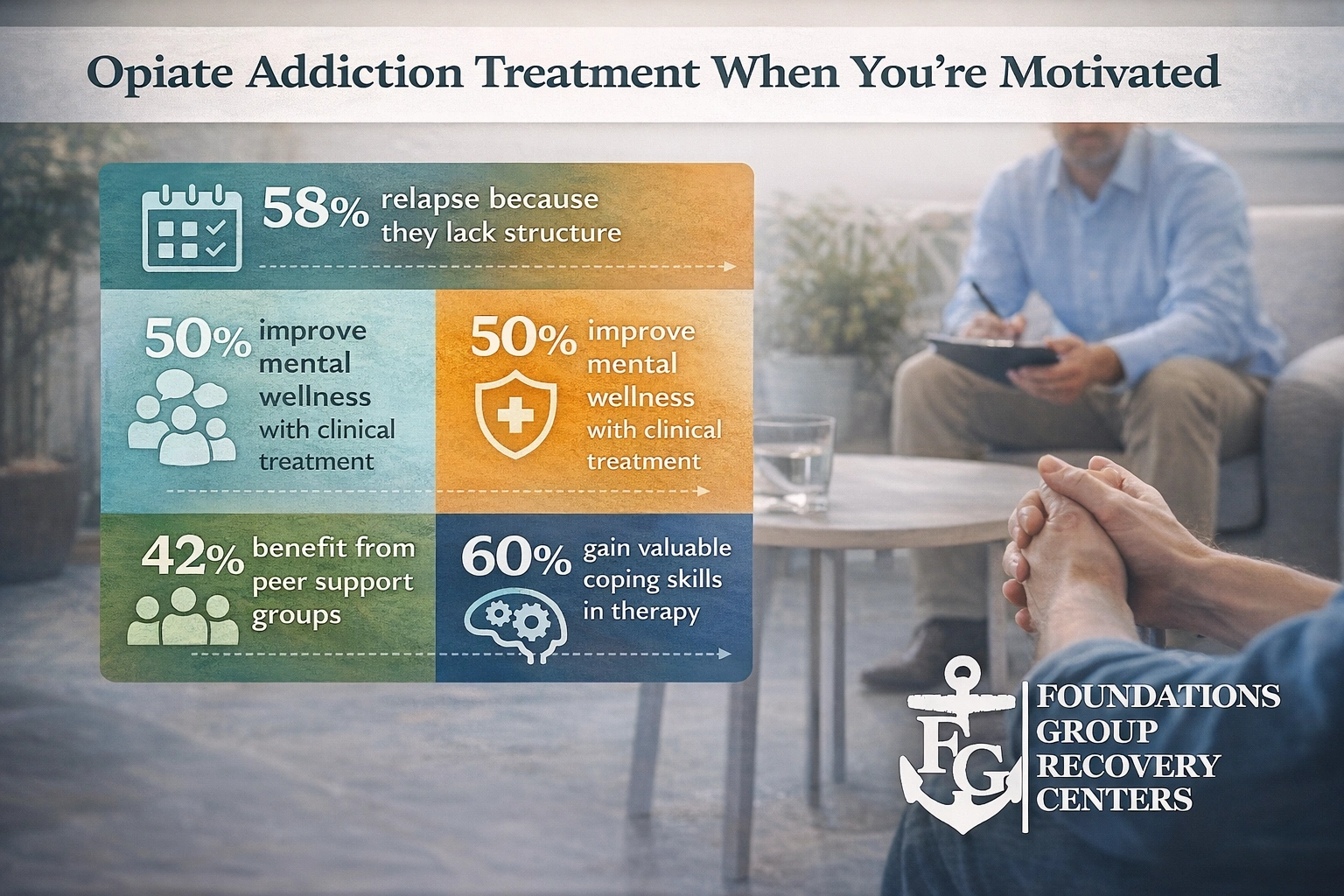
Emotional Readiness Doesn’t Cancel Out the Need for Clinical Support
There’s a dangerous myth in recovery that says: if you’re serious enough, you can do it on your own.
We want to challenge that.
Because even the most motivated people:
- Struggle with brain fog
- Experience emotional crash post-detox
- Have distorted internal narratives about worth, failure, or identity
- Need community to stay grounded
Treatment isn’t about doing it for you. It’s about making sure you’re not doing it all alone.
Even if you’re in a stable home, have a job, and “seem fine” on paper—if you’re using opiates to cope, numb, or survive, you deserve care.
And if you live in Barnstable County, Massachusetts, we can help you access that care in a way that respects your life, your needs, and your drive to get well.
What Makes a Program Effective Isn’t Just What They Offer—It’s How They Treat You
Treatment centers can list services all day. But what matters most is how you’re treated the moment you reach out.
Do they assume you’re in denial?
Do they talk over you?
Do they pressure you into decisions that don’t feel right?
Or do they:
- Ask what you want out of recovery
- Respect the clarity you already have
- Give you space to breathe, not perform
- Offer real answers—not vague promises
Foundations exists to offer that kind of care. Grounded. Evidence-based. Human.
Because treatment isn’t about fixing you. It’s about helping you feel safe enough to keep growing.
You Don’t Have to Hit Rock Bottom to Want More
This might be the most important thing we can say:
You don’t have to lose everything to decide you want something better. You don’t need to be in crisis to deserve help.
If you’re in that strange, quiet stage of knowing you’re using to get by—but you don’t want to do it anymore—come talk to us.
We’re not here to scare you into action. You’re already in motion. We’re just here to help guide it.
FAQs: Getting Started with Opiate Addiction Treatment
Do I really need treatment if I’m already motivated to stop?
Yes. Motivation is powerful, but recovery requires more than willpower. Treatment helps sustain that motivation with structure, therapy, community, and accountability.
What if I’ve never been to treatment before? Will I feel out of place?
Not at all. Many people come to treatment for the first time with clarity but no roadmap. You’ll be welcomed exactly as you are—with no shame, no assumptions.
What if I’m afraid treatment will be too intense for where I’m at?
Good treatment adapts to you. At Foundations, we meet people at all levels of readiness. You won’t be forced into anything you’re not emotionally or physically ready for.
Will I have to leave work or my responsibilities?
Not necessarily. Many clients start with outpatient care that fits into real-life schedules. We’ll help you choose a level of care that supports healing and respects your life.
How do I know if Foundations is the right fit for me?
Let’s talk. A simple phone call can help us understand your needs and give you a clearer sense of what we offer. No pressure. Just options.
You’ve already made the decision. We’ll help you take the next step.
Call (844)763-4966 to learn more about our opiate addiction treatment in Mashpee, Massachusetts.