
Maybe you’ve noticed that someone you care about seems different.
They’re sleeping less, talking faster, spending more money than usual, or disappearing for hours without explanation. Or perhaps you’re the one asking difficult questions about your own cocaine use and wondering whether it’s becoming something more than occasional experimentation.
If you’ve been searching for the signs of cocaine use, you’re not alone. Recognizing these changes can be uncomfortable, but it can also be the first step toward getting help. If cocaine use has begun affecting your life or someone you love, learning more about cocaine addiction treatment can help you understand what recovery may look like.
You don’t need to have all the answers today.
Whether you’re worried about yourself or someone close to you, understanding the warning signs can help you respond with clarity instead of fear or blame.
Physical Signs of Cocaine Use
Cocaine is a powerful stimulant that affects the brain, heart, and nervous system. Because it increases activity throughout the body, many of its physical effects are noticeable—especially with repeated use.
Not everyone will experience every symptom, and some signs depend on how cocaine is used.
Nosebleeds, Runny Nose, or Nasal Congestion
One of the most common cocaine use symptoms is irritation of the nose.
People who snort cocaine may experience:
- Frequent nosebleeds
- A constantly runny nose
- Nasal congestion
- Loss of smell
- Damage to the nasal lining over time
Persistent nasal problems without another obvious explanation can sometimes be an early clue.
Dilated Pupils
Cocaine often causes the pupils to become noticeably larger.
Someone may also appear unusually alert or sensitive to light.
Decreased Appetite and Weight Loss
Many people lose interest in eating while using cocaine.
Over time, this can lead to:
- Rapid weight loss
- Poor nutrition
- Changes in physical appearance
- Fatigue during periods without cocaine
Increased Energy Followed by a Crash
During intoxication, someone may seem:
- Extremely energetic
- Restless
- Unable to sit still
- Highly motivated
- Constantly active
When the drug wears off, the opposite often occurs.
They may suddenly become:
- Exhausted
- Irritable
- Depressed
- Sleepy
- Emotionally withdrawn
These dramatic shifts are common with stimulant use.
Elevated Heart Rate
Cocaine increases heart rate and blood pressure.
Someone may complain of:
- A racing heartbeat
- Chest discomfort
- Shortness of breath
- Feeling overheated
These symptoms should never be ignored, as cocaine can increase the risk of serious cardiovascular emergencies.
Insomnia
Difficulty sleeping is another common sign.
Someone may stay awake for long periods and then sleep excessively once the stimulant effects wear off.
Track Marks
Although less common than snorting or smoking, some individuals inject cocaine.
Injection can leave:
- Needle marks
- Bruising
- Skin infections
- Bandages in unusual places
Behavioral and Psychological Signs
Physical symptoms often occur alongside noticeable changes in mood, behavior, and daily routines.
These changes may become more obvious than physical symptoms over time.
Increased Talkativeness and Confidence
During cocaine use, someone may seem:
- Extremely outgoing
- More confident than usual
- Highly energetic
- Excited
- Unable to stop talking
These behaviors can appear very different from the person’s normal personality.
Mood Swings
As cocaine wears off, emotional changes often become apparent.
Someone may cycle between:
- Euphoria
- Irritability
- Anxiety
- Depression
- Anger
- Emotional withdrawal
These shifts can happen rapidly, sometimes within the same day.
Financial Problems
Cocaine can be expensive.
Someone may begin:
- Borrowing money frequently
- Missing bill payments
- Selling possessions
- Having unexplained financial difficulties
- Becoming secretive about spending
Financial stress often becomes more noticeable as use continues.
Increased Secrecy
Many people begin hiding aspects of their lives as substance use progresses.
You might notice:
- Locked doors
- Private phone conversations
- Unexplained absences
- Changes in social circles
- Avoiding family gatherings
Secrecy alone doesn’t prove cocaine use, but it may become one part of a larger pattern.
Risky Behavior
Cocaine lowers inhibitions and can impair judgment.
Someone may become more likely to engage in:
- Reckless driving
- Unsafe sexual behavior
- Impulsive spending
- Aggressive confrontations
- Dangerous decision-making
Neglecting Responsibilities
As cocaine use increases, responsibilities may begin slipping.
You might notice problems with:
- Work performance
- School attendance
- Parenting responsibilities
- Household tasks
- Personal hygiene
These changes may develop gradually rather than all at once.
Paranoia
Heavy or prolonged cocaine use can lead to paranoid thinking.
Someone may become unusually suspicious, fearful, or convinced that others are watching or talking about them.
In severe cases, stimulant-induced psychosis may occur and requires immediate medical attention.
Signs of Cocaine Use in a Loved One
If you’re concerned about someone else, it’s natural to look for a single unmistakable sign.
Unfortunately, substance use rarely works that way.
Instead, people often notice a pattern of small changes over time.
You may observe:
- Personality changes
- New sleep patterns
- Mood instability
- Financial problems
- Withdrawal from family
- Secretive behavior
- Declining work or school performance
Try to observe these changes without jumping to conclusions.
One sign alone doesn’t necessarily mean someone is using cocaine.
However, several changes occurring together may warrant a compassionate conversation.
What Not to Say
If you decide to talk with someone, avoid statements like:
- “You’re ruining your life.”
- “Why can’t you just stop?”
- “You’re lying to everyone.”
Confrontational language often increases defensiveness rather than encouraging honesty.
What to Say Instead
Consider saying:
- “I’ve noticed you’ve seemed different lately, and I’m worried about you.”
- “I’m here to listen if something’s going on.”
- “You don’t have to figure this out alone.”
Approaching the conversation with curiosity and concern can create more space for openness than criticism.
Support Without Enabling
Supporting someone doesn’t mean protecting them from every consequence.
Healthy support may include:
- Listening without judgment
- Encouraging professional treatment
- Setting healthy boundaries
- Avoiding financial support that could fund substance use
- Taking care of your own well-being
You can care deeply about someone while still protecting your own health and safety.
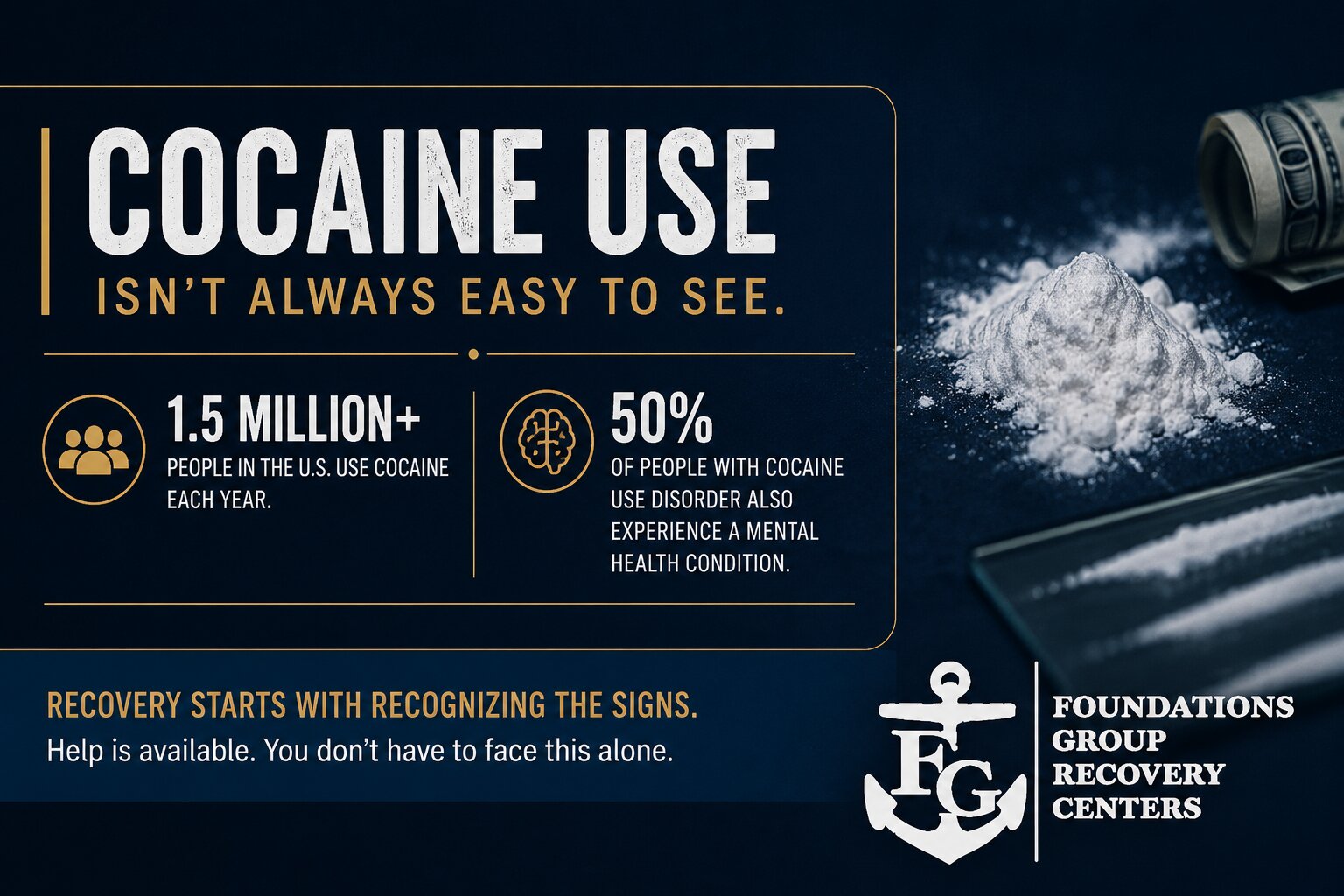
Cocaine Paraphernalia
Some loved ones begin recognizing cocaine use after noticing drug-related items.
Common cocaine paraphernalia may include:
- Rolled dollar bills
- Cut drinking straws
- Small mirrors
- Razor blades
- White powder residue
- Small plastic bags or baggies
- Tiny spoons or scoops
Finding one of these items does not automatically confirm cocaine use, but it may provide additional context when combined with other behavioral or physical signs.
When Signs Become Signs of Cocaine Addiction
Not everyone who uses cocaine develops addiction, but repeated use increases the risk.
Some possible signs of cocaine addiction include:
- Strong cravings
- Repeated unsuccessful attempts to quit
- Using larger amounts than intended
- Spending significant time obtaining or recovering from cocaine
- Continuing despite health, legal, or relationship problems
- Needing more cocaine to achieve the same effects
Recognizing these patterns early can make treatment more effective and reduce the likelihood of long-term consequences.
How to Help
Whether you’re recognizing these signs in yourself or someone you love, you don’t have to wait until everything falls apart before reaching out.
Early support often leads to better outcomes.
Treatment may include:
- Medical evaluation
- Individual counseling
- Cognitive behavioral therapy (CBT)
- Group therapy
- Family involvement
- Relapse prevention planning
- Treatment for co-occurring mental health conditions
If you’re worried about someone else, remember that you cannot force recovery.
You can offer support, encourage treatment, and let them know they’re not alone.
If you’re worried about yourself, know this:
Seeking help isn’t an admission of failure.
It’s a decision to give yourself the opportunity to recover before cocaine causes even greater harm.
Frequently Asked Questions
What are the first signs of cocaine use?
Early signs often include increased energy, dilated pupils, reduced appetite, frequent nosebleeds or nasal congestion (if snorted), insomnia, unusual confidence, rapid speech, and noticeable mood changes after the drug wears off.
How can you tell if someone is using cocaine?
No single sign confirms cocaine use. However, a combination of physical symptoms, behavioral changes, secrecy, financial problems, sleep disruption, and mood swings may indicate a problem. Looking for patterns over time is generally more helpful than focusing on one isolated behavior.
What should I do if I think someone I love is using cocaine?
Approach them with compassion rather than accusation. Share specific observations, express concern, and encourage them to speak with a healthcare provider or addiction specialist. Setting healthy boundaries while offering support can help protect both you and your loved one.
Take the Next Step
If you’re recognizing signs of cocaine use in yourself or someone you care about, remember that you don’t have to wait for the situation to become worse before seeking help. Compassionate, evidence-based treatment can help individuals and families begin moving toward recovery. Get help that’s close to home, Proudly serving in Falmouth, Barnstable County, MA.
Call (844) 763-4966 or learn about cocaine addiction treatment at Foundations Recovery.