

Many people begin using kratom believing it’s a safer, more natural alternative to opioids. Some use it to manage chronic pain. Others turn to it while trying to stop using prescription pain medications or heroin. For a time, it may seem like a helpful solution.
Then they try to stop.
If you’ve found yourself searching for kratom withdrawal, you may be surprised by what you’re experiencing. Muscle aches, anxiety, insomnia, cravings, and flu-like symptoms can make it feel much harder to quit than you ever expected. If you’re concerned that kratom use has become difficult to control, learning more about opiate addiction treatment can help you understand your options for recovery.
You’re not alone if this caught you off guard.
Many people who experience kratom withdrawal never intended to misuse a substance. They simply didn’t realize that a plant marketed as “natural” could still affect the brain in ways that lead to physical dependence.
Understanding why withdrawal happens—and what to expect—can make the process feel less frightening and help you decide whether additional support may be beneficial.
What Is Kratom Withdrawal?
Kratom comes from the leaves of Mitragyna speciosa, a tropical tree native to Southeast Asia. For centuries, it has been used traditionally in some regions for its stimulating and pain-relieving properties.
Today, kratom is sold in powders, capsules, teas, extracts, and concentrated products throughout the United States.
While kratom is not legally classified as an opioid, it interacts with many of the same brain systems.
Its primary active compounds—mitragynine and 7-hydroxymitragynine—bind to mu-opioid receptors, the same receptors responsible for many of the effects produced by opioid medications and heroin.
Because of this receptor activity, regular kratom use can cause the brain to adapt over time.
When someone suddenly reduces or stops using kratom, the brain must adjust to functioning without that stimulation. This adjustment produces withdrawal symptoms that often resemble mild to moderate opioid withdrawal.
Not everyone experiences withdrawal the same way.
Someone who has used small amounts for a short period may experience relatively mild discomfort. Someone using high-potency extracts or large daily doses for months or years may experience far more intense symptoms.
The important thing to remember is this:
Withdrawal is not a sign of weakness or failure.
It simply reflects the brain adapting to repeated exposure.
Kratom Withdrawal Symptoms
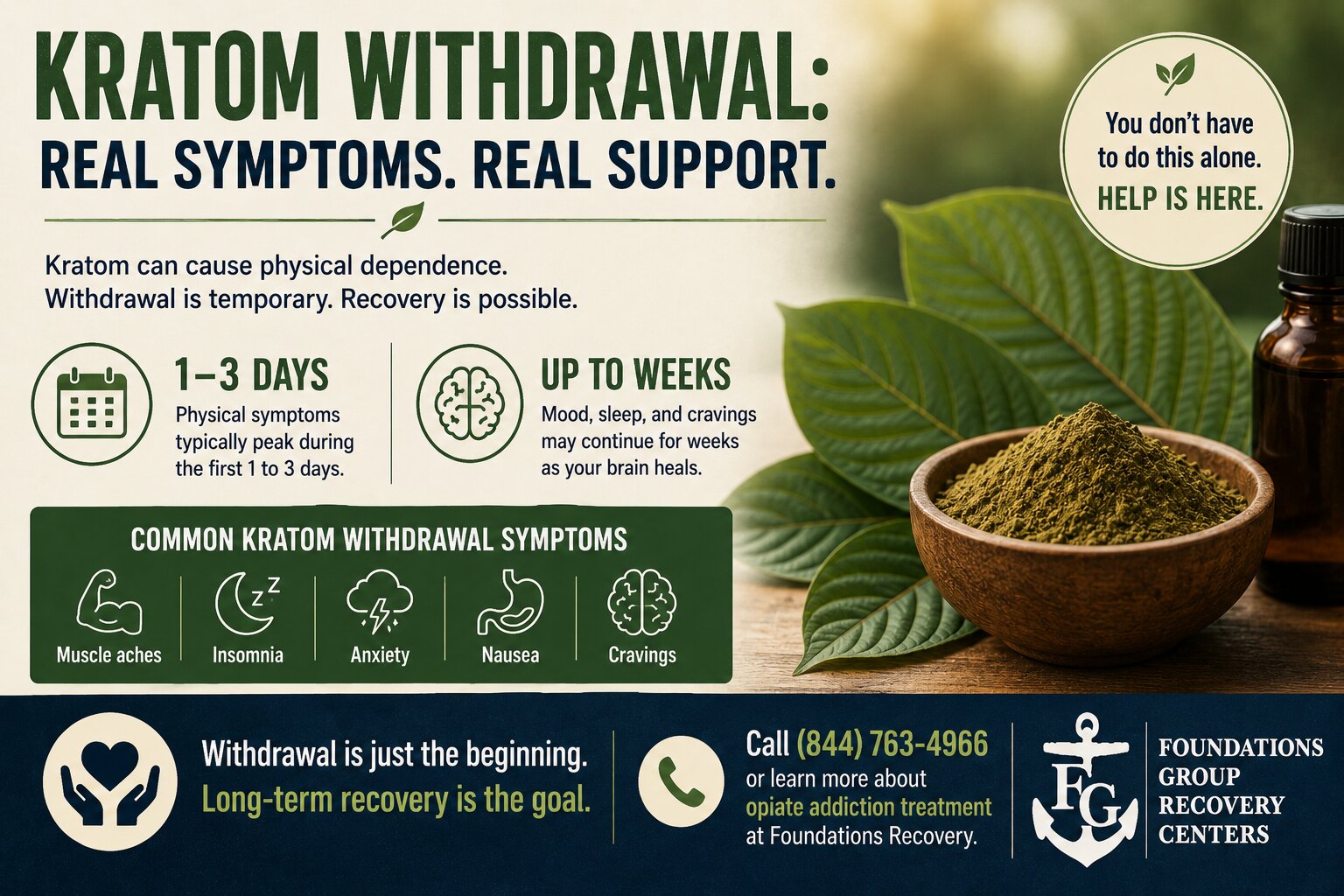
Kratom withdrawal symptoms often resemble a combination of opioid withdrawal and flu-like illness, along with significant emotional distress.
Symptoms typically include both physical and psychological effects.
Physical Symptoms
Common physical symptoms include:
- Muscle aches
- Joint pain
- Sweating
- Hot and cold flashes
- Chills
- Runny nose
- Yawning
- Nausea
- Vomiting
- Diarrhea
- Stomach cramps
- Tremors
- Fatigue
- Restlessness
- Dilated pupils
- Difficulty sleeping
Many people describe feeling physically uncomfortable almost everywhere in their body.
The discomfort may not be dangerous in most cases, but it can be intense enough to make returning to kratom feel like the easiest way to stop the symptoms.
Psychological Symptoms
The emotional symptoms can be just as challenging.
They often include:
- Anxiety
- Irritability
- Depression
- Mood swings
- Difficulty concentrating
- Strong cravings
- Restlessness
- Low motivation
- Trouble experiencing pleasure
- Emotional sensitivity
Some individuals report feeling emotionally “flat” for several days after stopping.
Others experience powerful cravings that continue even after the physical symptoms begin improving.
The severity depends on factors such as:
- Daily dose
- Frequency of use
- Potency of the product
- Use of concentrated extracts
- Length of use
- Previous opioid exposure
- Individual health differences
Kratom Withdrawal Timeline
One of the most common questions people ask is:
How long does kratom withdrawal last?
There is no single answer because withdrawal varies considerably between individuals.
However, many people experience a pattern similar to the following.
Time |
What You May Experience |
|---|---|
| 12–24 hours after last use | Early withdrawal begins with anxiety, muscle aches, restlessness, yawning, sweating, and cravings. |
| Days 1–3 | Physical symptoms usually peak. Nausea, stomach upset, chills, insomnia, irritability, and body aches are often most intense during this period. |
| Days 3–5 | Many physical symptoms gradually begin improving, although fatigue and sleep problems often continue. |
| Weeks to months | Some people experience post-acute withdrawal symptoms (PAWS), including cravings, mood changes, anxiety, low energy, and disrupted sleep that gradually improve over time. |
This timeline is only a general guide.
Someone using concentrated kratom extracts or taking very high doses may experience a longer or more difficult withdrawal than someone who used lower doses occasionally.
Why Kratom Causes Opioid-Like Withdrawal
One of the biggest misconceptions about kratom is that because it is a plant, it cannot produce significant dependence.
The reality is more complicated.
The key lies in mu-opioid receptors.
These receptors help regulate pain, reward, mood, and many other functions throughout the brain.
Traditional opioids activate these receptors.
Kratom’s primary alkaloids also interact with them.
Although kratom is not legally or pharmacologically classified as an opioid, its activity at these receptors explains why many users experience:
- Pain relief
- Relaxation
- Mood elevation
- Reduced withdrawal from opioids
- Physical dependence after regular use
As the brain adapts to repeated receptor stimulation, it begins relying on that stimulation to maintain balance.
When kratom is removed suddenly, the nervous system temporarily becomes overactive while trying to regain equilibrium.
This produces symptoms that closely resemble opioid withdrawal.
Many people who started using kratom specifically to stop opioid use are especially surprised by this.
They may have expected kratom to be easier to discontinue because it is sold as a botanical supplement.
Unfortunately, receptor activity—not marketing language—is what determines whether dependence can develop.
That does not mean kratom is identical to prescription opioids or heroin.
Its pharmacology is more complex, and its effects differ in important ways.
However, the shared interaction with mu-opioid receptors explains why withdrawal can feel so similar.
Factors That Influence Withdrawal Severity
No two people experience kratom withdrawal exactly the same way.
Several factors affect how intense symptoms become.
Amount Used
Higher daily doses generally produce greater physical dependence.
Length of Use
Using kratom regularly for months or years typically increases withdrawal severity compared to shorter periods of use.
Product Strength
Concentrated extracts often contain much higher levels of active compounds than traditional powdered leaf.
These products may increase the likelihood of dependence.
Individual Health
Sleep quality, nutrition, mental health, and underlying medical conditions can all influence recovery.
Previous Opioid Use
People who previously struggled with opioid use disorder sometimes find kratom withdrawal especially challenging because of prior changes in opioid receptor function.
Is Medical Detox Needed for Kratom Withdrawal?
Not everyone requires medical detox.
For individuals who used lower doses for a relatively short time, withdrawal may be manageable with supportive care, hydration, rest, and medical guidance from a healthcare provider.
However, medical support may be especially helpful if:
- You use kratom multiple times every day.
- You rely on high-potency extracts.
- You’ve been unable to quit on your own.
- Withdrawal repeatedly leads to relapse.
- You also use opioids, alcohol, benzodiazepines, or other substances.
- You have depression, anxiety, or another mental health condition.
- You’re experiencing severe vomiting, dehydration, or significant distress.
Medical professionals can evaluate your symptoms, monitor your health, help manage discomfort, and develop a treatment plan that supports long-term recovery rather than simply getting through withdrawal.
For many people, withdrawal is only the beginning.
The greater challenge is preventing a return to use once symptoms improve.
That is why treatment often focuses on both physical recovery and the emotional, behavioral, and psychological factors that contribute to continued substance use.
Recovery After Kratom Withdrawal
Completing withdrawal is an important milestone, but recovery rarely ends there.
Many people initially used kratom for a reason.
Perhaps it helped manage:
- Chronic pain
- Anxiety
- Depression
- Fatigue
- Previous opioid cravings
- Emotional stress
If those underlying issues remain unaddressed, returning to kratom can feel tempting.
Comprehensive treatment may include:
- Individual counseling
- Cognitive behavioral therapy (CBT)
- Group therapy
- Relapse prevention planning
- Mental health treatment
- Medication evaluation when appropriate
- Ongoing recovery support
Recovery is about more than stopping a substance.
It’s about finding healthier ways to manage the challenges that led someone to use it in the first place.
You Don’t Have to Figure This Out Alone
Many people feel embarrassed when they realize they’ve become dependent on kratom.
Some worry they won’t be taken seriously because kratom is sold as a supplement.
Others believe they should be able to stop on their own because it isn’t legally classified as an opioid.
Those feelings are understandable.
But needing help is not a reflection of your character.
Physical dependence can happen with substances that many people mistakenly believe are harmless.
If withdrawal feels overwhelming or repeated attempts to quit haven’t worked, professional support can make the process safer, more comfortable, and more sustainable.
You don’t have to wait until things become worse before reaching out.
Frequently Asked Questions
How long does kratom withdrawal last?
Most people begin experiencing withdrawal symptoms within 12 to 24 hours after their last dose. Physical symptoms often peak during the first one to three days and gradually improve over the following several days. Some individuals continue experiencing cravings, mood changes, or sleep difficulties for weeks as part of post-acute withdrawal.
Is kratom an opioid?
No. Kratom is not legally or pharmacologically classified as an opioid. However, its primary active compounds interact with mu-opioid receptors in the brain. This receptor activity explains why kratom can produce pain relief, physical dependence, and withdrawal symptoms that resemble opioid withdrawal.
Can you detox from kratom at home?
Some people with mild dependence can stop using kratom at home with appropriate medical guidance and support. However, individuals with heavy, long-term, or high-potency kratom use—or those with co-occurring substance use or mental health conditions—may benefit from professional medical supervision to manage withdrawal and reduce the risk of relapse.
Take the Next Step Toward Recovery
If kratom withdrawal has been more difficult than you expected, know that you’re not alone—and help is available. Whether you’re trying to stop for the first time or you’ve struggled with repeated attempts to quit, compassionate support can make a meaningful difference. Get help that’s close to home, Proudly serving in Falmouth, Barnstable County, MA.
Call (844) 763-4966 or learn more about opiate addiction treatment at Foundations Recovery.