
You might not be afraid of getting sober.
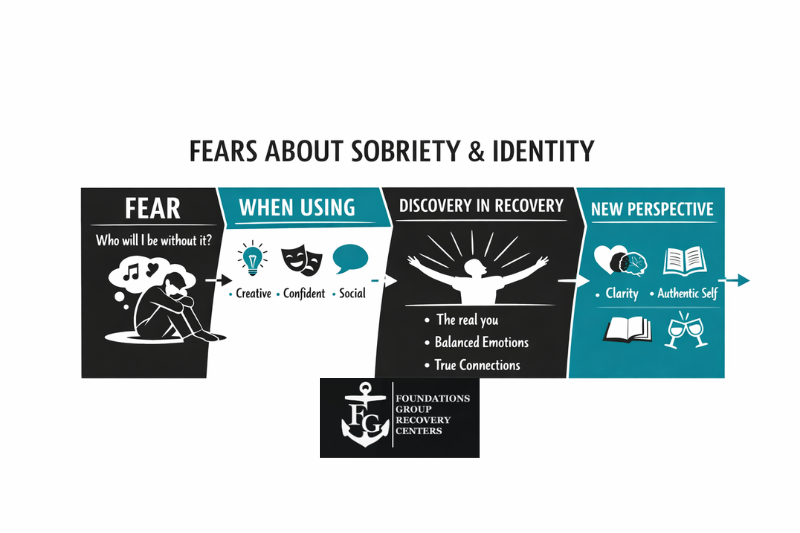
You might be afraid of who you’ll be without the thing that made you feel like yourself.
If that fear has kept you from exploring options like medication-supported recovery options, you’re not alone and it deserves to be talked about honestly.
The Quiet Fear No One Talks About
A lot of people imagine sobriety as a kind of flattening.
Less fun.
Less emotion.
Less personality.
Especially if substances have been tied to how you create, socialize, relax, or perform.
So the fear shows up like this:
“What if I lose the best parts of myself?”
It’s a deeply human question.
When Substances Become Part of Your Identity
For many people, alcohol or drugs weren’t just habits. They were tools.
Tools for feeling more open.
Tools for accessing emotion.
Tools for quieting the noise in your mind.
Some people felt more creative. Others felt more confident. Some finally felt like they belonged in a room.
So of course the idea of letting that go can feel like erasing something important.
But recovery isn’t about erasing who you are.
It’s about separating you from the thing that’s been speaking for you.
What People Often Discover Instead
Something surprising happens for many people once the fog lifts.
The personality they thought substances created… was actually theirs all along.
Creativity doesn’t disappear.
Humor doesn’t disappear.
Charisma doesn’t disappear.
What often disappears is the constant emotional tax that comes with using—shame, exhaustion, anxiety, the mental math of managing it all.
And without that weight, people often rediscover pieces of themselves they hadn’t seen in years.
One client once said it this way:
“I thought sobriety would make me boring. It turns out it just made me honest.”
The Myth of the “Boring Sober Life”
Early recovery can feel awkward. That part is real.
You’re learning how to show up to life without the shortcut you’re used to.
But boring?
Most people describe something different after some time passes:
- Conversations that actually feel real
- Creativity that lasts longer than a single night
- Energy that doesn’t crash the next day
- Relationships that aren’t built around substances
It’s not smaller.
It’s steadier.
Why Support Matters During This Shift
Changing your relationship with substances also means learning new ways to access confidence, emotion, and connection.
That’s why many people benefit from structured support that meets them where they are—sometimes including approaches like medication-assisted treatment Massachusetts providers offer when appropriate.
Not because something is “wrong” with you.
But because your brain deserves the same support your identity does.
Recovery works best when both are respected.
You Don’t Have to Lose Yourself to Heal
The fear that sobriety will erase who you are is incredibly common.
In fact, it’s often a sign that you care deeply about your identity, your creativity, and your presence in the world.
Those things aren’t obstacles to recovery.
They’re the reason it matters.
Recovery isn’t about becoming someone new.
It’s about finally meeting the version of you that was always there—without the interference.
If you’re curious about what recovery could look like without losing who you are, compassionate support can make that first step feel less intimidating.
Call (844)763-4966 or explore our medication-supported recovery services to learn more about our treatment programs Massachusetts, medication assisted treatment services Massachusetts.