
It’s okay to come back.
Relapse hurts. But it doesn’t mean you failed. Especially around the holidays—when emotions run high and routines fall apart—it’s more common than people admit. If you’ve stepped away from your opiate addiction treatment program, you’re not broken. You’re human. And you’re still allowed to return. Here’s how we help at our opiate addiction treatment center in Mashpee, MA.
Start with honesty—not shame
When you relapse or step away from treatment, shame moves in fast. It whispers things like: “You blew it,” or “They’re not going to take you back.” That shame wants to keep you isolated.
But the truth is—relapsing doesn’t erase the effort you already put in.
You showed up. You tried. That matters.
Coming back starts with letting yourself be honest—not punished. You’re allowed to say:
“I’m not okay, but I want to be.”
That’s not weakness. That’s a return to strength.
The holidays can be a trigger—and a turning point
Let’s be real: holidays are hard.
For a lot of us, this season is tied to grief, family tension, financial stress, and old habits. The schedule changes. Expectations rise. Loneliness hits harder. And if you’ve been in or near recovery, this time of year can shake your footing.
But here’s the thing: holidays don’t have to be the reason you stay stuck.
They can be the reason you reach back out. The reason you choose to get back into care—because you want something better next year. Not perfect. Just better.
You didn’t lose everything
Maybe it’s been days. Maybe it’s been months. Either way, it can feel like you’ve slid all the way back to square one. But that’s not how recovery works.
You didn’t lose your progress—you gained information.
You’ve seen what made you wobble. You’ve felt the pull. You’ve learned, even if it came the hard way.
Relapse doesn’t mean you’re not cut out for treatment.
It means you’ve got another piece of the puzzle now. You know more about what you need. You know what kind of support you didn’t have—or weren’t ready to ask for.
That’s valuable. And it can guide your next step.
You don’t need to explain everything to come back
One of the biggest blockers to reentering treatment is the fear of what people will say.
But here’s the truth:
No one at a good treatment center is going to make you sit down and explain every detail of what happened.
You don’t have to justify the relapse, the absence, or the silence.
You can say:
“I want to come back.”
And that’s enough.
At Foundations, especially during the holidays, we understand that the path back might feel uncertain or intimidating. But it’s open. And no one’s standing at the door with a clipboard of your mistakes.
You’re not the only one
It’s easy to feel like the only person who slipped. Like everyone else stayed on track and you’re the outlier.
But you’re not.
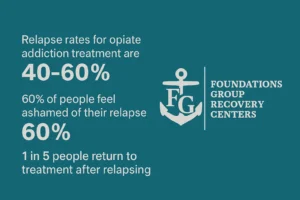
Relapse is common—and so is returning after time away. Especially during or after the holidays.
Sometimes people stop attending because of shame. Sometimes it’s scheduling, stress, travel, or an emotional spiral that snuck up fast. Sometimes it’s just life.
Whatever the reason—relapse doesn’t make you weaker. It makes you real.
What you do next? That’s where power lives.
If you’re looking for Opiate addiction Treatment in Falmouth or Barnstable County, MA…
Foundations Group Recovery Centers offers programs that meet people where they are—whether you’re walking in for the first time or coming back after stepping away.
We provide Opiate addiction Treatment in Falmouth, MA and surrounding Barnstable County, with flexible options and a human-first approach. No judgment. No gatekeeping.
Just an open door—and support that fits your life now, not the version you think you “should” be.
What coming back might actually look like
Still not sure what the reentry process would be like? Here’s what we can tell you:
- You won’t be shamed.
- You won’t be asked to “earn” your way back.
- You might feel awkward—but that passes.
- You might be surprised by the welcome.
Some programs (including ours) even build space for returners, knowing that stepping away happens.
You’ll be met with curiosity, not criticism.
With structure, not punishment.
With encouragement, not empty platitudes.
Quick Tips for Easing Back Into Treatment
Don’t ghost forever
A relapse can feel like a shutdown. But the longer you stay silent, the harder it can be to come back. Just one message—”Hey, I’d like to talk”—is enough to reopen the door.
Expect some discomfort
Returning isn’t always smooth. You might feel embarrassed or unsure where you fit. That’s normal. Give it three sessions before you decide anything.
Ask for flexible support
If full-time IOP feels like too much at first, ask about stepping back in through check-ins, virtual options, or adjusted schedules. You don’t have to sprint.
Don’t wait for January 1st
New Year’s resolutions can be motivating—but healing doesn’t need a holiday. You don’t have to wait for a “fresh start” to begin again.
Talk about the relapse if you want to
You don’t owe anyone your story. But if you’re ready, sharing what happened can help you and your treatment team understand what support you really need this time around.
Frequently Asked Questions: Returning After Relapse
Is it normal to relapse during the holidays?
Yes. The holidays can be deeply triggering—emotionally, socially, and physically. Many people experience setbacks this time of year. You’re not alone.
Will I be judged for coming back after relapsing?
A good treatment program won’t judge you. At Foundations, we welcome people back with compassion and without punishment. Relapse is part of many people’s process.
Do I have to start over if I return?
Not necessarily. You may revisit early recovery tools, but you don’t have to erase your past work. Your team will help tailor your care to reflect what you’ve learned and what you need now.
What if I left on bad terms or ghosted?
That’s more common than you think. You can always reach out again—even if you disappeared mid-program. Just saying “I’m ready to try again” is enough to begin a conversation.
Can I get support in Barnstable County if I don’t live in Mashpee?
Absolutely. We serve Barnstable County, including areas like Falmouth, with programs designed for accessibility and local support.
What if I’m not ready to return but want to talk?
That’s okay too. You can call or message us just to ask questions or feel things out. There’s no pressure. You deserve space to figure out your next step.
Ready to return without judgment?
Call (844)763-4966 or visit our Opiate addiction Treatment page to learn more about our compassionate, non-punitive programs in Mashpee, MA. You’re not behind—you’re just getting back on track. We’re here when you are.