
When you’re a parent, the hardest words to say out loud might be: “My child is using again.”
You may whisper it at first. Or not at all. Because saying it means it’s real—and that can feel like standing on the edge of a cliff without a map. But if you’re reading this, you haven’t given up. And neither have they. There is a path forward. And it often begins with the right support, at the right time.
Opiate addiction treatment isn’t about blame. It’s about returning a young adult’s future to them—and offering families like yours a place to breathe, regroup, and rebuild.
Why Young Adult Relapse Feels So Personal—and Isn’t Your Fault
When your child is 20, 22, 25… there’s a strange in-between space. They’re technically an adult, but still very much your child. You raised them. You taught them right from wrong. Maybe you got them into treatment before. And now—again—they’re using. The fear is back. The heartbreak is louder.
You might be asking yourself:
- Where did I go wrong?
- Why isn’t it working?
- Am I losing them?
It’s okay to ask those things. You’re not weak for hurting. You’re not wrong for loving someone who’s struggling. And you are not to blame for their addiction. Addiction is complex—it affects the brain, behavior, and development. And for young adults, those parts of the brain are still forming. Relapse doesn’t mean treatment failed. It means your child still needs help—and now, with the right support, they might actually be ready to accept it.
What Opiate Addiction Treatment Can Do—That Love Alone Can’t
Love is powerful. But it can’t always compete with addiction.
Opiate addiction treatment steps in where love reaches its limit—offering structure, skills, and support that no parent can give alone.
At Foundations Group Recovery Center in Mashpee, we offer programs tailored to the emotional, psychological, and practical needs of young adults. These include:
- Individual and group therapy: where they learn to reflect, rebuild self-worth, and find community
- Medication-assisted treatment (MAT): which can reduce withdrawal symptoms and cravings
- Trauma-informed care: because many young adults use to cope with pain they don’t yet know how to name
- Life skills support: including help with routines, decision-making, and emotional regulation
- Family involvement: so you don’t feel left out or left behind—we help you heal, too
This kind of care goes beyond stopping substance use. It helps your child feel capable again—and gives your family the tools to stop living in crisis.
Looking for Opiate Addiction Treatment in Barnstable County or Falmouth, MA?
If you’re searching for support near Cape Cod, we serve families throughout the region—including Barnstable County and Falmouth, MA. You don’t have to navigate this alone.
From Survival Mode to Stability: What Treatment Restores
When your child is actively using, daily life becomes a string of “what ifs.”
- What if they don’t come home tonight?
- What if I say the wrong thing?
- What if they disappear again?
You live on edge. But recovery shifts that. With consistent support, young adults learn how to regulate their emotions, tolerate distress, and make choices they can be proud of. Parents begin to feel hope instead of fear. And that’s not a fantasy—it’s the natural result of good treatment.
Why Young Adults Need Their Own Kind of Treatment
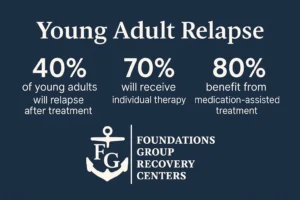
Young adults don’t just need a modified version of adult rehab—they need care that reflects their stage of life. At this age, they’re still forming identity, learning boundaries, and figuring out how to navigate independence. Treatment that works for a 45-year-old won’t always speak to a 22-year-old trying to find themselves.
Here’s what makes young adult-focused treatment different:
- Peers they can relate to
- Programming focused on independence, not just sobriety
- Support that balances structure with autonomy
When young adults feel like they belong, they’re more likely to stay—and that’s where healing begins.
Boundaries Aren’t Cruel—They’re Loving
One of the hardest shifts for a parent is recognizing that helping sometimes means not rescuing.
That might look like:
- Saying no to rent without treatment
- Letting them feel the natural consequences of missed appointments
- Choosing peace in your home over chaos, even when it hurts
Boundaries aren’t about giving up. They’re about creating enough distance for your child to choose change—and enough safety for you to stay steady while they do.
What If They Don’t Want Help?
That’s common. Many young adults resist treatment at first. Sometimes they don’t see the problem. Sometimes they’re scared. Sometimes they’re ashamed. What matters most isn’t forcing the door open—it’s keeping it unlocked and visible.
At Foundations, we often work with families whose children were reluctant, angry, or completely shut down at the start. With time, consistency, and care, that changes. When someone feels safe, seen, and not judged—they open up.
Your Grief Is Real, Too
This isn’t just your child’s experience. It’s yours.
And maybe no one talks about what it feels like to grieve a child who’s still alive. That unique pain of watching someone you love lose parts of themselves—to see their spark dim, their laughter fade, their choices shift. It’s okay to grieve that.
But this isn’t the end of the story.
Treatment gives you both a chance to reclaim what’s been lost—and to rewrite what’s ahead.
FAQs About Opiate Addiction Treatment for Young Adults
What if my child has already been to treatment before?
It’s okay. Recovery isn’t linear. Many people need multiple rounds of care to find what truly works. What matters is that each attempt brings new tools, insights, and readiness. We honor that process.
Do you accept insurance for treatment?
Yes. Our team can verify your benefits quickly and discreetly. We work with many major providers and can walk you through what’s covered.
How involved are families in the treatment process?
Very. We believe healing happens in relationships. That’s why we include families in therapy, education, and regular updates—always with your child’s consent and dignity at the center.
Is medication-assisted treatment (MAT) safe for young adults?
Yes, when it’s prescribed and monitored carefully. MAT is often a life-saving component of treatment, helping to reduce cravings and prevent overdose. It’s not trading one addiction for another—it’s stabilizing a brain in crisis so healing can begin.
What’s the first step to get help?
Reach out. Whether you call, email, or fill out a form, we’ll meet you with warmth—not pressure. We’ll help you understand options, timing, and what makes the most sense for your family.
There’s Still Time. There’s Still Hope.
You may feel like you’re losing them—but addiction doesn’t get the final say. Treatment is a way to claim hope back. To shift from fear to action. To give your child the tools to rebuild, and yourself the space to heal.
And the hardest part? You’ve already done it. You’ve faced the truth. You’re looking for help. That is love in action.
Want to talk with someone who gets it?
Call (844)763-4966 or visit Foundations Group Recovery Center’s Opiate Addiction Treatment page to learn how we support families and young adults in Mashpee, MA and beyond.