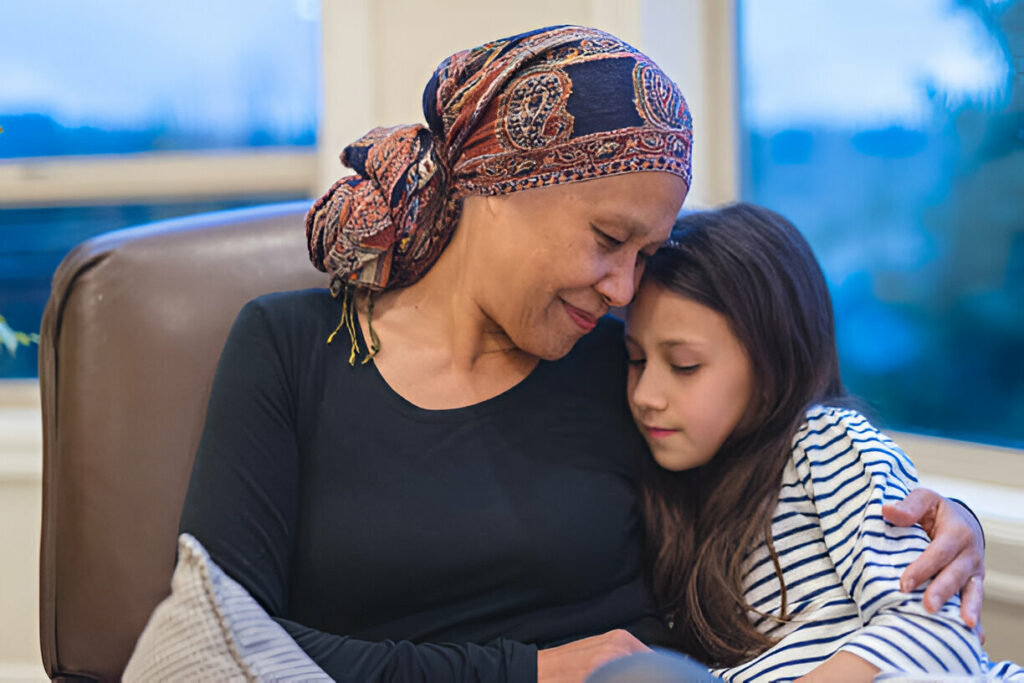
You’ve lost the high, but not the isolation. The silence in early recovery lands loud—as if everyone else is laughing behind you, and you can’t remember why.
That ache? It’s real. And it’s not weakness. It’s your system craving connection right now. At Foundations Group Recovery Center, we see this most when someone first starts treatment and thinks everyone else got the memo. They didn’t. But help does exist—because early recovery doesn’t have to be lonely.
This blog walks through what loneliness in meth addiction treatment feels like, and how the layers of care—IOP, PHP, outpatient, recovery coaching, 12‑step, peer groups—aren’t just supports. They’re lifelines when your brain rewires and relaunches your life.
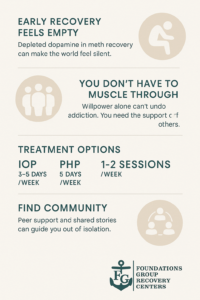
1. Why Early Recovery Feels Deafeningly Empty
When meth leaves your system, your brain doesn’t just detox physically—it’s also starved of dopamine, the chemical that once made it light up.
That crash feels like standing in a crowded room with no sound. Everyone else has their internal music back—you haven’t rewired yours yet.
That emptiness isn’t a sign you’re broken. It’s a sign you’re healing. But healing is hard alone. So let’s talk about how not to.
2. You Don’t Have to Rely on Willpower Alone
The popular narrative says: “You just have to want it.” That couldn’t be more wrong.
Meth addiction rewires your brain to crave it. Your willpower is firing against a biological driven ship. You wouldn’t expect to muscle through a broken leg—you shouldn’t muscle through this either.
Support isn’t a failure—it’s the only sane way forward: group, coaching, therapy, community.
3. Treatment Formats: Which Is Right for You?
Meth addiction treatment comes in frameworks—not ultimatums.
IOP (Intensive Outpatient Program):
- 3–5 days per week of therapy and peer support
- Days are full, but nights are home
- Best if you need structure without leaving your life
PHP (Partial Hospitalization Program):
- 5 days of program-level support, sometimes multiple sessions daily
- Still home each night
- Ideal if you’re early in sobriety and need intensive support
Outpatient:
- Weekly therapy or group sessions
- Great for check-ins, coping strategies
- Best after stronger foundations (like IOP or PHP)
They’re not rigid levels. They’re options. We help you find your pace—not abandon your life.
4. Recovery Coaching: A Peer’s Hand When You’re Unsure
Therapists are invaluable—but sometimes you just need someone who’s been there.
Recovery coaches can grab coffee with you, help with relapse planning, check in on rough days, share what worked when they were where you are. They don’t replace therapy—they amplify it with real-world accountability.
5. 12‑Step and Peer Groups: Silence Can Be Strength
You don’t have to speak. Sitting in circle, feeling less invisible—that alone builds connection.
12‑step meetings aren’t a lecture—they’re daily whispers of hope. Every nod is a moment of “I see you.” Every silence is a way back to yourself through shared presence.
6. Building Your Toolkit: It Takes a Village
Recovery tools aren’t just schemes on paper. They’re life practice. And they take repetition.
Your toolbox might include:
- Breathing and grounding for anxiety
- Journaling for early thoughts
- Daily structure—getting up, checking in
- Cheering in small wins (hey, made it to the meeting)
- Sharing someone else’s story in group
These don’t “fix” you. They help your wiring rematch connection to daily purpose.
7. Milestones Beyond Abstaining
Abstinence is the start. The goal is belonging.
Look for markers like:
- Feeling less alone in a room
- Seeing someone else’s smile and softening
- Saying “I had a hard day” without shame
- Asking for help (or accepting it)
- Owning your commitments again: job, family, self
Each one is a thread weaving you back into life.
Frequently Asked Questions
Why does recovery feel lonelier than always using?
Your brain relied on meth to feel connected. Now it’s doing hard rewiring without the chemical support. That silence is healing—but it’s loud at first.
I’ve been to a meeting and felt out of place. Should I stop?
Not forever. It happens. Start with something low-pressure—maybe an open reflection group or a coach buddy. Speaking isn’t the only way to connect.
What happens if I skip the next session?
Skipping one isn’t the same as failure. But skipping is a red flag. It’s often fear cloaked as “I’m fine.” If you lose the thread of connection, don’t hunt shame—just show up again.
Can I work full-time and still do IOP or PHP?
Yes. Many clients work, parent, care. Intensive Outpatient Program and Partial Hospitalization Program schedules often include evenings and weekends to fit your life. We build around your responsibilities, not over them.
I feel like my feelings are too much. Can treatment help without overloading me?
Absolutely. Treatment is about pacing. You won’t be forced into huge emotional dives. You’ll build capacity and safety at your speed.
How do I help my family understand what I’m feeling without burdening them?
Education is key. Share articles, bring them to family sessions, have recovery coaching include a loved one once you’re ready. You don’t have to carry alone—but neither do they.
You don’t have to turn your back on this loneliness. You just have to step into support.
Call (844) 763‑4966 to learn more about our meth addiction treatment services in Mashpee, MA. You don’t have to do recovery alone—and you don’t have to stop feeling until you know where you’re going.