
On paper, everything looked good.
I had the job. The house. The marriage.
I answered emails on time. I went to meetings. I made the grocery runs and showed up to birthday dinners.
I wasn’t falling down drunk. I wasn’t missing work. I wasn’t getting DUIs.
So I thought I was okay.
But inside, I was running on fumes.
I wasn’t living—I was maintaining.
I kept everything together—except my sense of self
My drinking wasn’t the messy kind. It was the quiet kind. The “well-earned glass of wine” after work that turned into three. The extra drink before dinner. The “just one more” after everyone else went to bed.
I didn’t black out. I didn’t scream or fight.
I just disappeared slowly—into the bottom of the glass.
My body was always tired. My brain was always buzzing. I couldn’t remember what true rest felt like. And underneath it all, I started noticing something I couldn’t ignore:
I wasn’t proud of who I was becoming.
I waited for a disaster that never came
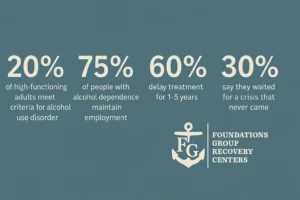
I thought treatment was for people who had hit rock bottom. Who had lost everything.
Not people like me.
I was too “high-functioning” to be a candidate for help. At least that’s what I told myself. And that story kept me stuck longer than I’d like to admit.
But the disaster I feared never came.
Instead, what came was the quiet realization that I didn’t want this life—not the way it was.
I was still performing. Still managing. But I was empty inside.
And I didn’t want to lose everything just to get permission to change.
I searched “alcohol addiction treatment in Falmouth” and stared at the screen
I must have looked at that Google tab a dozen times before I clicked. Even when I did, I kept telling myself it was just research. I wasn’t really “that bad.” I just wanted to understand my options.
But the more I read, the more I saw myself in the words. The fatigue. The hiding. The anxiety in the morning. The relief at night.
Eventually, I landed on a page for alcohol addiction treatment in Mashpee, MA. I scrolled for hours.
It didn’t look like punishment. It looked like care.
I made the call—and then I exhaled
I don’t even remember what I said on the phone.
Something like, “I think I need help but I’m not sure what kind.”
The person on the other end didn’t rush me. Didn’t push. Didn’t sound surprised.
They said:
“That’s okay. You don’t have to know everything right now. Let’s just talk about what’s going on.”
That was the first time in months I felt like someone really saw me—not just the version I showed the world.
I expected judgment. What I got was space.
When I came in for my first appointment, I braced for the worst.
I thought I’d have to justify every drink, explain every choice, defend my high-functioning life.
But I didn’t.
The intake felt more like a conversation than a confession. They asked what my days looked like. How I felt physically, mentally, emotionally. What my relationship with alcohol really felt like.
There were no labels. No shame. Just honest curiosity—and quiet relief.
I didn’t have to disappear to get help
What shocked me most was how much treatment fit into my life.
I didn’t go away for 30 days. I didn’t leave my job. I didn’t blow up my schedule.
Foundations’ outpatient program in Barnstable County worked with my real life—morning routines, deadlines, school pickups, everything.
Evening sessions. Flexible scheduling. Telehealth when I couldn’t make it in.
I could do the work of recovery without stepping out of my entire world.
What treatment actually felt like (and didn’t)
It didn’t feel like breaking down.
It felt like being allowed to stop pretending.
In group, I heard people say things I had never admitted out loud—about drinking to stay calm, to stay upright, to keep going.
In therapy, I explored what I’d been avoiding: the fear that if I didn’t keep everything together, I’d unravel completely.
And I learned tools. Real ones. How to sit with hard feelings. How to say no. How to sleep without drinking. How to name my needs before I numbed them.
It wasn’t magical. But it was real.
I still had everything—but now I have myself too
Today, I still have the job, the marriage, the house.
But I also have:
- Mornings that don’t start with regret
- Evenings I actually remember
- Relationships that feel real—not performed
I have clarity. I have quiet. I have moments where I laugh and don’t feel like I’m faking it.
I didn’t lose everything. I just almost lost myself.
Treatment gave me a way back.
You don’t have to look “sick” to be suffering
If this sounds familiar—if you’re tired, wired, and holding it all together with caffeine and alcohol—I want you to know:
You don’t have to lose it all to get help.
You don’t need to hit bottom.
You’re allowed to want better just because you do.
There’s care for people like us. Quiet, flexible, nonjudgmental care that fits your real life—not the version you think you have to present.
FAQs About Alcohol Addiction Treatment for High-Functioning Adults
What if I don’t want to call myself an alcoholic?
You don’t have to. Treatment isn’t about labels—it’s about understanding your relationship with alcohol and deciding if it’s working for you.
Will I have to quit everything right away?
That depends on your goals and your needs. Many treatment plans are gradual and collaborative. The goal is stability—not shock.
Can I still go to work while getting treatment?
Absolutely. Outpatient programs are designed to accommodate work and family schedules. Evening and virtual sessions are often available.
What if no one knows I’m struggling?
You’re not alone. Many people in treatment were hiding it well. You don’t need everyone’s approval to take care of yourself.
Is treatment private and confidential?
Yes. Your participation is protected by privacy laws. No one will know you’re attending unless you choose to share it.
What makes Foundations different?
Foundations in Mashpee offers flexible, respectful care that meets you where you are—especially if you’ve been “managing” for years and are finally ready to stop surviving and start healing.
You don’t have to fall apart to reach out
Call (844)763-4966 or visit our Alcohol addiction Treatment page to find real, respectful care in Mashpee, MA. We see what you’re carrying. You don’t have to carry it alone anymore.