
I’ve had people sit across from me and say it quietly, like they’re confessing something irreversible:
“I think I ruined it.”
Not because everything actually collapsed.
But because it felt like it did.
If you’ve relapsed after time in recovery, especially after doing well for a while, there’s a specific kind of grief that shows up.
Not just about using again—
but about what you believe you lost.
And yet… you’re here.
Still thinking.
Still searching.
Still considering coming back.
That matters more than you think.
If you’re trying to find your footing again, there are still ways forward—including opiate addiction treatment that meets you exactly where you are now, not where you feel like you fell from.
The Quiet Moment Where Everything Feels “Gone”
Relapse rarely feels neutral.
It feels final.
Like something closed that you can’t reopen.
You might recognize this internal shift:
- You stop talking about recovery
- You avoid people who knew you when you were sober
- You start thinking, “What’s the point of going back?”
And underneath all of that is a belief:
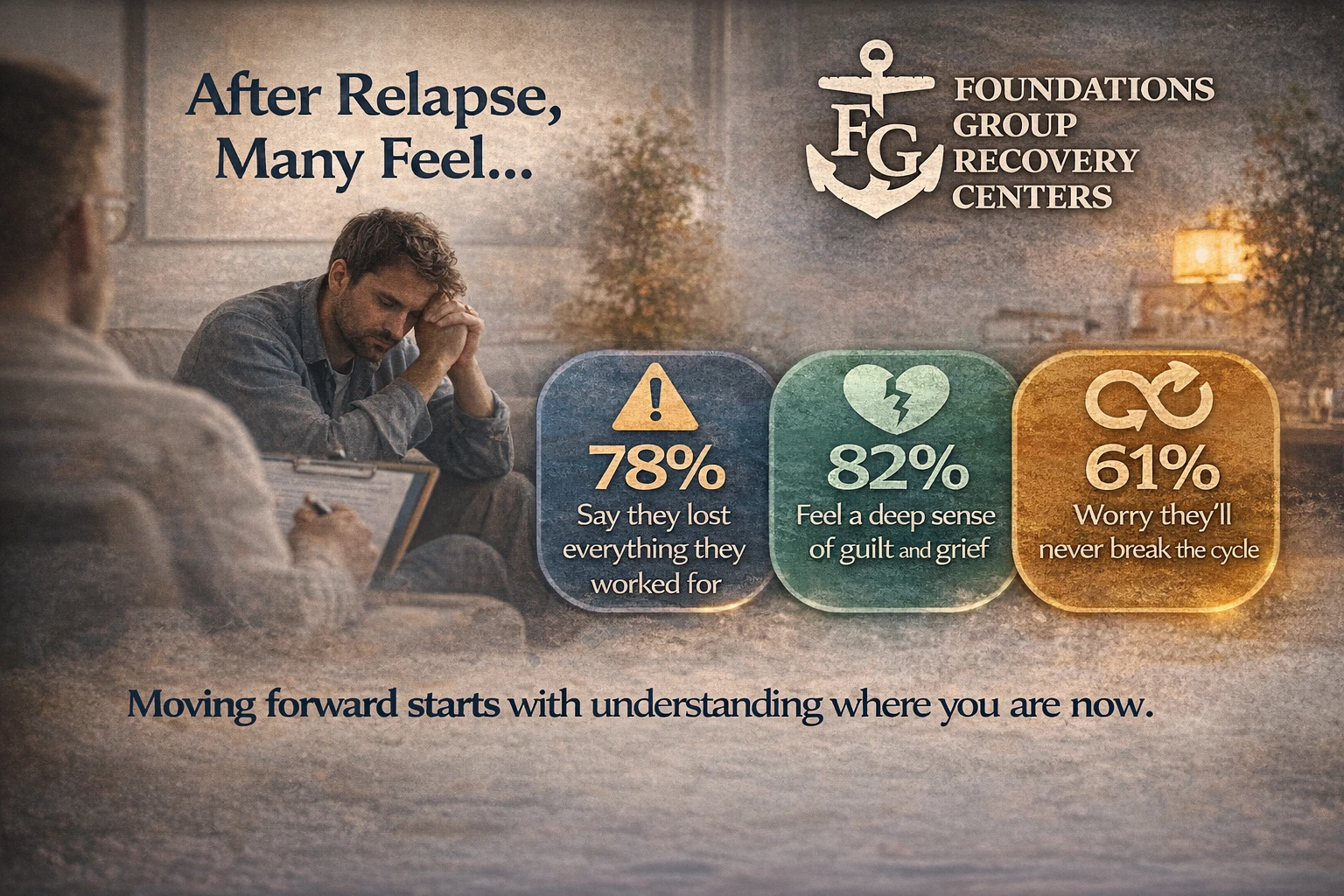
“I lost everything I worked for.”
But that belief is emotional—not factual.
Because what you built didn’t disappear.
It just doesn’t feel accessible right now.
What Actually Stays (Even When It Doesn’t Feel Like It)
You didn’t go back to who you were before.
Even if it feels that way.
You still have:
- The awareness that something isn’t right
- The memory of what stability felt like
- The ability to recognize patterns you couldn’t see before
Those things don’t vanish.
They just get quieter when shame gets louder.
For individuals in Barnstable County, Massachusetts, this stage often looks like isolation—but underneath it, there’s still awareness trying to surface.
And awareness is where recovery restarts.
Why Coming Back Feels Worse Than Starting
The first time you got help, you were stepping into something unknown.
There was fear—but also possibility.
Coming back is different.
Now you’re carrying:
- The memory of what worked
- The disappointment of what didn’t last
- The fear that you’ll repeat the same pattern
That weight makes everything feel heavier.
But it also means you’re not starting from nothing.
You’re starting from experience.
The Story You Tell Yourself After Relapse Matters Most
Relapse is a moment.
The meaning you attach to it becomes the story.
And that story can either:
- Pull you further away from support
- Or guide you back toward it
Common stories sound like:
- “This proves I can’t do it.”
- “I wasted all that time.”
- “I’m not someone recovery works for.”
But there’s another version of the story that’s just as true:
“Something didn’t have enough support—and now I know where.”
That version creates movement instead of shutdown.
You Didn’t Come Back Empty-Handed
This part is easy to overlook.
The second time around, you bring more with you.
Not perfection—but insight.
You know:
- What situations are harder than you expected
- Where your coping broke down
- What kind of support you actually need
For many people exploring opioid rehab Boston options, this is the turning point—realizing that the issue isn’t willingness, it’s alignment.
The right support at the right level changes everything.
The Difference Between Trying Again and Doing It Differently
A lot of people come back thinking they need to “try harder.”
But effort isn’t usually the missing piece.
Alignment is.
Doing it differently might mean:
- More structure in your day
- More consistent support
- Being more honest about what’s actually hard
That shift—from effort to alignment—is what makes recovery sustainable.
What Clinicians Notice About People Who Come Back
From a clinical perspective, something important happens when someone returns after relapse.
They’re more:
- Honest
- Aware
- Willing to engage in the uncomfortable parts
Not because they want to be.
But because they’ve seen what happens when those parts are avoided.
That’s not failure.
That’s growth—just not the kind people celebrate publicly.
You Came Back—And That Changes the Outcome
This is the part that often gets minimized.
You came back.
That means:
- You didn’t fully disconnect
- You didn’t stay in avoidance
- You didn’t let the story end where the relapse happened
That single decision interrupts the cycle.
And clinically, that’s one of the strongest predictors of continued recovery.
The Space Between Shame and Action
Right now, you might be sitting in between two things:
Shame that tells you to stay where you are.
And a quieter voice telling you to move.
That quieter voice doesn’t shout.
It sounds like:
- “Maybe I should talk to someone.”
- “Maybe I need something different this time.”
That’s the voice to listen to.
Not because it’s louder—but because it leads somewhere.
Recovery Doesn’t Restart—It Continues
It feels like starting over.
But it’s not.
You’re continuing—just with more information than before.
Even this relapse taught you something:
- About your limits
- About your stress
- About what doesn’t hold long-term
For individuals near Falmouth, Massachusetts, finding support that integrates those lessons into real life—not just short-term change—is often what makes the difference this time.
You’re Not Disqualified—You’re More Informed
Relapse doesn’t disqualify you from recovery.
It informs your next step.
It shows you:
- What wasn’t supported enough
- What needs to be approached differently
- Where to focus now
And when you respond to that information with action, you don’t go backward.
You go deeper.
Frequently Asked Questions
Did I lose all my progress after relapsing?
No.
Your awareness, insight, and understanding are still there. They may feel distant, but they haven’t disappeared.
Why does coming back feel more difficult than starting?
Because you’re carrying emotional weight—especially shame and self-doubt. But you’re also bringing more experience, which can strengthen recovery.
Am I starting over from the beginning?
Not exactly.
You’re starting from a more informed place, with a better understanding of your needs and challenges.
What if I feel like I don’t deserve help anymore?
That feeling is common—but not accurate.
Support isn’t something you earn. It’s something you return to when you need it.
Can recovery still work after relapse?
Yes.
In many cases, it becomes more sustainable because it’s based on more honest awareness and better-aligned support.
Take the Next Step Without Losing What You’ve Gained
If you’re thinking about coming back—or already have—you don’t have to navigate this alone.
Call (844)763-4966 to learn more about our opiate addiction treatment in Mashpee, MA.
You didn’t lose everything.
You came back—and that’s where real recovery continues.