
It was March when he called—mud season in Massachusetts. Not quite winter, not yet spring. The world was stuck in between, and so was he.
He had just gotten his diagnosis. Alcohol use disorder. The words felt clinical, too clean for what his life actually looked like.
“I think I need help,” he said. Then, quieter:
“But I’m scared of the meds. I don’t want to lose myself.”
He isn’t alone in that fear. And if you’re here—reading this—you may be feeling the same. If you’re newly diagnosed and considering alcohol and drug detox, but medication feels like a deal-breaker, this post is for you.
At Foundations Group Recovery Center in Mashpee, MA, we’ve supported many people through this exact crossroads. You want to get well. But you want to stay you. That’s not a contradiction. It’s courage.
Let’s walk through what detox really looks like when you’re scared of medication—and what second chances can feel like when they’re offered with care.
You’re Not “Anti-Help”—You’re Protecting Something Sacred
For many newly diagnosed people, fear of medication isn’t about being anti-science or unwilling. It’s about agency.
- “What if I get numb?”
- “What if I’m not myself?”
- “What if one substance just gets swapped for another?”
These questions aren’t irrational. They’re deeply human.
Maybe you’re a creative, someone who’s used substances to feel. Or maybe you’ve grown up around overmedicated adults and swore you’d never go that route. Maybe you’ve tried medication before and didn’t like how it felt.
All of that matters. At Foundations, we honor that fear. We start with it, not push past it.
What Alcohol and Drug Detox Really Looks Like
Let’s demystify what happens in a detox program—especially when you’re medication-wary.
When you arrive at Foundations, here’s what happens first:
- Assessment, not assumption: You’ll meet with a nurse or medical provider who listens—not just to your symptoms, but to your story. We’ll ask what you’ve been using, how long, what your goals are, and how you feel about meds. This isn’t a one-way conversation.
- Personalized detox plan: Some people need medication to detox safely—especially with alcohol, benzos, or opioids. Others may opt for minimal support, using non-addictive comfort meds only. Either way, your consent is key.
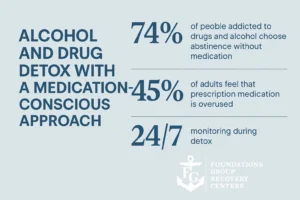
- 24/7 monitoring: You’ll be medically monitored around the clock, not because we expect emergencies, but because we want to respond to discomfort in real time. You’ll never be alone with your symptoms.
- Emotional support: Detox is physical, but it’s emotional too. That’s why our team includes not just nurses and doctors, but therapists, recovery coaches, and peers who’ve been there. You’ll be supported on every level.
We don’t do cookie-cutter care. Your detox experience is shaped by your needs, your voice, and your right to be informed every step of the way.
Medications Are Optional—And Always Explained
Here’s the truth: You can detox without heavy medication. For some substances, like alcohol or benzodiazepines, medical intervention might be recommended for safety—but we’ll never force something you don’t understand.
We explain every option. Every dose. Every purpose. You’ll know exactly what’s being offered and why.
And if you decide you’d rather manage symptoms more naturally? We’ll adjust your care plan to include hydration, rest, nutrition support, and therapeutic grounding tools.
This is not a hospital ward. This is not a punishment. This is a place where you get to return to yourself—without fear of disappearing.
What Emotions Feel Like When the Substances Leave
Here’s something no one tells you about early detox:
You might feel more alive than you expect.
Yes, some people feel raw, anxious, or even grief-stricken in the first days without alcohol or drugs. That’s part of the healing. But there’s also laughter. Relief. Real rest.
- You might sleep deeply for the first time in weeks.
- You might cry—and have someone there to hand you a tissue without judgment.
- You might say, “I feel weirdly okay today,” and mean it.
One client said, “I was scared I’d feel less like myself. But I feel like I just met myself again.”
Recovery doesn’t erase who you are. It helps you come home to it.
Detox Isn’t the Whole Story—But It’s the First Chapter
Detox is the beginning, not the end.
After your body clears the substances, you’ll be clearer-headed and more able to make decisions about what comes next. That might mean:
- Staying with us for residential care
- Transitioning into our outpatient treatment program
- Working with a therapist or peer support coach
- Exploring your relationship with medication over time (or not)
And if you’re looking for alcohol and drug detox in Falmouth, MA, our Falmouth-area program offers seamless connection to ongoing services nearby.
The next chapter is yours to shape. We’re just here to walk with you as it begins.
Detox with Dignity: Our Promise to You
Whether you decide to use medication or not, here’s what we promise:
- You will be treated with dignity.
- Your voice will be heard and respected.
- You’ll never be shamed for asking questions.
- You will not be forced into compliance.
- You can change your mind at any time.
You are allowed to be scared. But you are also allowed to hope. This can be your season of second chances—and we’d be honored to walk beside you.
FAQs About Alcohol and Drug Detox (When You’re Nervous About Medication)
What if I refuse medication during detox—can I still come?
Yes. We regularly work with people who want to detox with minimal or no medications. We’ll help you understand any medical risks and offer support strategies that align with your comfort level.
Is detox painful without medication?
It can be uncomfortable, depending on the substance and how long you’ve used. But even if you decline traditional detox meds, we still offer comfort support—hydration, rest, nutrition, and emotional care. You’re not doing it alone.
Will I be judged if I change my mind and ask for medication later?
Not at all. Many clients change their minds mid-detox once they understand how gentle some medications are. We support informed choice at every stage—not rigid plans.
How long will detox last?
Detox usually lasts 3–10 days, depending on the substance and your medical needs. We don’t rush or prolong unnecessarily. The goal is to stabilize your body and help you feel safe enough to plan your next step.
Can I still get therapy or support if I don’t want to take psychiatric meds after detox?
Absolutely. Medication is one tool—not the only one. Many people recover using therapy, group work, lifestyle changes, and spiritual or community support. You get to build your recovery toolbox in the way that fits you.
Is there support for people in Barnstable County?
Yes. Foundations provides detox services to Barnstable County residents with access to follow-up care, including outpatient programs and sober living referrals.
Ready to take the first step—your way?
Call (844)763-4966 or visit our alcohol and drug detox page to learn more about medication-conscious detox in Mashpee, MA. You don’t have to feel ready. You just have to reach out. We’ll meet you exactly where you are.