
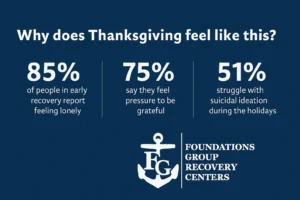
Last Thanksgiving, I didn’t want to die—but I didn’t really want to live either.
It’s strange, isn’t it? How holidays can bring out the heaviest parts of us.
Everyone else was talking about gratitude, family, football, and food. I was thinking about how much easier it would be if I didn’t have to feel anything at all.
I wasn’t actively planning anything that day—I was just exhausted.
Exhausted from pretending, from smiling when it felt fake, from hearing people say how lucky I was when I couldn’t feel lucky about anything.
That was the year I realized I needed help. And somehow, through the fog, I found my way into alcohol addiction treatment at Foundations Group Recovery Center in Mashpee, MA.
It didn’t “fix” me overnight. It didn’t make the holidays magical again.
But it gave me one thing I didn’t have before—a reason to hold on, even when it hurt.
If Thanksgiving feels like a test you don’t have the strength to take, I see you. And I want to share what helped me get through it when I didn’t think I could.
The Holiday Pressure to Feel Grateful Can Be Brutal
There’s something uniquely painful about being told to “count your blessings” when your heart feels heavy.
Thanksgiving can make it seem like everyone’s surrounded by love and laughter, while you’re sitting in silence trying not to cry into your mashed potatoes.
That year, I remember staring at my plate and thinking, I should feel better than this. I’m sober. I’m alive. Why does everything still feel empty?
What I’ve learned since then is this: gratitude isn’t supposed to be forced.
It’s not a performance or a checklist—it’s something that comes naturally once healing starts to take root.
And in early recovery, it’s okay if it’s not there yet.
When I entered alcohol addiction treatment, nobody told me to “cheer up.” They just let me be where I was. Sad. Scared. Angry. Numb. That honesty was the beginning of healing.
The Loneliness Hits Harder Without Alcohol
Before treatment, I drank through the holidays.
I told myself it made the family dinners easier. It made conversation flow. It made me belong.
In truth, it just muted everything—the awkwardness, the sadness, the tension, and the loneliness.
When I stopped drinking, all of those things came roaring back.
In alcohol addiction treatment, I finally admitted it out loud:
“I feel lonelier sober than I ever did drunk.”
The counselor didn’t flinch.
She said, “That’s because now you’re actually feeling it. And that’s where the real work starts.”
That hit hard. Because it was true. Sobriety strips away the noise. It makes you sit face-to-face with the ache you’ve been drinking to avoid.
And it’s terrifying—but it’s also what saves you.
Thanksgiving in Treatment Looked Nothing Like I Expected
I thought rehab would feel sterile, clinical, or full of rules.
It wasn’t. It was quiet, soft, and strangely human.
That Thanksgiving, I didn’t eat turkey with my family. I ate lasagna in a common room with six other people who didn’t have anywhere else to go.
Someone played guitar. Someone else cried halfway through dinner.
We weren’t grateful. We were surviving.
And somehow, that felt like enough.
At Foundations Group Recovery Center, the team didn’t force joy or small talk. They just let us be real.
We talked about missing our families, our guilt, and how strange it felt to be sober when the rest of the world was drinking to celebrate.
That night, I didn’t drink. I didn’t run. I stayed.
That was my first real win.
Looking for Alcohol Addiction Treatment in Barnstable County, MA?
If you live on Cape Cod and the holidays feel heavier than they should, you’re not alone.
Foundations Group Recovery Center offers alcohol addiction treatment in Barnstable County, MA and nearby Falmouth, MA for people who are ready to stop white-knuckling their pain.
You don’t have to walk through Thanksgiving—or any day—alone.
There’s help here, right where you are.
What Alcohol Addiction Treatment Taught Me About Survival
Treatment didn’t hand me a list of things to be thankful for.
It gave me something better—permission to feel what I felt, without shame.
Here’s what I learned:
- You don’t have to be grateful to deserve help.
- You don’t have to be happy to be healing.
- You don’t have to be okay to keep going.
When I couldn’t find hope, other people in treatment carried it for me until I could hold it myself.
That’s what community is for. And that’s what the team at Foundations helped me see.
What I Did Differently That Saved Me
That Thanksgiving, I didn’t make a gratitude list.
I didn’t pretend I was fine.
Instead, I did small, human things that reminded me I was still here:
- I called a friend from treatment instead of isolating.
- I took a walk, even though I didn’t want to.
- I let myself cry in front of someone safe.
- I ate.
- I stayed sober.
It wasn’t pretty. But it was enough.
And sometimes, “enough” is the most beautiful word in recovery.
What I Wish Someone Had Told Me About the Holidays in Recovery
That it’s okay to feel out of place.
That it’s normal to grieve the life you used to have, even if it was destroying you.
That healing doesn’t erase pain—it teaches you how to live with it differently.
I wish someone had told me that the loneliness would start to fade, little by little.
That I’d eventually wake up one day and actually want to call someone, or cook breakfast, or just exist without needing to numb it all.
It took time. It wasn’t linear. But it happened.
FAQs About Surviving the Holidays in Early Recovery
Is it normal to feel worse before I feel better in treatment?
Yes. Sobriety can feel emotionally heavier before it gets lighter. When alcohol leaves your system, your brain and body start processing everything you avoided. It’s painful—but temporary.
What if I don’t feel grateful during the holidays?
That’s okay. Gratitude isn’t mandatory. It will come when it’s ready. For now, focus on being honest about what you do feel—that honesty is the foundation of recovery.
How do I handle family gatherings when they trigger me?
Plan ahead. Bring a support contact you can call. Step outside when needed. Remember, you can leave early, say no, or create your own version of the day. Boundaries are part of healing.
Can I talk about suicidal thoughts in alcohol addiction treatment?
Absolutely. You are safe to speak honestly. The staff at Foundations are trained to handle those feelings with compassion and care. You won’t be judged—you’ll be supported.
What if I relapse during the holidays?
You’re still welcome back. A relapse doesn’t erase your progress—it just means something in your plan needs to be adjusted. There’s always another chance. Always.
What I’d Say to You, From One Survivor to Another
If you’re reading this and dreading Thanksgiving, I get it.
If you’re afraid of how much it hurts, I get that too.
You don’t have to be strong. You just have to stay.
You don’t have to be grateful. You just have to breathe.
You don’t have to see a future. You just have to get through tonight.
Because someday, maybe next year or the one after that, you’ll look back and realize:
The version of you who made it through this was the bravest one of all.
If this holiday season feels too heavy to carry alone—please reach out.
Call (844)763-4966 or visit our Alcohol Addiction Treatment to learn how Foundations Group Recovery Center in Mashpee, MA can help you hold on, find hope, and rebuild at your own pace.
You don’t have to face Thanksgiving—or tomorrow—by yourself. Help is here.