

If you or someone you know is in crisis right now, call SAMHSA’s free helpline: 1-800-662-4357. Available 24/7, free and confidential.
One of the biggest reasons people stay stuck in fentanyl use isn’t that they want to — it’s that they’re terrified of what stopping will feel like. That fear is real, and it’s worth taking seriously. But so is the fact that fentanyl withdrawal, while genuinely brutal, is survivable. And with the right support, it doesn’t have to feel impossible.
Here’s an honest look at what happens during fentanyl withdrawal, how long it lasts, and what actually helps.
Why Fentanyl Withdrawal Is Different
Not all opioid withdrawal is the same. Fentanyl’s extremely short half-life — roughly 4–12 hours depending on the formulation — means it clears your system faster than heroin or prescription opioids like oxycodone. Faster clearance means withdrawal starts sooner and often hits harder in the first 24–48 hours.
If someone has used fentanyl that was mixed with other substances (which is increasingly common), withdrawal can be less predictable. The body may be managing multiple dependencies at once.
None of this is meant to scare you. It’s meant to set accurate expectations — because knowing what’s coming is one of the things that actually helps people get through it.
Fentanyl Withdrawal Symptoms
Withdrawal from fentanyl addiction follows a recognizable pattern, though the intensity varies from person to person based on how long they’ve been using, how much, and their overall health.
Early symptoms (first 6–24 hours)
- Anxiety and restlessness
- Muscle aches and joint pain
- Runny nose, watery eyes
- Yawning, insomnia
- Sweating and chills
These early symptoms often feel like a severe flu coming on fast.
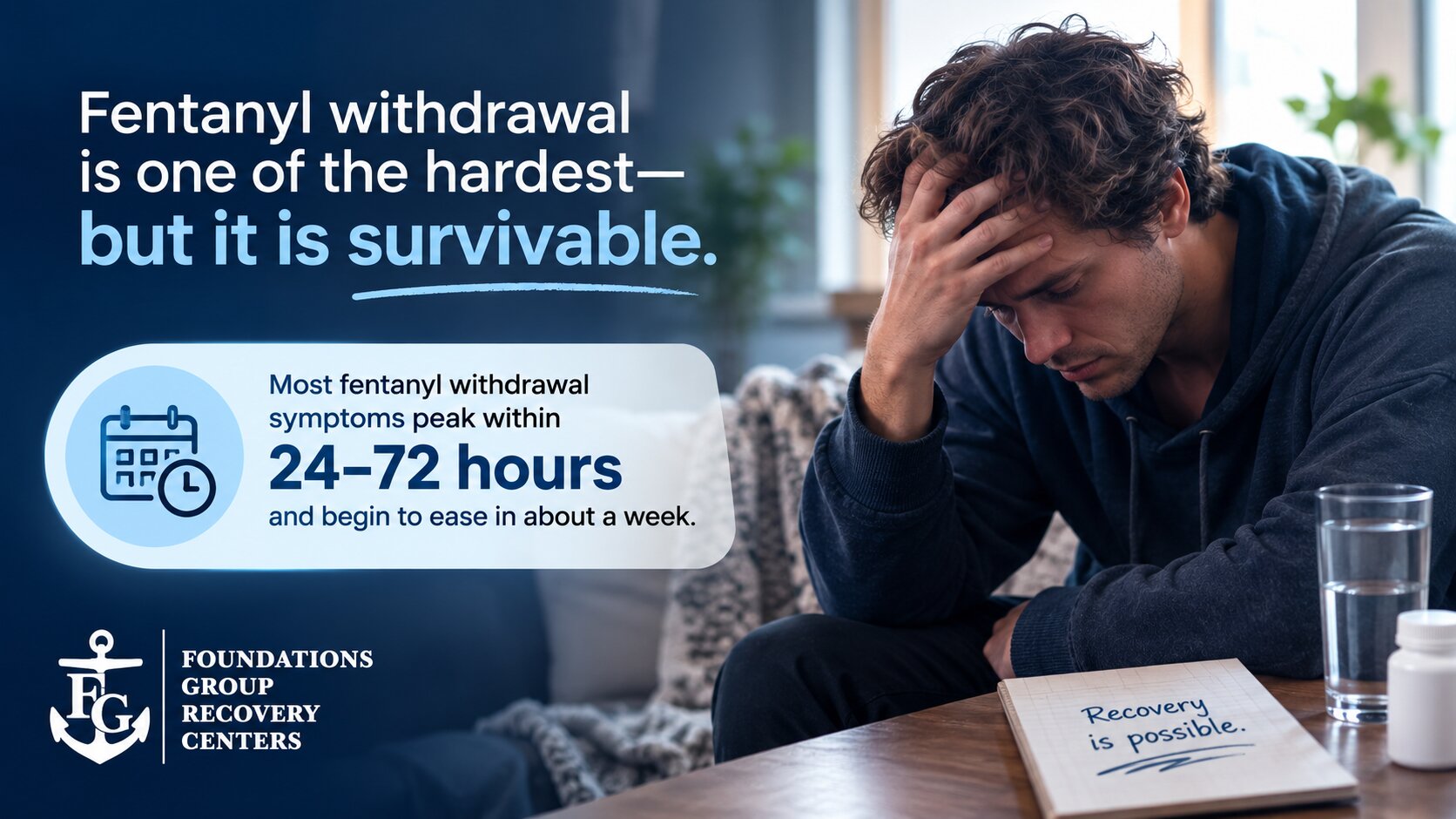
Peak symptoms (24–72 hours)
- Nausea, vomiting, diarrhea
- Abdominal cramping
- Rapid heart rate and elevated blood pressure
- Intense, overwhelming cravings
- Difficulty sleeping despite exhaustion
This is the hardest window. The combination of physical misery and cravings is why unsupported withdrawal so often ends in relapse — not because of a lack of willpower, but because the body is sending extremely loud signals to make it stop.
Psychological symptoms
Physical symptoms tend to peak and fade within a week. Psychological symptoms — cravings, anxiety, low mood, difficulty feeling pleasure — often linger well beyond that. This is part of why getting through the physical phase and then stopping support is rarely enough.
The Fentanyl Withdrawal Timeline
Phase |
Timeframe |
What’s happening |
|---|---|---|
| Early | Hours 6–24 | Onset of flu-like symptoms, anxiety, restlessness |
| Peak | Hours 24–72 | Most intense physical symptoms, peak cravings |
| Tapering | Days 4–7 | Physical symptoms begin to ease |
| Subacute | Weeks 1–4 | Fatigue, mood instability, ongoing cravings |
| PAWS | Weeks to months | Intermittent cravings, low mood, sleep disruption |
Individual timelines vary. Polysubstance use, overall health, and length of use all affect how this plays out.
Can You Detox From Fentanyl at Home?
Physically, yes. People do. The problem is the context around it.
Home withdrawal from fentanyl carries a high relapse risk — not because people don’t want to stop, but because the symptoms become unbearable and relief is accessible. And after a period of abstinence, even a brief one, tolerance drops sharply. Someone who relapses during or after a home withdrawal attempt is at significantly higher risk of overdose than they were before they tried to stop.
Dehydration from vomiting and diarrhea is also a real concern — especially for anyone with other health conditions.
Medically supervised detox addresses these risks directly: medication to reduce symptom severity, hydration support, 24/7 monitoring, and a safety net if something goes wrong. The goal isn’t just comfort — it’s completing the process in a way that actually sets you up for what comes next.
How Medication-Assisted Treatment Helps
Buprenorphine (the active ingredient in Suboxone) is one of the most effective tools for managing fentanyl withdrawal. It works by binding to the same receptors fentanyl does, reducing withdrawal symptoms and cravings without producing the same high. When used as part of a supervised program, it dramatically improves the likelihood of getting through the withdrawal phase and engaging with longer-term treatment.
Medication-assisted treatment isn’t replacing one addiction with another — that’s a common misconception. It’s using a medical tool to stabilize the body so that the psychological work of recovery becomes possible.
What Comes After Detox
Detox gets the drug out of your system. It does not address why the use started, what keeps it going, or what’s needed to build a life that doesn’t require fentanyl to feel okay. That’s what treatment is for.
Most people transitioning out of fentanyl detox do well with a structured step-down: from a higher level of care like a partial hospitalization program — which provides intensive daily support while allowing you to sleep at home — down through intensive outpatient and standard outpatient as stability builds. The continuum matters. Jumping from detox to once-a-week therapy skips several important rungs.
Fentanyl Withdrawal Is Survivable — With the Right Support
You don’t have to have a plan figured out. You don’t have to know what the next six months look like. You just need a next step.
Foundations Group Recovery Centers serves Cape Cod and the surrounding communities of southeastern Massachusetts. Our team offers free, confidential substance use evaluations — no pressure, no judgment, just a conversation about where you are and what might help. Get help that’s close to home, Proudly serving in Falmouth, Barnstable County, MA.
Call us anytime at (844) 763-4966 or schedule a free evaluation online. Most insurance is accepted — verify your coverage here.