On the outside, they’ve got it together.
The job, the marriage, the inbox at zero. They show up. They keep up. They overachieve, even. And somewhere between deadlines and dinner plans, they’re managing a full-blown opiate addiction.
Not from the gutter. From the conference room. From the carpool lane. From the family vacation they organized down to the minute.
At Foundations Group Recovery Center, we work with people like this every day. And here’s what we know: high-functioning doesn’t mean fine. It means hiding. It means exhausted. It means terrified someone might see the cracks—especially now that they’re starting to spread.
The Lie That It’s “Not That Bad” If Life Still Works
High-functioning opiate addiction is full of rationalizations.
“I’m not nodding off in public.”
“I’m not stealing.”
“I’m not using heroin—just pills.”
“I still show up. I pay my bills.”
And those things might be true. But here’s what else is often true:
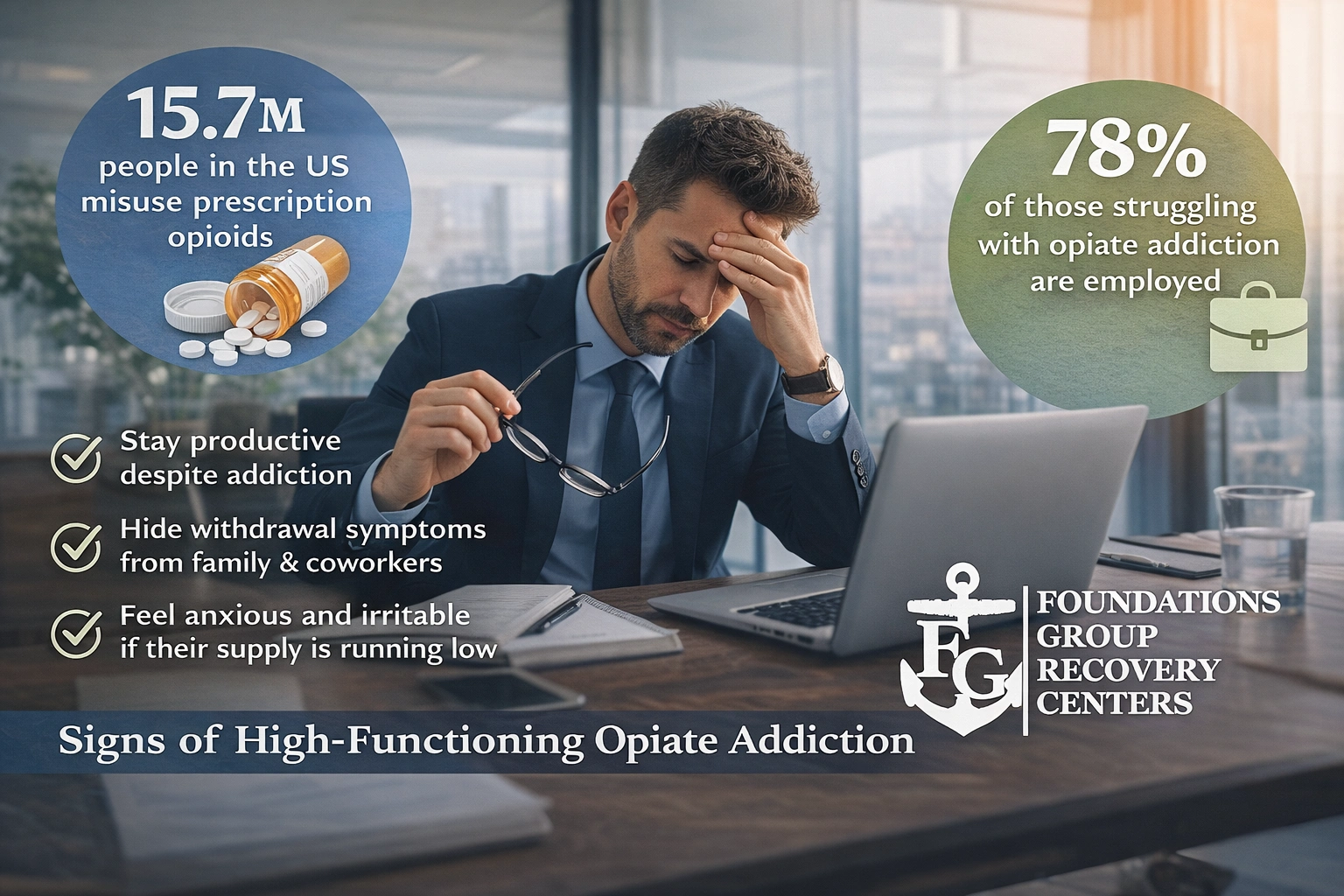
- You’re using just to feel normal
- You’re constantly managing withdrawal in secret
- You feel anxious if you can’t refill early or find extras
- You’ve lost track of when you last felt clear-headed
The lie isn’t just what you tell others—it’s what you whisper to yourself to get through the day. But inside opiate addiction treatment, that lie finally gets a name: survival mode.
It’s not dramatic. It’s quiet. Controlled. Composed. On the surface, everything’s fine—until you stop to notice how often you’re dosing just to function.
Inside Treatment: The Mask Comes Off—Finally
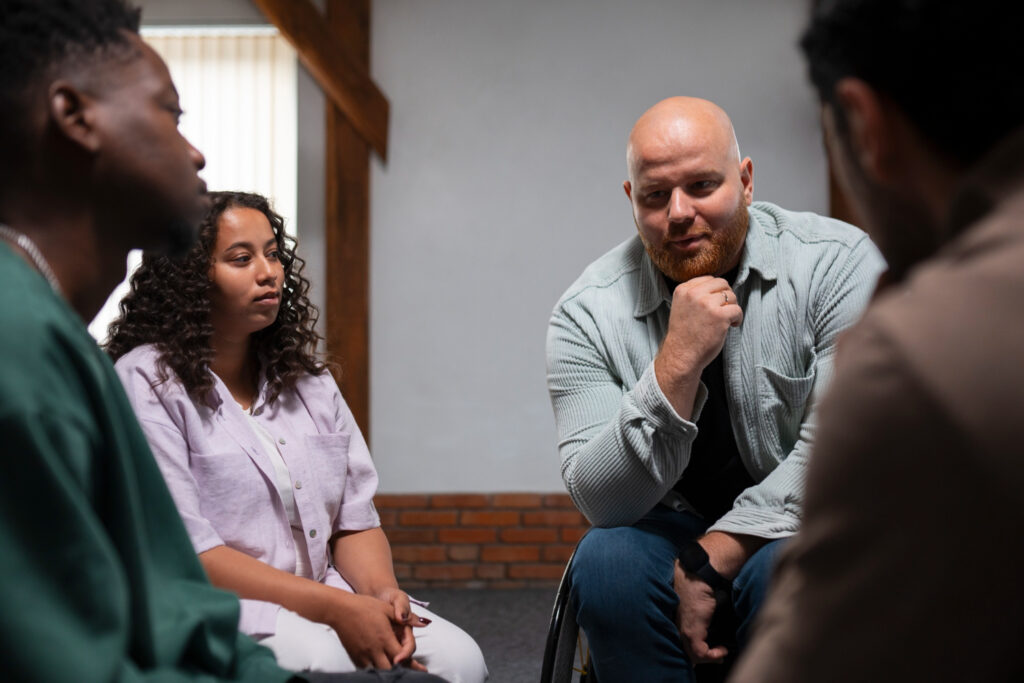
In group, the high-functioners speak last. They listen first. They study the room. And when they finally open up, there’s a precision to their words—a kind of measured collapse.
“I didn’t think I belonged here.”
“I thought I was the exception.”
“I thought if I was still productive, it wasn’t addiction.”
But here’s the shift: in treatment, high-functioning looks different.
- It looks like tears on a lunch break.
- It looks like shaking hands finally admitting they’re tired.
- It looks like clarity arriving in the form of surrender—not collapse, but permission to stop pretending.
Why It’s So Hard to Ask for Help
If control is your superpower, vulnerability feels like defeat. That’s the trap high-functioning clients fall into.
They’re afraid treatment means exposure. Weakness. Slipping. Being judged by people who “aren’t like them.”
But here’s what we tell them: addiction doesn’t care how much you accomplish. It just wants you silent, busy, and dependent.
Asking for help isn’t weakness—it’s strategy. The smartest move in the playbook. And high-functioning people? They’re excellent strategists once they see the truth of their own patterns.
When someone from Barnstable County, Massachusetts walks through our doors looking put-together but hollowed out on the inside, we don’t try to break them down. We just offer a place to finally set it all down.
What Opiate Addiction Treatment Actually Looks Like for High-Functioning Adults
There’s this idea that addiction treatment is all tears and rock-bottom chaos. For high-functioning clients, the process looks more like this:
- Learning to feel without numbing
- Rebuilding trust in your own internal signals (hunger, pain, joy)
- Finding out who you are when you’re not proving anything
- Facing grief over how long you’ve been on autopilot
At Foundations, we offer opiate addiction treatment that’s structured but adaptive. Group sessions. 1:1 therapy. Holistic support. And space—real, quiet, restorative space—to stop spinning your wheels and actually come back to yourself.
It’s Not About Quitting Work. It’s About Stopping the Emotional Bleed
People often say: “I can’t go to treatment. I’ve got a business to run. A team to lead. Kids at home. Deadlines.”
We get it.
But here’s the question: what’s the cost of not going?
How many times have you emailed from the bathroom mid-withdrawal? How often have you used just to get through a client dinner or parent-teacher meeting? How much mental bandwidth is being eaten up by planning, hiding, scoring, recovering?
The emotional bleed is silent—but it’s fatal over time.
Treatment doesn’t ask you to abandon your life. It helps you live it without needing something to get through it. It puts your strength back in your own hands.
High-Functioning Clients Move Fast—Once They Get Real
When high-functioning people enter treatment, they often start skeptical, resistant, emotionally walled off.
But once they drop the act? They move.
- They apply what they learn.
- They lean into structure.
- They crave accountability.
- They’re done with half-truths.
That momentum is powerful—when it’s rooted in honesty, not performance.
And we match that energy. We bring real tools, not clichés. Evidence-based practices, trauma-informed care, and peer support that respects intelligence without feeding the ego.
You’re not too functional for treatment. You’re exactly the kind of person who benefits most—because when you decide you’re done hiding, you won’t look back.
What Happens Next Is Up to You—But You Don’t Have to Do It Alone
You already know what burnout feels like. What faking wellness feels like. What juggling control and craving feels like.
You also know, deep down, that something has to give.
Treatment won’t take away your career, your identity, or your ambition. It’ll help you recalibrate them. Reclaim them. Rebuild them on solid ground.
And you’re not alone in this. Not even close.
FAQs: Opiate Addiction Treatment for High-Functioning Adults
Do I really need treatment if I’m still functioning?
Yes. Functioning doesn’t equal thriving—or safety. Many people maintain appearances while quietly spiraling. If you’re using opiates daily, hiding your use, or managing withdrawal just to get through the day, treatment isn’t overkill—it’s essential.
What if I can’t take time off for inpatient?
You may not have to. Many high-functioning clients start with outpatient programs that offer structure and support while allowing you to continue working or managing responsibilities. We’ll help you determine the level of care that fits your reality.
Will treatment make me lose everything I’ve worked for?
No—treatment helps you protect it. Addiction is what’s slowly eroding the life you’ve built. Recovery strengthens it. Many clients discover they perform better, lead more clearly, and feel more connected post-treatment.
Is it possible to stay anonymous during treatment?
Absolutely. We respect privacy at every level. We’ve worked with business leaders, professionals, parents, and public-facing clients who needed discretion. We’ll talk through your needs and ensure care that protects your peace.
What’s the first step if I’m still not sure?
Talk to us. No pressure. Just a conversation. We can walk through your situation, your concerns, and your options—without judgment, without labels, without assumptions.
Ready to stop hiding and start healing?
Call (844)763-4966 to learn more about our opiate addiction treatment services in Mashpee, Massachusetts.