
Nothing prepares you for this part of parenting—the part where your child is grown, maybe twenty, maybe older, and you’re watching them struggle in a way you can’t immediately fix. If you’re here, chances are you’ve heard about a Partial Hospitalization Program in Massachusetts, and you’re feeling that mix of worry, confusion, and cautious hope.
At Foundations Group Recovery Center in Mashpee, MA, we see this scenario more often than most people realize. Young adults stepping into structured treatment after a difficult patch, and their parents standing at the edge—desperate to help but unsure how. You don’t want to smother them. You don’t want to abandon them either.
The good news? You don’t have to be perfect to be helpful. There are quiet, steady ways to support your child through this stage—ways that nurture both their recovery and your own peace of mind.
Understand What a Partial Hospitalization Program Actually Means
A partial hospitalization program (PHP) isn’t the same as being hospitalized. It’s not the same as residential rehab, either. Think of it as an intensive, structured therapy program where your adult child attends treatment during the day and comes home in the evenings.
At Foundations Group Recovery Center, PHP typically runs five days a week, for about 5-6 hours each day. It offers individual therapy, group therapy, psychiatric care, and skill-building sessions like CBT, DBT, and trauma-focused therapies.
PHP is often used when outpatient therapy hasn’t been enough, but inpatient treatment feels too disruptive. It’s a space for your child to stabilize, gain healthier coping skills, and start addressing deeper issues—without being completely removed from their day-to-day life.
Knowing this can ease some of the panic. PHP is an active choice toward recovery, not a last resort.
Communication Matters: Gentle, Open, and Judgment-Free
When your adult child comes home after a long therapy day, they may not feel like talking. They may feel emotionally drained, frustrated, or even distant. This doesn’t mean treatment isn’t working—it means they’re processing a lot.
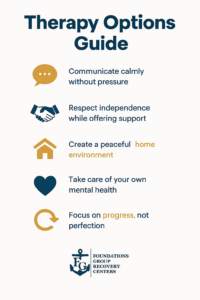
Your job isn’t to fix their feelings but to provide a calm, non-judgmental space where they feel safe to be as they are. Try simple, low-pressure check-ins like:
- “How are you feeling tonight?”
- “Is there anything you need from me?”
- “I’m proud of you for showing up today.”
Avoid prying questions like “What did you talk about in therapy?” unless they offer it up. Keep your door open, but don’t force it.
One parent shared, “The best thing I did was just be available. Some nights we didn’t talk at all, but they knew I was in their corner.”
Respect Boundaries and Support Independence
If your child is in a PHP, it likely means they’re learning how to take responsibility for their mental health. This includes making it to sessions on time, participating actively in therapy, and communicating with their clinical team.
As a parent, your instinct might be to step in—wake them up, remind them, or manage their schedule. But part of their healing involves owning this process themselves. Unless your child specifically asks for help, give them the space to manage their own treatment.
This can be hard, especially if past crises have made you hyper-alert. But in a structured program like PHP, there’s a professional team handling the day-to-day accountability. You get to step back and just be their parent again—loving, supportive, but not micromanaging.
Create a Calm and Stable Home Environment
After therapy sessions, your child will likely crave routine and peace. You don’t need to create a perfect home, but small adjustments can make a big difference.
- Keep evenings simple: low-pressure dinners, quiet downtime, limited stressful conversations.
- Limit alcohol or triggering substances at home, especially if your child struggles with addiction.
- If arguments start, take a breath and return to calm communication techniques—therapy days can stir up difficult emotions.
You can even enhance your support by learning about the therapies they’re experiencing. Many PHPs use approaches like CBT, DBT, and motivational interviewing. A little research on your end shows respect for their process—and makes conversations easier if your child chooses to open up.
Remember: It’s Okay to Take Care of Yourself Too
Parenting an adult child in recovery is emotionally exhausting. It’s okay to admit that. You’re managing your own feelings—fear, anger, sadness, hope—while trying to be supportive. That’s a lot.
Support groups for parents can be incredibly helpful, whether it’s a formal program, Al-Anon, or just connecting with a friend who “gets it.” Therapy for yourself is equally valid. Remember, your well-being matters too.
At Foundations Group Recovery Center, we often encourage parents to get their own support system in place. When you take care of yourself, you avoid burnout—and your child benefits from a steadier version of you.
It’s a Phase, Not a Permanent State
It’s natural to wonder if this will be your child’s life forever—stuck in and out of treatment, on a carousel of struggle. But PHP is not a life sentence. It’s a chapter, sometimes a necessary one, to rebuild and redirect.
Many young adults experience dramatic improvements in PHP, especially because they can apply new skills in real life immediately after therapy sessions. Others need multiple rounds—and that’s okay too. Progress isn’t linear.
One thing is certain: every day in treatment is a day moving toward safety and health.
Balance Support and Space: How to Know When to Step In
Supporting your adult child involves knowing when to lean in and when to step back. A few quick tips:
✅ Step in when safety is at risk—if you notice severe mood shifts, withdrawal, or risky behavior, reach out to their treatment team.
✅ Step back when they’re handling responsibilities, even if imperfectly. Let them develop independence.
✅ Step in with care—stock healthy food, help with transportation if needed, remove harmful triggers.
✅ Step back from trying to control outcomes or emotions. Validate their experience without solving it.
It’s a dance—and you’ll get better at reading the rhythm.
Frequently Asked Questions (FAQs)
What happens during a partial hospitalization program?
PHP typically involves 5–6 hours a day of therapy, group work, psychiatric care, and skill-building, five days a week. Your child comes home in the evenings and has weekends free, depending on the program.
Is PHP just for addiction treatment?
No—while PHP is helpful for substance use issues, it’s equally effective for mental health struggles like depression, anxiety, trauma, and bipolar disorder. Many programs, including ours in Mashpee, MA, are dual-diagnosis capable.
Should I be involved in my child’s treatment?
Family involvement can be helpful, and many PHPs offer optional family sessions. That said, your adult child may or may not want you involved. Respect their choice and be ready to participate if invited.
Can my child work or go to school during PHP?
PHP is a time-intensive program, so full-time work or school usually isn’t possible. Some people handle part-time work or evening classes, but the primary focus should be on treatment during this phase.
How long does PHP usually last?
Programs can vary from 2–6 weeks, with flexibility based on individual needs. Many young adults step down to lower levels of care like intensive outpatient (IOP) after PHP.
You’re Doing Better Than You Think
If no one has said it to you lately: you’re doing enough. You’re not responsible for your child’s recovery, but your steadiness makes a difference. Just showing up—quietly, kindly, consistently—means more than you know.
At Foundations Group Recovery Center in Mashpee, MA, we see parents like you show up every day, tired but hopeful. You don’t have to do this alone, and neither does your child.
Call (844)763-4966 to learn more about our partial hospitalization program services in Mashpee, MA.